翻刻
【右丁・上段】
に解(とき)柱(はしら)にぬる也。
立木(たちき)を日影(ひかげ)にて
其長 ̄サをしる法
一高き木の長 ̄サを
しるには。日 影(かけ)に其
木の形(かたち)地(ち)に移(うつ)る
をはかりて。少も違(ちが)
ふ事なし。其法
は先(まつ)杖にても棒(ぼう)
にても。又は扇子(せんす)の
類(るい)にても。手前に
有合(ありあは)せたる物を
【下段】
刀(かたな)脇指(わきざし)錆(さび)を早速(さつそく)おとす法
一 刃物(はもの)の錆(さび)のおとしやう。枳殻(きこく)の実(み)の生(なま)し
きを熱灰(あつはい)へ埋(うづ)み。むし。取出(とりいだ)しよく灰(はい)を払(はら)ひ。
《割書:但紙につゝみ水にてぬらし|あつはいへ埋こむしてよし》此枳殻にてこすれば。
錆(さび)こと〳〵くおつ。しかもひきめつかずして
よし。枳殻(きこく)の油 刃物(はもの)につかば。砥(と)の粉(こ)にてみ
がけばとれるなり。生(なま)しき枳殻なきときは。
乾(かは)きたるを。一 夜(や)水に漬(つけ)をき。是を以て
おとすべし。
《振り仮名:■|ほうろく》なしに胡麻(ごま)熬(いり)やうの事
【左丁】
一 胡麻(ごま)を紙によく包(つゝみ)。丸めて火の中へ投入
るゝに。紙少しもこけず。加減(かげん)よく熬(いれ)る
ものなり。胡麻(ごま)にかぎり紙こげざる事
理外(りくはい)の理なり
晒(さらし)帷子(かたひら)の垢(あか)を洗(あら)ひ白(しろ)くする事
一 夏日(かじつ)白雨(ゆふだち)の時(とき)。雨(あま)水を桶(おけ)に溜(ため)て
かたびらを洗(あら)ふべし。垢(あか)をよくさりて色
白くなるなり
諸人 平産(へいさん)をする法
一此 法(はう)何程(なにほど)の難産(なんさん)にても平産(へいさん)する
現代語訳
【右丁・上段】
(前ページより続き——柱の色付け用の煤の拵え方)
…水で適度に溶いて、柱に塗るのである。
---
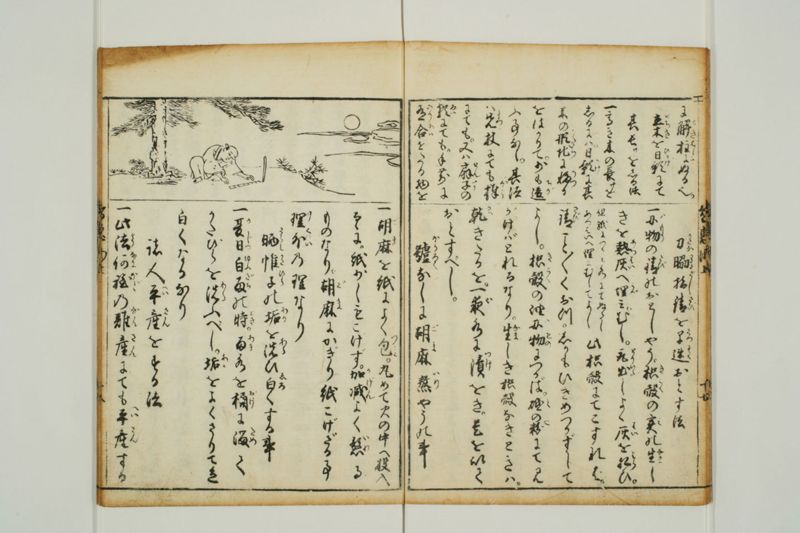
立木の高さを日影(ひかげ)によって知る方法
一、高い木の高さを知るには、日光によってその木の形が地面に映る影を測ることで、少しも違いなく正確に分かる。その方法はまず、杖でも棒でも、あるいは扇子の類でも、手元にある適当な物を
(次段へ続く)
---
【右丁・下段】
刀・脇差の錆を早急に落とす方法
一、刃物の錆を落とす方法。枳殻(きこく)の実の生(なま)のものを熱い灰の中に埋めて蒸し、取り出してよく灰を払う。
(割注:ただし、紙に包んで水で湿らせてから熱い灰に埋めて蒸してもよい。)
この枳殻でこすれば、錆がことごとく落ちる。しかも刃に引き目(傷)が付かないのでよい。枳殻の油が刃物に付いた場合は、砥の粉で磨けば取れるものである。生の枳殻がない時は、乾いたものを一晩水に漬けておき、これを用いて落とすべし。
---
焙烙(ほうろく)なしに胡麻を煎る方法
---
【左丁】
一、胡麻を紙によく包んで丸め、火の中へ投げ入れると、紙が少しも焦げず、ちょうどよい加減に煎れるものである。胡麻に限って紙が焦げないことは、理屈を超えた不思議な道理である。
---
晒した帷子(かたびら)の垢を洗い白くする方法
一、夏の日に夕立(白雨)の時、雨水を桶に溜めて帷子を洗うとよい。垢がよく取れて色が白くなるものである。
---
諸人が安産(平産)をする方法
一、この方法は、どれほどの難産であっても安産(平産)になる
(次ページへ続く)
英語訳
**[Right Page — Upper Section]**
*(Continued from the previous page — On Preparing Soot for Coloring Pillars)*
…dissolve it in an appropriate amount of water and apply it to the pillar.
---
**On Determining the Height of a Standing Tree Using Its Shadow**
- To determine the height of a tall tree: measure the shadow cast by the tree onto the ground in sunlight, and one can ascertain the height with perfect accuracy, without the slightest error. The method is as follows: first, take any convenient object at hand — a walking stick, a rod, a folding fan, or similar item —
*(Continues in the lower section)*
---
**[Right Page — Lower Section]**
**On a Method for Quickly Removing Rust from Swords and Short Swords (*wakizashi*)**
- The method for removing rust from bladed instruments: take a fresh, raw trifoliate orange (*kikoku* / *Poncirus trifoliata*) fruit and bury it in hot ash to steam it. Remove it and brush off the ash thoroughly.
*(Interlinear note: Alternatively, wrap the fruit in paper, moisten it with water, and then bury it in hot ash to steam it.)*
Rub the blade with this steamed *kikoku* fruit, and the rust will come off completely. Moreover, this method is preferable because it leaves no scratches on the blade. If the oil from the *kikoku* adheres to the blade, it can be removed by polishing with *tono-ko* (whetstone powder). When fresh *kikoku* fruit is unavailable, soak a dried one in water overnight and use that instead.
---
**On Roasting Sesame Seeds Without a *Hōroku* (Earthenware Roasting Pan)**
---
**[Left Page]**
- Wrap sesame seeds well in paper, roll it into a ball, and throw it into a fire. The paper will not burn at all, and the seeds will be roasted to just the right degree. The fact that the paper does not scorch when sesame seeds alone are inside is a principle that transcends ordinary reason — a remarkable mystery.
---
**On Washing and Whitening Soiled Bleached *Katabira* (Summer Garments)**
- On summer days during a sudden shower (*yūdachi* / evening squall): collect the rainwater in a barrel and wash the *katabira* garment in it. The dirt will come off thoroughly and the cloth will become white once more.
---
**On a Method for All People to Have an Easy Delivery (*heisan*)**
- This method works to bring about an easy delivery (*heisan*) no matter how difficult the labor may be —
*(Continues on the next page)*