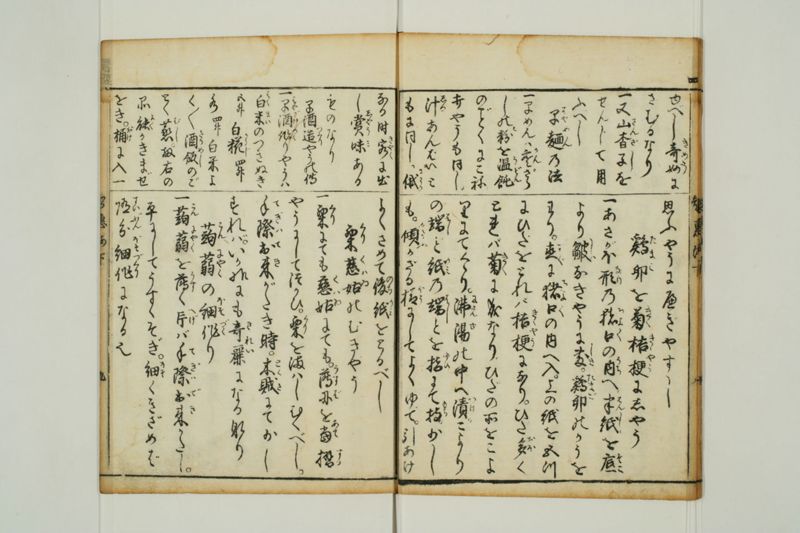
翻刻
【右丁】
【欄外上部】四
【上段】
ゆべし奇妙(きめう)に
さむるなり
一又 山杳子(さんざし)を
せんじて用
ふへし
早麺(はやめん)の法
一早めんは寒(かん)ざら
しの粉(こ)を温飩(うどん)
のごとくにこね
打やうも同し。
汁(しる)あんばいと
もに同し。俄(にわか)
【左丁・上段】
なる時 客(きやく)に出
し賞味(しやうみ)ある
ものなり
早酒 造(つくり)やうの伝
一 早酒(はやざけ)作(つく)りやうは
白米(はくまい)のつきぬき
《割書:五升| 》白 糀(かうじ)《割書:四升| 》
水《割書:四升| 》白米よ
く〳〵酒飯(さかめし)のご
とく蒸(むし)。扨右の
品 能(よく)かきまぜ
をき。桶(おけ)に入一
【右丁・下段】
思ふやうにへぎやすし
鶏卵(たまこ)を菊(きく)桔梗(きゝやう)にしやう
一あさがほ形(なり)の猪口(ちよく)の内(うち)へ半紙(はんし)を底(そこ)
より皺(しは)なきやうに敷(しき)。鶏卵(たまご)のからを
わり。直(すぐ)に猪口(ちよく)の内へ入。上の紙を五つ
にひだをとれば桔梗(きゝやう)になり。ひた多(おほ)く
とれば菊(きく)に成なり。ひだの所をこよ
りにてくゝり。沸湯(にえゆ)の中へ漬(つけ)。こより
の端(はし)と紙(かみ)の端(はし)とを指(ゆひ)にて持(もち)。少し
も。傾(かたふ)かざる様(やう)にしてよくゆで。引あけ
【左丁・下段】
よくさめて後(のち)紙(かみ)をとるべし
栗(くり)慈姑(くはゐ)のむきやう
一 栗(くり)にても慈姑(くはゐ)にても。薄刃(うすば)を当(あて)摺(する)
やうにしてつかひ。栗(くり)をまはしむくべし。
手際(てぎは)出来(てき)がたき時。木賊(とくさ)にて少し
すれば。いか様にも奇麗(きれい)になるなり
蒟蒻(こんにやく)の細作(ほそづく)り
一 蒟蒻(こんにやく)を薄(うす)く《振り仮名:■|へげ)》ば手際(てぎは)出来(でき)かたし。
平にしてうすくそぎ。細(ほそ)くきざめば
随分(すいぶん)細作(ほそづくり)になる也
現代語訳
【右丁・上段】
(前ページからの続き)
(橄欖を)煎じて用いるとよい。不思議なほどよく醒めるのである。
一 また、山査子(さんざし)を煎じて用いるとよい。
早麺(はやめん)の作り方
一 早めんは、寒ざらしの粉(寒晒し粉)を、うどんのように(水で)こねて、打ち方も同じである。汁の加減もともに同じである。急な(にわかな)
【左丁・上段】
ときに客に出すと喜ばれるものである。
早酒の作り方の伝授
一 早酒の作り方は、白米のつきぬき(よく精白したもの)【五升】、白糀【四升】、水【四升】。白米をよくよく酒飯(さかめし:酒造りに用いる蒸し米)のように蒸す。さて、右の材料をよくかき混ぜておき、桶に入れ、一(晩置く)……
【右丁・下段】
(前ページからの続き)
(海鼠が)思い通りに薄く削りやすい。
鶏卵を菊・桔梗(の形)にする方法
一 朝顔の形をした猪口(ちょく)の内側に、半紙を底から皺のないように敷く。鶏卵の殻を割り、すぐに猪口の内へ入れる。上の紙を五つにひだをとれば桔梗の形になり、ひだを多くとれば菊の形になる。ひだの箇所をこより(紙縒り)で括り、煮えたっているお湯の中へ漬け、こよりの端と紙の端を指で持ち、少しも傾かないようにしてよく茹で、引き上げる。
【左丁・下段】
よく冷めた後に紙を取るべし。
栗・慈姑(くわい)の剥き方
一 栗でも慈姑でも、薄刃(うすば包丁)を当てて摺るようにして使い、栗を回しながら剥くべし。手際よくできないときは、木賊(とくさ)で少し磨れば、どのようにも綺麗になるのである。
蒟蒻(こんにゃく)の細造り
一 蒟蒻を薄く剥こうとすると手際よくできない。平らにして薄く削ぎ、細く刻めば、十分に細造りになるのである。
英語訳
【Right Page, Upper Section】
(Continued from previous page)
...simmer [Chinese olive/kanran] and use it. It will cure [the poisoning] remarkably well.
- Alternatively, simmer hawthorn berries (sanzashi) and use them.
Method for Making Quick Noodles (Hayamen)
- For quick noodles (hayamen), knead kanzarashi flour (cold-water-refined starch) just as you would for udon, and the method for rolling the dough is the same as well. The seasoning of the broth is likewise the same. In a sudden [situation —]
【Left Page, Upper Section】
— [such noodles] can be served to guests on short notice and will be well appreciated.
Transmitted Method for Making Quick Sake (Hayazake)
- The method for making quick sake is as follows: well-polished white rice [5 shō], white kōji [4 shō], water [4 shō]. Steam the white rice very thoroughly, as one would for sake rice (sakameshi). Then mix all of the above ingredients well, place into a barrel, and leave for one [night]...
【Right Page, Lower Section】
(Continued from previous page)
...[the sea cucumber] can be sliced thinly just as desired.
Method for Shaping Eggs into Chrysanthemum and Bellflower Forms
- Lay a sheet of hanshi paper inside a morning-glory-shaped sake cup (choku), smoothing it from the bottom so that there are no wrinkles. Crack an egg and pour it directly into the cup. Gather the paper on top into five pleats to create a bellflower (kikyō) shape; gather it into more pleats to create a chrysanthemum (kiku) shape. Tie the pleats with a twisted paper cord (koyori), submerge in boiling water, hold the ends of the koyori and the paper with your fingers, and boil thoroughly, taking care not to let it tilt to one side. Lift it out.
【Left Page, Lower Section】
After it has cooled sufficiently, remove the paper.
Method for Peeling Chestnuts and Arrowhead Bulbs (Kuwai)
- Whether peeling chestnuts or arrowhead bulbs (kuwai), apply a thin-bladed vegetable knife (usuba) and use it as if rubbing/shaving, rotating the chestnut as you peel. If you cannot manage it neatly, rub [the surface] a little with horsetail (tokusa) and it will come out beautifully, no matter what.
Method for Making Finely Cut Konjac (Konnyaku)
- It is difficult to slice konjac neatly when trying to shave it thinly. Instead, lay it flat, shave it into thin slices, and then mince it finely — this will produce a suitably fine cut.