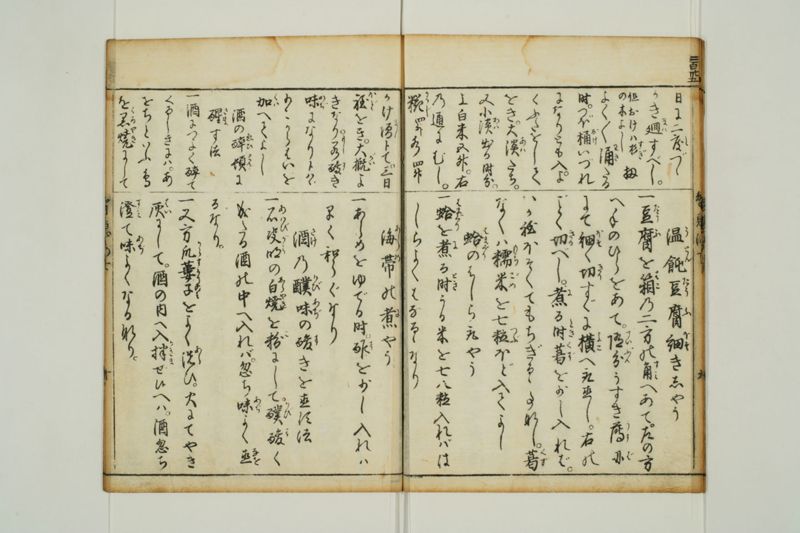
翻刻
【右丁】
【欄外上部】二百卅五
【上段】
日に二 度(と)づゝ
かき廻(まは)すべし。
《割書:但おけは杉(すぎ)|の木よし》扨
よく〳〵涌(わき)たる
時。つぼ桶(おけ)いづれ
になりとも入。よ
くふたをして
をき。大 淡(あは)たち。
又小 淡(あは)出る時分。
上白米五升。右
の通にむし。
糀(かうじ)《割書:四升| 》水《割書:四升| 》
【左丁・上段】
かけ増(まし)候て。三日
程(ほど)をき。大 概(がい)よ
きなり。若(もし)酸(す)き
味(あぢ)になり候はば
よこからはいを
加(くは)へてよし
酒の酔(ゑひ)頓(とん)に
醒(さま)す法
一酒につよく酔て
くるしきには。あ
をちといふ鳥
を黒焼(くろやき)にして
【右丁・下段】
温飩(うとん)豆腐(たうふ)細(ほそ)きしやう
一 豆腐(たうふ)を箱(はこ)の二方の角(すみ)へあて。左の方
へ手のひらをあて。随分(すいぶん)うすき薄刃(うすば)
にて細(ほそ)く切(きり)すぐに横(よこ)へ取出し。右の
ごとく切(きる)べし。煮(に)る時(とき)葛(くず)を少し入れば。
いか程ほそくてもちぎるゝ事なし。葛(くず)
なくは糯米(もちごめ)を七 粒(つぶ)ほど入てよし
蛤(はまぐり)のはしら取やう
一 蛤(はまぐり)を煮(に)る時(とき)うる米を七八粒入ればは
しらよくはなるゝなり
【左丁・下段】
海帯(あらめ)の煮(に)やう
一あらめをゆでる時。酢(す)を少し入れは
早く和らぐなり
酒の醭味(かびあぢ)の酸(す)きを直す法
一 石決明(あはびがら)の白焼(しらやき)を粉(こ)にして。醭酸(かびす)く
成たる酒の中へ入れば。忽ち味(あぢ)よく直(なを)
るなり。
一又方 瓜蔞子(からすうりのみ)をよく洗(あら)ひ。火にてやき
灰(はい)にして。酒の内へ入 拌(かきま)ぜ候へは。酒忽ち
澄(すみ)て味(あぢ)よくなるなり。
現代語訳
【右丁・上段】
(前ページからの続き)
一日に二度ずつかき回すべし。
(ただし、桶は杉の木がよい)
さて、よくよく沸き立ったとき、壺か桶のいずれになりとも入れ、よく蓋をしておく。大きな泡が立ち、また小さな泡が出る時分に、上白米五升を右の通りに蒸し、糀【四升】・水【四升】を
【左丁・上段】
加え増して、三日ほど置けば、大概(だいたい)よくできあがっている。もし酸い味になってしまったならば、横蔓延(よこからはい)【灰】を加えるとよい。
酒の酔いを素早く醒ます法
一 酒に強く酔って苦しいときには、「あおち」という鳥を黒焼きにして(用いる)……
【右丁・下段】
うどん豆腐の細造り
一 豆腐を箱の二方の角に当て、左の方へ手のひらを当て、十分に薄い薄刃包丁で細く切り、すぐに横へ取り出す。右のように切るべし。煮るとき葛を少し入れれば、どれほど細くても千切れることがない。葛がなければ、糯米(もち米)を七粒ほど入れるとよい。
蛤のはしら(貝柱)の取り方
一 蛤を煮るとき、うるち米を七、八粒入れれば、貝柱がよく離れるのである。
【左丁・下段】
荒布(あらめ)の煮方
一 あらめを茹でるとき、酢を少し入れれば、早く柔らかくなるのである。
酒の黴味(かびあじ)の酸いのを直す法
一 石決明(あわびの貝殻)の白焼きを粉にして、黴酸くなった酒の中へ入れれば、たちまち味がよく直るのである。
一 また別の方法として、烏瓜(からすうり)の実をよく洗い、火で焼いて灰にして、酒の中へ入れてかき混ぜれば、酒はたちまち澄んで味がよくなるのである。
英語訳
【Right Page, Upper Section】
(Continued from previous page — Quick Sake recipe)
Stir [the mixture] twice a day.
(Note: cedar wood barrels are best for the bucket.)
When it has come to a good, vigorous boil, transfer it into either a jar or a barrel, and seal it well with a lid. When large bubbles appear, and then small bubbles begin to form, steam another 5 shō of polished white rice in the same manner as before, and add 4 shō of kōji and 4 shō of water —
【Left Page, Upper Section】
— as supplementary additions. Leave it for about three days, and it will generally be well finished. If it has turned sour in taste, adding yokokarahai [wood ash from the side/横蔓延] will remedy it.
Method for Quickly Sobering Up from Sake
- When one has drunk heavily and is suffering from intoxication, take the bird called "aochi," roast it to a black char (kurayaki), and [use it as follows]...
【Right Page, Lower Section】
Method for Making Finely Cut Tofu in the Udon Style
- Press the tofu against two corners of its box, place the palm of your hand against the left side, and using a sufficiently thin-bladed vegetable knife (usuba), slice it finely, removing the slices immediately to the side. Cut it in the manner described above. When boiling, if you add a little kudzu (arrowroot) starch, the pieces will not fall apart no matter how finely they are cut. If kudzu is not available, adding about seven grains of glutinous rice (mochi rice) will serve just as well.
Method for Removing the Adductor Muscle (Hashira) from Clams
- When boiling clams, if you add seven or eight grains of non-glutinous rice (uruchi rice), the adductor muscle will separate cleanly.
【Left Page, Lower Section】
Method for Simmering Arame (Rough Seaweed)
- When boiling arame seaweed, adding a little vinegar will soften it quickly.
Method for Correcting Sake That Has Gone Sour with a Mouldy Taste
- Grind the white-roasted shell of an abalone (ishiketsumei / awabi shell) into powder and add it to sake that has turned mouldy and sour — the flavour will be promptly restored.
- Alternatively, wash the fruit of the crow gourd (karasuuri / Trichosanthes cucumeroides) thoroughly, burn it in a fire until it becomes ash, add it to the sake, and stir. The sake will immediately clear and its flavour will be restored.