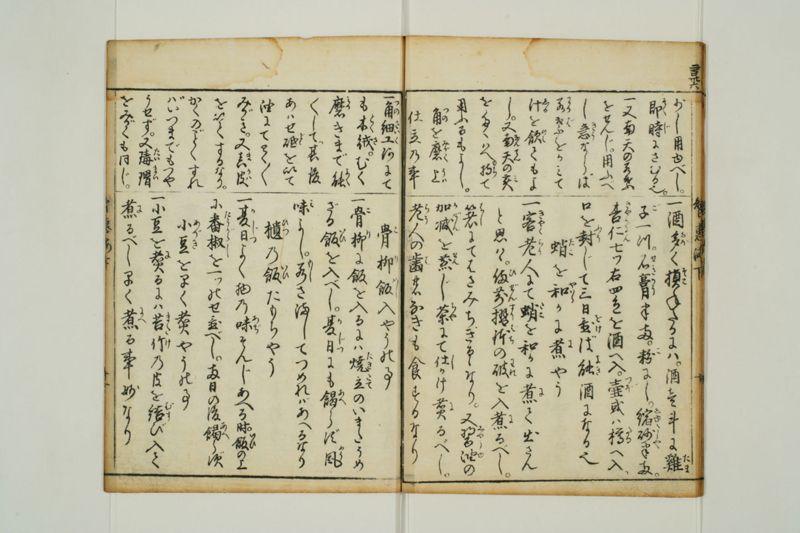
翻刻
【右丁】
【欄外上部】二百卅六
【上段】
少し用ゆべし。
即時(そくじ)にさむる也。
一又南天の若葉
をせんじ。用ふべ
し急(きう)ならば
若葉(わかば)をかみて
汁(しる)を飲(のみ)てもよ
し。又 南天(なんてん)の実(み)
をたくはへ持(もち)て
用ふるもよし。
角(つの)を磨(みがく)上(うは)
仕立の事
【左丁・下段】
一 角細工(つのさいく)何にて
も木賊(とくさ)。むく
磨(みか)きまで能(よく)
〳〵して。其後
あはせ砥(ど)を以て
油にてとく〳〵
みがき。又 真皮(まかは)
を以てするなり。
かくのごとくすれ
ばいつまでもつや
うせず。又 瑇瑁(たいまい)
をみがくも同じ。
【右丁・下段】
一酒 多(おほ)く損(そこ)ねたるには。酒壱斗に鶏(たま)
子(ご)一つ。石膏(せきかう)半両。粉(こ)にし。縮砂(しゆくしや)半両。
杏仁(きやうにん)七ツ右四色を酒へ入。壺(つぼ)或は樽(たる)へ入。
口を封(ふう)じて三日 置(をけ)ば能(よき)酒になる也
蛸(たこ)を和(やはら)かに煮(に)やう
一 客(きやく)老(らう)人にて蛸(たこ)を和かに煮(に)て出さん
と思はゝ。備前摺鉢(びぜんすりばち)の破(われ)を入 煮(に)るべし。
箸(はし)にてはさみちぎるゝなり。又 醤油(しやうゆ)の
加減(かげん)を煎(せん)じ茶(ちや)にて仕(し)かけ煮(に)るべし。
老(らう)人の歯(は)のなきも食するなり
【左丁・下段】
骨柳飯(こりめし)入やうの事
一 骨柳(こり)に飯を入るには焼立(たきたて)のいまたかめ
ざる飯(いひ)を入べし。夏日(かじつ)にも餲(あへ)らず風(ふう)
味(み)よし。若(もし)さましてつめればあへるなり
櫃(ひつ)の飯(いひ)たもちやう
一 夏日(かじつ)よく物の味(あぢ)そんじあへる時。飯(いひ)の上
に番椒(たうがらし)を一ッのせ置べし。両日の後 餲(あへ)らず
小豆(あづき)を早く煮やうの事
一小豆を煮(に)るには苦竹(またけ)の皮を結(むす)び入て
煮(に)るべし早く煮(にへ)る事妙なり
現代語訳
【右丁・上段】
(前ページからの続き:酒の酔いを素早く醒ます法)
少し用いるべし。即座に醒めるものである。
一 また、南天(なんてん)の若葉を煎じて用いるべし。急ぎの場合は、若葉を噛んで、その汁を飲んでもよい。また、南天の実をたくわえておいて用いるのもよい。
角(つの)を磨き上げ仕立てる事
【左丁・上段】
一 角細工(つのさいく)は何であれ、木賊(とくさ)でよくよく磨き、その後、合わせ砥(といし)を油に浸して丁寧に磨き、さらに真皮(まかわ)でこするのである。このようにすれば、いつまでも艶が失われない。また、玳瑁(たいまい)を磨く場合も同様である。
【右丁・下段】
一 酒を多く損ねたときには、酒一斗に対して、卵一つ・石膏半両(粉にする)・縮砂(しゅくしゃ)半両・杏仁七つ、右の四品を酒に入れ、壺または樽に入れて口を封じ、三日置けばよい酒になるものである。
蛸(たこ)を柔らかく煮る方法
一 客人が老人で、蛸を柔らかく煮て出したいと思うならば、備前焼の擂り鉢の割れたものを入れて煮るべし。箸で挟むとちぎれるほど柔らかくなる。また、醤油の加減で、煎じたお茶を使って煮始めるとよい。歯のない老人でも食べられるようになるのである。
【左丁・下段】
骨柳飯(こりめし)の入れ方の事
一 骨柳(こり)に飯を入れるには、炊きたてでまだ固まっていない飯を入れるべし。夏の暑い日でも飯が傷まず(饐えず)、風味もよい。もし冷ましてから詰めると、傷んでしまうものである。
櫃(ひつ)の飯の保ち方
一 夏の暑い日に、食べ物の味が損なわれ傷みやすい時、飯の上に唐辛子を一つ乗せて置くべし。二日経っても飯が傷まないものである。
小豆を早く煮る方法の事
一 小豆を煮るには、苦竹(またけ・真竹)の皮を結んで入れて煮るべし。早く煮えること、まことに妙なるものである。
英語訳
【Right Page, Upper Section】
(Continued from previous page — Method for Quickly Sobering Up from Sake)
Use [it] in small amounts. [The person] will sober up immediately.
- Also, boil the young leaves of nandina (heavenly bamboo) and drink the decoction. If urgent, one may chew the young leaves and swallow the juice. Alternatively, keeping the berries of nandina on hand and using them [for this purpose] is also effective.
Method for Polishing and Finishing Horn [Objects]
【Left Page, Upper Section】
- For any kind of horn craftwork, polish thoroughly with tokusa (horsetail / scouring rush), then use a finishing whetstone moistened with oil to polish carefully, and finally rub with genuine leather (makawa). If done in this way, the lustre will never fade. Polishing tortoiseshell (taimai) is done in the same manner.
【Right Page, Lower Section】
- When sake has been greatly spoiled, add to one tō of sake: one egg, half a ryō of sekikō (gypsum, powdered), half a ryō of shukusha (cardamom), and seven kernels of kyōnin (apricot kernels). Add all four ingredients to the sake, place it in a jar or barrel, seal the mouth, and leave for three days — it will become good sake again.
Method for Cooking Octopus Until Tender
- If you have elderly guests and wish to serve octopus cooked until tender, place broken pieces of a Bizen-ware grinding bowl (suribachi) into the pot and simmer [the octopus]. It will become so tender that it falls apart when picked up with chopsticks. Furthermore, simmer it using brewed tea adjusted with soy sauce. Even elderly persons without teeth will be able to eat it.
【Left Page, Lower Section】
Method for Filling a Kori (Travelling Wicker Box) with Rice
- When filling a kori with rice, one should pack it with freshly cooked rice that has not yet cooled and hardened. Even on hot summer days the rice will not go sour (ferment), and the flavour will remain good. If one packs it after it has cooled, it will spoil.
Method for Preserving Rice in a Hitsu (Wooden Rice Container)
- On hot summer days, when food spoils and goes off easily, place one piece of red pepper (tōgarashi) on top of the rice [in the hitsu]. The rice will not spoil even after two days.
Method for Cooking Adzuki Beans Quickly
- When cooking adzuki beans, tie a strip of madake (giant timber bamboo) skin [into a knot] and add it to the pot before boiling. It is remarkably effective at speeding up the cooking.