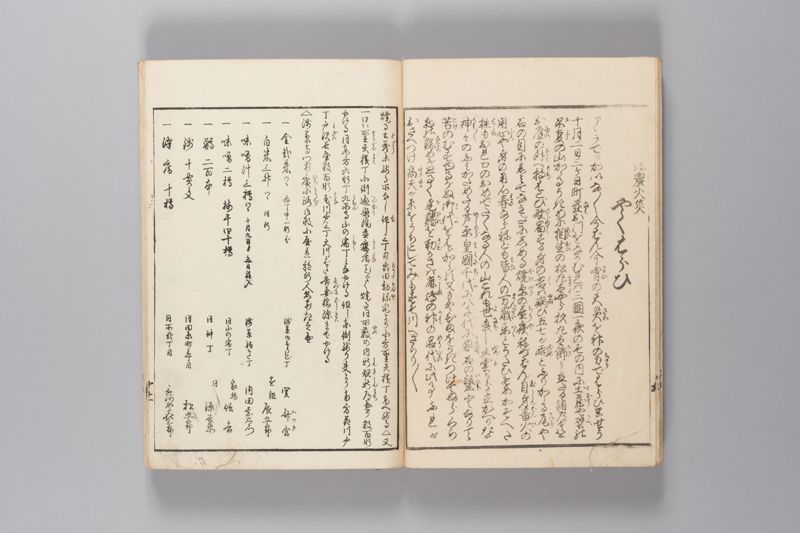
翻刻
【右丁】
地震火災
《題:やくはらひ》
アゝラでつかいな〳〵今ばん今 宵(よひ)の天 災(さい)を神の力(ちから)ではらひませう
十月二日三ヶ日町 並(なみ)お門をなかむれば三国一夜のその内に土蔵(とぞう)や壁(かべ)の
不事(ふじ)の山かゝるうきめに相生(あいおひ)の松 丸太(まるた)やら杦丸太 飾(かざ)り立たる諸道具を
お庭(には)の外(そと)へ持(もち)はこび野宿(のじゆく)する身の苦(く)は病(やま)ひ五七が雨(あめ)とふりかゝる瓦(かはら)や
石の目にしみてなみだにしめる焼原(やけはら)の昼夜(ちうや)ねづばん自身番(じしんばん)火(ひ)の
用 心(じん)や身の用心 春(はる)ならねども皆人の万歳楽(まんざいらく)とうたひそめかぞへた
柱(はしら)もおれ口のおめでたくなる人の山これも世直(よなほ)し出雲(いづも)から立かへりたる
神々(かみ〳〵)のふみかためたる芦原(あしわら) 皇国(みくに)千代(ちよ)に八千代に要(かなめ)石の磐(いわほ)となりて
苔(こけ)のむすゆるがぬ御代(みよ)をはゞからず又もやひまをかぎつけてぬらくら
物の鯰(なまづ)めが■るく尾鯺(をひれ)を動かさば鹿島(かしま)の神の名代(めうだい)に此事ふれが
おさへつけ高天(たかま)が原をうちこしてみもすそ川へさらり〳〵
【左丁】
焼る土蔵(どざう)等残る所なし但(たゞ)し三丁目 森田(もりた)勘弥(かんや)宅より北方聖天横丁東へ残る△又
一口は聖天横(せうでんよこ)丁北側 遍照(へんぜう)院並 裏店(うらたな)こと〴〵く焼る同所 藪(やぶ)の内 新規(しんき)新道(しんみち)通り数百軒
やける同東方六軒丁 九品(くほん)寺山の宿(しゆく)丁みなやける但し東側残り夫より南方花川戸
丁 戸沢(とざは)長屋数百軒 花(はな)川戸三丁大川ばた吾妻橋(あづまばし)際(きは)までやける
△浅草寺門前 広小路(ひろこうぢ)御救小屋立施行人名前左之通
一 金弐朱つゝ 居丁中一軒分 浅草御そうじ丁 関 斎宮(いつぎ)
一 白米三升つゝ 同断 を組 辰五郎
一 味噌汁三樽つゝ 十月九日ゟ毎日施入 浅草駒かた丁 内田甚右衛門
一 味噌二樽 梅干四十樽 同山の宿丁 家持 信吉
一 鱒 二百本 同仲丁 同 源兵衛
一 銭 十貫文 同田原町三丁目 松五郎
一 沢庵 十樽 同所弐丁目 三河や喜三郎
現代語訳
【右丁】
**地震火災 厄払い**
ああ、らでつかいな、らでつかいな——今宵の天災を、神の力で払いましょう。
十月二日、三か日にわたって町並みのお門を眺めれば、三国一夜(みくにいちや)のその間に、土蔵や壁が崩れるという憂き目にあい、相生の松丸太や杉丸太、飾り立てた諸道具をお庭の外へ持ち運び、野宿する身の苦しさは、病や五七日(ごしちにち)の雨のように降りかかる。瓦や石が目にしみて、涙に濡れる焼け原で、昼夜・夜番・自身番(じしんばん)での火の用心、身の用心。春ではないけれども、皆が「万歳楽」と歌い始め、数えてみれば折れた柱も口のめでたくなる(語呂合わせ)人の山——これも世直しと、出雲から立ち帰った神々が踏み固めた葦原(あしわら)の皇国(みくに)。千代に八千代に要石(かなめいし)が巌(いわほ)となって、苔の生すまで揺るがぬ御代を願うのも憚らず、またもや隙をかぎつけてのらりくらりと、あの鯰めが素早く尾鰭(おひれ)を動かさば、鹿島の神の名代として、この触れ書きがおさえつけ、高天原を越えてみもすそ川(宮川)へさらりさらり(と流し去ろう)。
---
【左丁】
焼けた土蔵等、残るところなし。ただし三丁目・森田勘弥宅より北方、聖天横丁の東側は残る。△また一方、聖天横丁北側・遍照院ならびに裏店ことごとく焼ける。同所の藪の内、新規の新道通りの数百軒焼ける。同じく東方六軒丁・九品寺・山の宿丁、みな焼ける。ただし東側は残る。それより南方、花川戸丁・戸沢長屋数百軒、花川戸三丁・大川端・吾妻橋際まで焼ける。
△浅草寺門前広小路に設けられたお救い小屋における施行(せぎょう)の人名は以下の通り。
- 一、金二朱ずつ 居丁中一軒分 浅草御掃除丁 関 斎宮(いつぎ)
- 一、白米三升ずつ 同断 を組 辰五郎
- 一、味噌汁三樽ずつ 十月九日より毎日施入 浅草駒形丁 内田甚右衛門
- 一、味噌二樽・梅干四十樽 同山の宿丁 家持 信吉
- 一、鱒 二百本 同仲丁 同 源兵衛
- 一、銭 十貫文 同田原町三丁目 松五郎
- 一、沢庵 十樽 同所二丁目 三河屋喜三郎
英語訳
**Right Page**
**Earthquake and Fire Disaster — Ritual Purification Chant (Yaku-harai)**
Ah, away with it all, away with it all! Let us use the power of the gods to purify and drive away this night's great disaster.
Looking upon the gateways of the town for three days from the second day of the tenth month, within a single night's span across the three provinces, one is struck by the sorrowful sight of collapsed storehouses (dozō) and crumbled plaster walls. Pine logs and cedar logs that had been decoratively displayed, along with household goods of all kinds, were carried out into the gardens, and the misery of sleeping rough outdoors pours down like rain in the weeks following a death—tiles and stones sting the eyes, and tears wet the ruins of the burned fields. Through day and night, the night watchmen and neighborhood fire-watch posts (jishinban) maintain vigilance over fire safety and personal safety. Though it is not spring, everyone begins to sing "Manzairak" (a celebratory verse), and counting up the broken pillars that have somehow become a cheerful topic of wordplay—a mountain of people—this too is a "world-renewal" (yonaoshi). The gods who have returned from Izumo have trodden firm the Reed-Plain Land (Ashiwara no Mikuni), our imperial realm. For a thousand, eight thousand generations, may the Keystone (kaname-ishi) become an enduring boulder, and may our lord's reign remain unshaken until moss grows upon it—yet without a moment's hesitation, that slippery catfish once again sniffs out an opportunity and lazily stirs its tail and fins. Should it do so, as the deputy of the god of Kashima, this proclamation shall hold it down, sweeping it past the High Plain of Heaven (Takamagahara) and away down the Mimosuso River, gone, gone!
---
**Left Page**
The burned storehouses and such left nothing standing. However, from Morita Kan'ya's residence in Sanchōme northward, the east side of Shōden Yokochō (the alleyway by the Shōden shrine) survived. △ Additionally, the north side of Shōden Yokochō, along with Henshōin temple and the tenement houses behind it, burned entirely. Hundreds of houses in the new lane through the bamboo grove in the same area also burned. Likewise, Rokken-chō to the east, Kuhon-ji, and Yamanoshuku-chō all burned, though the east side survived. Further south, hundreds of houses in Hanakawado-chō, Tozawa's long tenement block, Hanakawado Sanchōme, along the Ōkawa riverbank, and right up to the edge of Azumabashi Bridge all burned.
△ The names of those who carried out charitable relief (segyō) at the relief huts (osukui-goya) set up in the broad avenue (Hirokōji) in front of Sensō-ji Temple are as follows:
- Item: Two shu of gold per household, for one block of Io-chō — Asakusa Osōji-chō: Seki Itsuki
- Item: Three shō of white rice per household, same as above — [Asakusa] O-gumi: Tatsugorō
- Item: Three barrels of miso soup per day, donated daily from the 9th day of the 10th month — Asakusa Komagata-chō: Uchida Jinuemon
- Item: Two barrels of miso, forty barrels of pickled plums — Same, Yamanoshuku-chō, householder: Nobuyoshi (Shinkichi)
- Item: Two hundred trout — Same, Naka-chō, householder: Genbei
- Item: Ten kan-mon in cash — Same, Tawaramachi Sanchōme: Matsugorō
- Item: Ten barrels of pickled daikon (takuan) — Same location, Nichōme: Mikawa-ya Kisaburō