翻刻
【右丁】
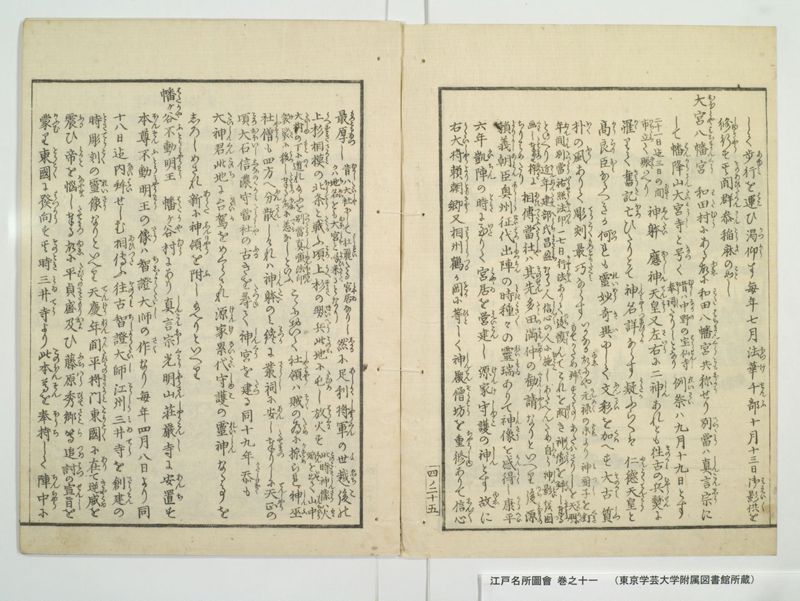
して歩行(あゆみ)を運(はこ)ひ渇仰(かつかう)す毎年七月 法華千部(ほつけせんふ)十月十三日 御影供(みえいく)を
修行(しゆきやう)す其間(そのあひた)群参(くんさん)稲麻(とうま)の如(こと)し
大宮八幡宮(おほみやはちまんくう) 和田村(わたむら)にある故(ゆゑ)に和田八幡宮(わたはちまんくう)共(とも)称(しよう)せり別当(へつたう)は真言宗(しんこんしう)に
して幡䧏山(はんかうさん)大宮寺(たいくうし)と号(なつ)く《割書:昔(むかし)は中野(なかの)の宝仙寺(はうせんし) |奉祠(ほうし)たりしとなり》例祭(れいさい)は九月十九日とす
《割書:二十一日迄三日の間(あひた)|市(いち)立(たち)て賑(にき)はへり》神体(しんたい) 応神天皇(おうしんてんわう)又 左右(さいう)に二神( しん)あれとも往古(そのかみ)の兵燹(ひやうせん)に
罹(かゝ)りて旧記(きうき)亡(ほろ)ひたりとて神名(しんみやう)詳(つまひらか)ならす疑(うたか)ふらくは 仁徳天皇(にんとくてんわう)と
高良臣(かうらのおみ)なるへきか何(いつ)れも霊妙(れいめう)奇異(きい)にして文彩(ふんさい)を加(くは)へす大古(そのかみ)質(しつ)
朴(ほく)の風(ふう)ありて彫刻(てうこく)最(もつとも)巧(たくみ)ならす《割書:いかなる故(ゆゑ)にや元禄(けんろく)の末(すゑ)より神厨子(みつし)を釘(くき)|もてかため拝(はい)する事あたはさりしを天明(てんめい)》
《割書:年間(ねんかん)別当(へつたう)祐照法印(いうせうほふいん)一七日 行法(きやうほふ)ありて後(のち)慎(つゝし)んてこれを開(ひら)き神像(しんさう)を拝(はい)し奉(たてまつ)る|といへり近年(きんねん)建部氏昌盈(たてへうちまさみち)なる人 信心(しん〳〵)の人に 施(ほとこ)しあたへんため自(みつか)ら神影(しんえい)を図(つ)》
《割書:画(くわ)し奉(たてまつ)り梓(あつさ)に|ちりはめたり》相伝(あひつたふ)当社(たうしや)は其先(そのせん)多田満仲(たゝのまんちゆう)の勧請(くわんしやう)なりといへり後(のち)源(みなもとの)
頼義朝臣(よりよしあそん)奥州征伐(あうしうせいはつ)出陣(しゆつちん)の時(とき)種々(くさ〳〵)の霊瑞(れいすゐ)ありて神像(しんさう)を感得(かんとく)し康平(かうへい)
六年 凱陣(かいちん)の時(とき)に至(いた)りて宮居(みやゐ)を営建(えいこん)し源家(けんけ)守護(しゆこ)の神(しん)とす故(ゆゑ)に
右大将頼朝卿(うたいしやうよりともきやう)又 相州(さうしう)《振り仮名:鶴か岡|つる をか》に等(ひと)しく神殿(しんてん)僧坊(そうはう)を重修(ちやうしゆ)ありて信心(しん〳〵)
【左丁】
最(もつとも)厚(あつ)し《割書:昔(むかし)は大社(たいしや)にして壮麗(さうれい)たる宮居(みやゐ)なりし|かは地名(ちめい)をも大宮(おほみや)と呼来(よひきた)るとなり》然(しかる)に足利将軍(あしかゝしやうくん)の世(よ)越後(ゑちこ)の
上杉(うへすき)相摸(さかみ)の北条(ほうてう)と戦(たゝか)ふ頃(ころ)上杉(うへすき)の勢兵(せいへう)此地(このち)に屯(たむろ)し放火(はうくわ)す《割書:此時(このとき)神像(しんさう)は火(くわ)|焔(えん)を出(いて)て山中(さんちゆう)》
《割書:大樹(たいしゆ)の下(もと)に遁(のか)れ給ふを別当(へつたう)真順法印(しんしゅんほふいん)|袈裟(けさ)に移(うつ)し奉(たてまつ)る故(ゆゑ)に恙(つゝか)なしといふ》こゝにおいて社領(しやりやう)は賊(そく)の為(ため)に掠(かすめ)られ神巫(しんふ)
社僧(しやそう)も四方へ分散(ふんさん)しけれは神体(しんたい)のみ纔(わつか)に叢祠(さうし)に安(あん)し奉(たてまつ)りしに天正(てんしやう)の
頃(ころ)大石信濃守(おほいししなのゝかみ)当社(たうしや)の古(ふる)きを尋(たつね)て神宮(しんくう)を建(たつ)る同十九年 忝(かたしけなく)も
大神君(たいしんくん)此地(このち)に台駕(たいか)をめくらされ源家(けんけ)累代(るいたい)守護(しゆこ)の霊神(れいしん)なる事を
しろしめされ新(あらた)に神領(しんりやう)を附(ふ)し給へりといへり
《振り仮名:幡ヶ谷不動明王|はたかやふとうみやうわう》 《振り仮名:幡ヶ谷村|はたかやむら》にあり真言宗(しんこんしう)光明山(くわうみやうさん)荘厳寺(しやうこんし)に安置(あんち)す
本尊(ほんそん)不動明王(ふとうみやうわう)の像(さう)は智証大師(ちしようたいし)の作(さく)なり毎年四月八日より同
十八日迄 内拝(ないはい)せしむ相伝(あひつた)ふ往古(そのかみ)智証大師(ちしようたいし)江州(こうしう)三井寺(みゐてら)を創建(さうこん)の
時(とき)彫刻(てうこく)の霊像(れいさう)なりといへり天慶年間(てんけうねんかん)平将門(たひらのまさかと)東国(とうこく)に在(あり)て逆威(きやくゐ)を
震(ふる)ひ帝(みかと)を悩(なやま)し奉(たてまつ)る故(ゆゑ)に平貞盛(たひらのさたもり)及(およ)ひ藤原秀郷(ふちはらひてさと)等(ら)追討(つゐはつ)#1の宣旨(せんし)を
蒙(かふむ)り東国(とうこく)に発向(はつかう)す其時(そのとき)三井寺(みゐてら)より此(この)本尊(ほんそん)を奉持(ほうち)して陣中(ちんちゆう)に
現代語訳
【右丁】
(前頁よりの続き:妙法寺について)
…歩みを運んで渇仰する。毎年七月には法華千部、十月十三日には御影供を修行する。その間、群れ集う参拝者は稲や麻のように立ち並ぶ。
---
**大宮八幡宮**
和田村にあるため、和田八幡宮とも称される。別当は真言宗にして、幡降山大宮寺と号する。〔昔は中野の宝仙寺が奉祠していたとのことである。〕例祭は九月十九日とする。〔二十一日まで三日間、市が立って賑わう。〕
神体は応神天皇であり、また左右に二神あるが、往古の戦火(兵燹)に罹って旧記が失われてしまい、神名が明らかでない。おそらくは仁徳天皇と高良臣であろうか。いずれも霊妙・奇異にして、後から文彩を加えることなく、大古の質朴な風格があり、彫刻は必ずしも巧みではない。〔いかなる理由によってか、元禄の末より神厨子を釘でもって固め、拝することができなくなっていたが、天明年間に別当・祐照法印が一七日の行法を行った後、慎んでこれを開き、神像を拝し奉ったという。近年、建部昌盈という人が、信心ある人々に施し与えんがため、自ら神影を図画し奉り、版木に刻み板行した。〕
相伝えるところによれば、当社はもとより多田満仲の勧請によるものだという。後に源頼義朝臣が奥州征伐に出陣の折、種々の霊瑞があって神像を感得し、康平六年に凱陣の際、宮居を営み建てて源家守護の神とした。そのため、右大将頼朝卿もまた相州鶴ヶ岡(鶴岡八幡宮)と等しく神殿・僧坊を重修され、信心
【左丁】
最も厚かった。〔昔は大社にして壮麗な宮居であったことから、地名をも「大宮」と呼び来たったとのことである。〕
しかるに足利将軍の世に、越後の上杉と相模の北条が戦った頃、上杉の勢兵がこの地に屯して放火した。〔この時、神像は火焔を出でて山中の大樹の下に遁れ給うたのを、別当・真順法印が袈裟に移し奉ったため、恙なかったという。〕ここにおいて社領は賊のために掠め奪られ、神巫・社僧も四方へ分散したため、神体のみわずかに叢祠に安じ奉っていたところ、天正の頃、大石信濃守が当社の由緒ある古きを尋ねて神宮を建てた。同十九年、かたじけなくも大神君(徳川家康公)がこの地に台駕をめぐらされ、源家累代守護の霊神であることをお聞き及びになり、新たに神領をお附け下さったという。
---
**幡ヶ谷不動明王**
幡ヶ谷村にあり、真言宗・光明山荘厳寺に安置されている。本尊・不動明王の像は智証大師の作である。毎年四月八日より同十八日まで内拝させる。
相伝えるところによれば、往古に智証大師が江州三井寺を創建された時に彫刻された霊像であるという。天慶年間、平将門が東国にあって逆威を振るい、帝を悩まし奉ったため、平貞盛および藤原秀郷らが追討の宣旨を蒙り、東国へ発向した。その時、三井寺よりこの本尊を奉持して陣中に…
(以下、次頁へ続く)
英語訳
【Right Page】
*(Continued from the previous page, regarding Myōhōji Temple)*
…people make their way here with deep reverence and devotion. Every year in the seventh month, the Hokke Senbu ceremony (One Thousand Recitations of the Lotus Sutra) is performed, and on the thirteenth day of the tenth month, the Mieigu (memorial service with portrait of the founder) is observed. During these events, the throngs of worshippers gather as thickly as stalks of rice and hemp standing in the fields.
---
**Ōmiya Hachimangū Shrine**
As it is located in Wada Village, it is also known as Wada Hachimangū. Its bettō (administrative temple) belongs to the Shingon sect and is called Hankōzan Daigūji. [It is said that in former times, Hōsenji Temple in Nakano served as the shrine's administering institution.] The annual festival is held on the nineteenth day of the ninth month. [A market is set up for three days until the twenty-first, and the area is lively with activity.]
The deity enshrined is Emperor Ōjin, and there are two additional deities to the left and right; however, the old records were lost in the fires of war in ancient times, and the names of these deities are no longer clearly known. It is suspected that they may be Emperor Nintoku and Kōra no Omi. In any case, all three possess a wondrous and extraordinary quality; no ornamentation has been added after the fact, and they retain the plain and simple character of great antiquity—the carving itself is not particularly refined. [For some reason, from the end of the Genroku era the sacred cabinet (mitsuya) had been sealed with nails, making it impossible to worship the images within. Then, during the Tenmei era, the bettō Priest Yūshō Hōin performed a seven-day religious rite and thereafter reverently opened the cabinet to pay reverence to the divine images, as the account goes. In recent years, a man named Tatebe Masamichi, wishing to offer the gift of devotion to the faithful, personally rendered a painted image of the deity and had it carved onto woodblocks for printing.]
According to tradition, this shrine was originally established through the entreaty (kanjō) of Tada no Mitsunaka. Later, when Lord Minamoto no Yoriyoshi set out on his campaign to subdue the eastern provinces (Ōshū), various miraculous signs appeared and he received a divine image. Upon his triumphant return in the sixth year of Kōhei (1063), he constructed a shrine sanctuary and enshrined the deity as the guardian god of the Minamoto clan. Consequently, the Right General Lord Minamoto no Yoritomo likewise renovated the shrine hall and monks' quarters on a par with the Tsurugaoka Hachimangū in Sagami Province, and his devotion
【Left Page】
was most fervent. [It is said that the shrine was once a grand and splendid sanctuary, which is why even the place name came to be called "Ōmiya" (Great Shrine).]
However, during the era of the Ashikaga shogunate, when the Uesugi clan of Echigo and the Hōjō clan of Sagami were at war, Uesugi troops encamped in this area and set fire to it. [At this time, it is said that the divine image left through the flames and escaped to the foot of a great tree on the mountainside, whereupon the bettō priest Shinjun Hōin gathered it into his surplice (kesa), and so it came to no harm.] As a result, the shrine's estate lands were plundered by the enemy, and the shrine priests and monks scattered in all directions. The divine body was barely kept enshrined in a small makeshift sanctuary. Then, during the Tenshō era, Ōishi, the Lord of Shinano Province, traced the ancient origins of the shrine and had the shrine hall rebuilt. In the nineteenth year of the same era (1591), the Great Divine Lord (Tokugawa Ieyasu) most graciously directed his palanquin to this place, and upon learning that this was the tutelary deity worshipped by successive generations of the Minamoto clan, he newly granted it shrine lands.
---
**Hatagaya Fudō Myōō**
Located in Hatagaya Village, this deity is enshrined at Kōmyōzan Shōgonji Temple of the Shingon sect. The principal image of Fudō Myōō (Acalanātha) is the work of the Great Teacher Chishō (Enchin). Every year from the eighth day of the fourth month to the eighteenth day, the public is permitted to worship the image directly within the sanctuary.
According to tradition, the image is a sacred sculpture carved by the Great Teacher Chishō at the time he founded Miidera Temple in Ōmi Province in ancient times. During the Tengyō era (938–947), Taira no Masakado was in the eastern provinces, wielding rebellious power and causing great distress to the Emperor. Taira no Sadamori and Fujiwara no Hidesato, among others, received an imperial decree to suppress him and set out to the eastern provinces. At that time, this principal image was carried from Miidera Temple to the encampment…
*(Continues on the next page)*