翻刻
【右丁】
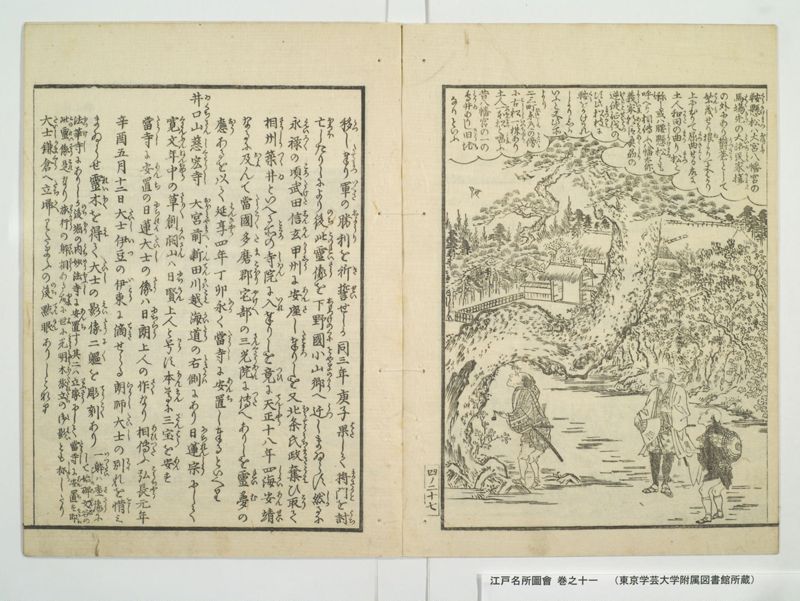
鞍懸松(くらかけまつ)は大宮八幡宮(おほみや )の
馬場先(はゝさき)の大路(たいろ)民家搆(みんかかまえ)
の外にあり鬱蒼(うつさう)として
繁茂(はんも)せり根(ね)より一丈はかり
上に至りて屈曲(くつきよく)せる故に
土人 和田(わた)の《振り仮名:曲り松|まつ まつ》と
称し或は腰懸松(こしかけまつ)とも
呼(よ)へり相伝ふ八幡太郎
義家朝臣(よしいゑあそん)奥州(あうしう)の
逆徒(けきと)征伐(せいはつ)の
頃此 松枝(まつかえ)に
鞍(くら)をかけられ
しよりしか
いふと又此所
より
二三町 東(ひかし)道(みち)の傍(かたはら)
に古松(こしよう)一株(いつちゅう)あり
土人 一本松(いつほんまつ)と唱(とな)ふ
昔八幡宮の一の
鳥井(とりゐ)ありし旧地(きうち)
なりといふ
【左丁】
移(うつ)し奉(たてまつ)り軍(いくさ)の勝利(しようり)を祈誓(きせい)せしか同三年庚子 果(はた)して将門(まさかと)を討(うち)
亡(ほろほ)したりしにより後(のち)此(この)霊像(れいさう)を下野国(しもつけのくに)小山郷(をやまのかう)へ遷(うつ)しまゐらす然(しか)るに
永禄(えいろく)の頃(ころ)武田信玄(たけたしんけん)甲州(かうしう)に安座(あんさ)し奉(たてまつ)りしを又 北条氏政(ほうてううちまさ)奪(うは)ひ取(とり)て
相州(さうしう)築井(つくゐ)といへる所(ところ)の寺院(しゐん)に入(いれ)奉りしを竟(つい)に天正(てんしやう)十八年 四海安靖(しかいあんせい)
なるに及(およ)んて当国(たうこく)多摩郡(たまこほり)宅部(やけへ)の三光院(さんくわうゐん)に伝(つた)へありしを霊夢(れいむ)の
応(おう)あるを以て延享(えんきやう)四年丁卯 永(なか)く当寺(たうし)に安置(あんち)し奉るといへり
井口山(ゐくちさん)慈宏寺(しくわうし) 大宮前新田(おほみやまへしんてん)川越海道(かはこえかいたう)の右側(みきかは)にあり日蓮宗(にちれんしう)にして
寛文年中(くわんふんねんちゆう)の草創(さう〳〵)開山(かいさん)は日賢上人(にちけん )と号(かう)す本尊(ほんそん)に三宝(さんはう)を安(あん)す
当寺(たうし)に安置(あんち)の日蓮大士(にちれんたいし)の像(さう)は日朗上人(にちらう )の作(さく)なり相伝(あひつた)ふ弘長(こうちやう)元年
辛酉五月十二日 大士(たいし)伊豆(いつ)の伊東(いとう)に滴(てき)せらる朗師(らうし)大士(たいし)の別(わか)れを惜(をし)み
まゐらせ霊木(れいほく)を得(え)て大士(たいし)の影像(えいさう)二躯(にく)を彫刻(てうこく)あり《割書:一体(いつたい)は座像(ささう)に|して始(はしめ)碑文谷(ひもんや)の》
《割書:法華寺(ほつけし)にありしか後(のち)《振り仮名:堀の内|ほり うち》妙法寺(めうほふし)に安置(あんち)す其二は立像(りふさう)にして当寺(たうし)に安置(あんち)す即(すなはち)|此(この)霊像(れいさう)是(これ)なり旅行(りよかう)の体相(ていさう)ある故(ゆゑ)に世(よ)に光明木(くわうみやうほく)《振り仮名:旅立の御影|たひたち みえい 》とも称(しよう)したり》
大士(たいし)鎌倉(かまくら)へ立帰(たちかへ)りたまふの後(のち)点眼(てんけん)ありしとなり
現代語訳
【右丁】
鞍懸松(くらかけまつ)は、大宮八幡宮の馬場先の大路、民家の構えの外にあり、鬱蒼と繁茂している。根元から一丈(約3メートル)ほど上のところで幹が屈曲しているため、土地の人々は「和田の曲り松」と称し、あるいは「腰懸松」とも呼んでいる。伝えによれば、八幡太郎義家朝臣が奥州の逆徒征伐のころ、この松の枝に鞍をかけられたことから、そのように呼ばれるようになったという。
また、この場所から二、三町(約200〜300メートル)東の道の傍らに、古い松が一株あり、土地の人々は「一本松」と呼んでいる。昔、八幡宮の一の鳥居があった旧地であるといわれている。
---
【左丁】
〔前項(前のページからの続き)〕
……(霊像を)遷し奉り、戦の勝利を祈誓したところ、同三年庚子に果たして将門を討ち亡ぼした。それによって、後にこの霊像を下野国小山郷へ遷し申し上げた。しかるに永禄のころ、武田信玄が甲州に安座し奉ったのを、また北条氏政が奪い取って、相州築井という所の寺院に入れ奉ったのを、ついに天正十八年、四海が安らかになるに及んで、当国多摩郡宅部の三光院に伝わっていたのを、霊夢の応験があったことをもって、延享四年丁卯に永く当寺に安置し奉るといわれている。
---
**井口山慈宏寺**
大宮前新田、川越街道の右側にある。日蓮宗であり、寛文年中(1661〜1673年)の草創で、開山は日賢上人という。本尊には三宝(仏・法・僧)を安置している。
当寺に安置されている日蓮大士の像は、日朗上人の作である。伝えによれば、弘長元年辛酉(1261年)五月十二日、大士(日蓮)が伊豆の伊東に流罪となられた際、朗師(日朗)は大士との別れを惜しみ奉り、霊木を得て大士の影像二躯を彫刻された。
(割書)一体は座像であり、はじめ碑文谷の法華寺にあったが、後に堀の内の妙法寺に安置された。その二体目は立像であり、当寺に安置されている。すなわちこの霊像がそれである。旅行(旅立ち)の体相があることから、世に「光明木(旅立の御影)」とも称されている。
大士が鎌倉へ立ち帰られた後、点眼(開眼供養)があったとのことである。
英語訳
【Right Page】
The **Kurakake Matsu** ("Saddle-Hanging Pine") stands outside the enclosures of the residential area along the great road at the far end of the riding ground (*babasaki*) of Ōmiya Hachimangū Shrine, growing in dense and luxuriant abundance. Because its trunk bends and curves at a point about one *jō* (approximately three meters) above the roots, the local people call it the "Wada no Magari-matsu" ("Twisted Pine of Wada"), and some also call it the "Koshikake-matsu" ("Sitting Pine"). According to tradition, this name derives from the fact that Hachimantarō Yoshiie, during his campaign to suppress the rebels of Ōshū (the Tōhoku region), once hung his saddle from the branches of this very pine.
Furthermore, about two or three *chō* (roughly 200–300 meters) to the east of this spot, along the side of the road, stands a single ancient pine, which the local inhabitants call the "Ipponmatsu" ("Lone Pine"). It is said that this is the former site where the first torii gate of the Hachimangū Shrine once stood.
---
【Left Page】
*[Continuation of the preceding entry]*
…The sacred image was enshrined [at a new location], and prayers were offered for victory in battle. In the same third year (*kōshi*), Masakado was indeed defeated and destroyed. As a result, this sacred image was later transferred to Oyama-gō in Shimotsuke Province. In the Eiroku era (1558–1570), Takeda Shingen enshrined it in Kōshū (Kai Province), whereupon Hōjō Ujimasa seized it and placed it in a temple at a place called Tsukui in Sōshū (Sagami Province). Finally, in the eighteenth year of Tenshō (1590), as peace was restored throughout the realm, the image came to be held at Sankōin in Yakebe, Tama District of this province. Following a response in a sacred dream, it was permanently enshrined at this temple in the fourth year of Enkyō (1747), the year of *Hinoto-U*.
---
**Ikuchisan Jikōji Temple**
This temple is located on the right side of the Kawagoe Highway in Ōmiya-mae Shinden. It belongs to the Nichiren sect and was founded during the Kanbun era (1661–1673); its founding abbot was known as the Venerable Nichiken. The Three Treasures (Buddha, Dharma, and Sangha) are enshrined as its principal objects of worship.
The statue of the Great Teacher Nichiren enshrined at this temple is a work by the Venerable Nichirō. According to tradition, on the twelfth day of the fifth month of the first year of Kōchō (*kanototori*, 1261), when the Great Teacher was exiled to Itō in Izu Province, the Reverend Nichirō, grieving at the parting from his master, obtained a sacred piece of wood and carved two images of the Great Teacher.
*(Annotation in smaller text)* One image is a seated figure; it was originally kept at Hokkeji Temple in Himonya, but was later enshrined at Myōhōji Temple in Horinōuchi. The second image is a standing figure, and it is enshrined at this temple — this is the sacred image in question. Because the figure bears the appearance of one setting out on a journey, it is also known in the world as the "*Kōmyōboku*" or the "御影 of Departure" (*Tabidachi no Miei*).
After the Great Teacher returned to Kamakura, the eye-opening ceremony (*tengen*) was performed, it is said.