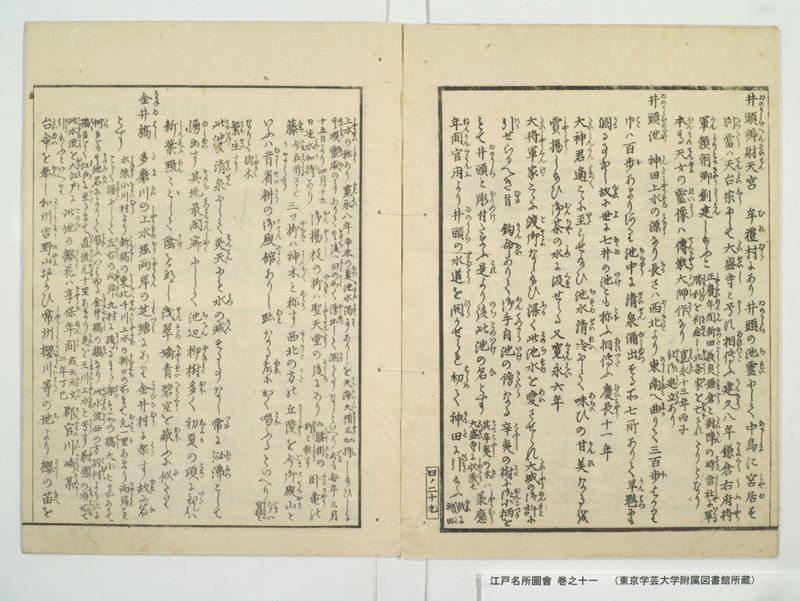
翻刻
【右丁】
井頭弁財天宮(ゐのかしらへんさいてん ) 牟礼村(むれむら)にあり井頭(ゐのかしら)の池霊(ちれい)にして中島(なかしま)に宮居(みやゐ)す
別当(へつたう)は天台宗(てんたいしう)にして大盛寺(たいせいし)と号(かう)す相伝(あひつた)ふ建久(けんきう)八年 鎌倉右府将(かまくらうふしやう)
軍頼朝卿(くんよりともきやう)創建(さうこん)し給ふと《割書:正慶年間(しやうけいねんかん)新田義貞(につたよしさた)鎌倉(かまくら)と対陣(たいちん)の時(とき)当社(たうしや)に軍(いくさ)|勝利(しようり)を祈念(きねん)し北条家(ほうてうけ)を亡(ほろほ)されたりとなり》
本尊(ほんそん)天女(てんによ)の霊像(れいさう)は伝教大師(てんきやうたいし)作(さく)なり《割書:寛永(くわんえい)十三年丙子|社(やしろ)御建立(ここんりふ)あり》
井頭池(ゐのかしらのいけ) 神田上水(かんたしやうすゐ)の源(みなもと)なり長(なか)さは西北(にしきた)より東南(ひかしみなみ)へ曲(まか)りて三百歩( ほ)はかり
幅(はゝ)は百歩( ほ)あまりあり池中(ちちゆう)に清泉(せいせん)涌出(ゆしゆつ)する所七所ありて旱魃(かんはつ)にも
涸(かる)る事なし故(ゆゑ)に世(よ)に《振り仮名:七井の池|なゝゐ いけ》とも称(とな)ふ相伝(あひつた)ふ慶長(けいちやう)十一年
大神君(たいしんくん)適(たま〳〵)こゝに至(いた)らせ給ひ池水(ちすゐ)清冷(せいれい)にして味(あちは)ひの甘美(かんひ)なるを
賞揚(しやうやう)し給ひ御茶(おんちや)の水(みつ)に汲(くま)せらる又 寛永(くわんえい)六年
大将軍家(たいしやうくんけ)こゝに渡御(ときよ)なし給ひ深(ふか)く此(この)池水(ちすゐ)を愛(あい)させられ大城(たいしやう)の御許(おんもと)に
引(ひか)せらるへき旨(むね) 鈞命(きんめい)ありて御手自(おんてつから)池(いけ)の傍(かたはら)なる辛夷(こふし)の樹(き)に御小柄(おんこつか)を
もて井頭(ゐのかしら)と彫付(ほりつけ)たまふ是(これ)より後(のち)此池(このいけ)の名(な)とす《割書:其(その)辛夷(こふし)の木(き)は|大盛寺(たいせいし)に収蔵(しゆさう)す》承応(しやうおう)
年間(ねんかん)官府(くわんふ)より井頭(ゐのかしら)の水道(すゐたう)を開(ひら)かせられ初(はしめ)て神田(かんた)に引(ひき)給ふ《割書:故(ゆゑ)に|神田(かんた)》
【左丁】
《割書:上水(しやうすい)の称(しよう)あり寛永(くわんえい)八年辛未の夏(なつ)池水(ちすゐ)渇(かるゝ)事(こと)ありしを天海大僧正(てんかいたいそうしやう)加持(かち)し給ひしに
|其頃(そのころ)霊威(れいゐ)の事ありて其後(そのゝち)は旧(もと)の如(こと)く湧出(ゆしゆつ)して涸(かる)る事なしといへり今(いま)も毎年三月》
《割書:十五日より四月十五|日迄 水加持(みつかち)あり》御楊枝(おんやうし)の柳(やなき)は聖天堂(しやうてんたう)の後(うしろ)にあり《割書:御腰掛( こしかけ)の|柳(やなき)と称(しよう)す》卧竜(くわりやう)の
藤(ふち)《割書:今(いま)在所(さいしよ)さた|かならす》《振り仮名:三ツ柳| やなき》は神木(しんほく)と称(しよう)す西北(にしきた)の方(かた)の丘陵(きうりやう)を今(いま)御殿山(こてんやま)と
いふは昔(むかし)省耕(せいかう)の御殿館(こてんやかた)ありし跡(あと)なる故(ゆゑ)にかく唱(とな)ふるといへり《割書:今(いま)は|官林(くわんりん)と》
《割書:なりて樹木(しゆもく)|繁生(はんせい)す》
此池(このいけ)は清泉(せいせん)にして炎天(えんてん)にも水(みつ)の減(けん)する事なし常(つね)に泌沸(ひつふつ)として
湧出(ゆしゆつ)す其地(そのち)最(もつとも)閑寂(かんしやく)にして池辺(ちへん)柳樹(やなき)多(おほ)く初夏(しよか)の頃(ころ)に至(いた)れは
新葉(しんえふ)黯々(あん〳〵)として陰(かけ)をなし浅翠(せんすゐ)嬌青(きやうせい)碧空(へきくう)を蔽(おほ)ふに似(に)たり
金井橋(こかねゐはし) 多磨川(たまかは)の上水堀(しやうすゐほり)両岸(りやうかん)の芝塘(しはつゝみ)にあり金井村(こかねゐむら)に架(わた)す故(ゆゑ)に名(な)
とす《割書:水源(みなもと)小川村(をかはむら)より新橋(しんはし)の東北(とうほく)千川上水(せんかはしやうすゐ)の掛口(かけくち)の所まて凡(およそ)一里( り)あまり両岸(りやうかん)こと|ことく桜(さくら)にして左右(さいう)の両岸(りやうかん)九村に跨(またか)るまた架(わた)す所の橋(はし)大小七ケ所ありて》
《割書:何(いつ)れも其(その)地名(ちめい)によりて唱(とな)ふいはゆる金井橋(こかねゐはし)の類(るい)なり此(この)水流(すゐりう)西の方 羽村(はむら)より北に|播(わか)れて江戸(えと)に至(いた)るまで直流(ちよくりう)凡(およそ)十里あまり是(これ)を玉川上水(たまかはしやうすゐ)と号(かう)す承応(しやうおう)の頃(ころ)始(はしめ)て》
《割書:此(この)水流(すゐりう)を大江戸(おほえと)に|引(ひき)給ふといへり》此地(このち)の桜花(さくら)は享保年間(きやうほねんかん)《割書:或云 元文(けんふん)|二年丁巳》郡官(くんくわん)川崎(かはさき)某(それかし)
台命(たいめい)を奉(ほう)し和州(わしう)吉野山(よしのやま)およひ常州(しやうしう)桜川(さくらかは)等(とう)の地(ち)より桜(さくら)の苗(なへ)を
現代語訳
【右丁】
**井の頭弁財天宮**(いのかしらべんざいてんぐう)
牟礼村(むれむら)にあり、井の頭の池は霊験あらたかで、中島(なかしま)に社が鎮座する。別当は天台宗にして大盛寺(たいせいじ)と号す。伝えによれば、建久八年(1197年)に鎌倉右府将軍・頼朝卿が創建されたという。〔割書:正慶年間(1332〜1334年)に新田義貞が鎌倉と対陣した際、当社に戦の勝利を祈念し、北条家を滅ぼしたとのことである。〕本尊の天女の霊像は伝教大師(最澄)の作である。〔割書:寛永十三年(1636年)丙子に社殿の建立があった。〕
**井の頭池**(いのかしらのいけ)
神田上水の源である。長さは西北から東南へと曲がりながら三百歩ほど、幅は百歩あまりある。池の中に清泉が湧き出す箇所が七か所あり、旱魃(かんばつ)の時にも涸れることがない。それゆえ、世に「七井の池(ななゐのいけ)」とも称される。伝えによれば、慶長十一年(1606年)に大神君(徳川家康)がたまたまこの地にお出でになり、池の水が清く冷たく、その味の甘美さをお褒めになり、お茶の水としてお汲みになったという。また、寛永六年(1629年)には大将軍家(徳川家光)がここに渡御なされ、深くこの池水をお気に召されて、大城(江戸城)へ引かせるべき旨の御命があり、御自ら池のほとりの辛夷(こぶし)の木に、御小柄(おんこづか)をもって「井頭」と彫り付けられた。これより後、この池の名とした。〔割書:その辛夷の木は大盛寺に収蔵されている。〕承応年間(1652〜1655年)に幕府より井の頭の水道が開かれ、はじめて神田へ水が引かれた。〔割書:それゆえ「神田〕
【左丁】
〔割書:上水」の称がある。寛永八年(1631年)辛未の夏に池の水が涸れることがあったが、天海大僧正が加持祈祷を行ったところ、その頃霊験のことがあって、その後は元のように湧き出して涸れることがなくなったという。今も毎年三月〕〔割書:十五日より四月十五日まで水加持が行われている。〕
御楊枝(おんようじ)の柳は聖天堂の後ろにある。〔割書:「御腰掛の柳」と称する。〕臥竜(がりゅう)の藤〔割書:今は所在が定かでない。〕、三ツ柳は神木と称する。西北の方の丘陵を今「御殿山」というのは、昔、御殿・館があった跡であるのでそのように唱えるという。〔割書:今は官林となって、樹木が繁茂している。〕
この池は清泉にして、炎天下にも水の減ることがない。常に泌々(ひつひつ)と湧き出す。その地は最も閑静で、池の辺には柳の木が多く、初夏の頃になると、新しい葉が鬱蒼(うっそう)として陰をなし、浅い翠(みどり)の嬌やかな青さが、青空を覆うかのようである。
**金井橋**(こがねいばし)
多摩川の上水堀、両岸の芝塘(しばつつみ)にあり、金井村に架けることからその名とする。〔割書:水源は小川村より新橋の東北、千川上水(せんかわじょうすい)の掛口(かけぐち)のあたりまでおよそ一里あまり、両岸ことごとく桜にして、左右の両岸は九つの村にまたがる。また橋の架かる所は大小七か所あって、〕〔割書:いずれもその地名によって唱える。いわゆる金井橋の類である。この水流は西の方、羽村(はむら)より北に分かれて江戸に至るまで直流およそ十里あまり、これを玉川上水と号する。承応の頃(1652〜1655年)に初めて、〕〔割書:この水流を大江戸へ引かれたという。〕
この地の桜花は享保年間(1716〜1736年)〔割書:或いは元文二年(1737年)丁巳ともいう。〕に郡官・川崎某が台命(将軍の命)を奉じ、大和国(奈良県)の吉野山および常陸国(茨城県)の桜川等の地から桜の苗を〔次頁へ続く〕
英語訳
【Right Page】
**Inokashira Benzaiten Shrine**
Located in Mure Village, the Inokashira Pond is sacred and spiritually potent, with the shrine enshrined on an island (nakajima) within it. The bettō (administrative temple) is of the Tendai sect, called Taisei-ji. According to tradition, the shrine was founded in the eighth year of Kenkyū (1197) by the Governor-General of Kamakura, Lord Minamoto no Yoritomo. [Interlinear note: During the Shōkei era (1332–1334), when Nitta Yoshisada faced off against Kamakura in battle, he prayed at this shrine for victory in war, and succeeded in destroying the Hōjō clan.] The principal image (honzon), a divine statue of a heavenly maiden (tennyo), is said to be the work of Dengyō Daishi (Saichō). [Interlinear note: In the thirteenth year of Kan'ei (1636), the cyclical year hinoe-ne, a new shrine hall was constructed.]
**Inokashira Pond**
This is the source of the Kanda Aqueduct (*Kanda Jōsui*). Stretching from northwest to southeast in a curving fashion, it measures approximately three hundred paces in length and over one hundred paces in width. Within the pond, there are seven spots where fresh springs well up, and the pond never runs dry even during drought. For this reason, it is also known in common parlance as "Nanai no Ike" (the Pond of Seven Wells). According to tradition, in the eleventh year of Keichō (1606), the Great Lord (Tokugawa Ieyasu) happened to visit this place, praised the clarity, coolness, and sweet flavor of the pond water, and had it drawn as water for his tea. Furthermore, in the sixth year of Kan'ei (1629), the Shogun (Tokugawa Iemitsu) made an imperial visit here and was so taken with the pond water that he issued an order to have it conveyed to Edo Castle. He personally carved the characters "Inokashira" (井頭) into a kobus (magnolia kobus) tree by the pond's edge, using his own small knife (kozuka). From this time forth, the pond took this as its name. [Interlinear note: That kobus tree is preserved at Taisei-ji.] During the Jōō era (1652–1655), the shogunal government opened the Inokashira waterway, and water was drawn to Kanda for the first time. [Interlinear note: Hence the name "Kanda]
【Left Page】
[Interlinear note: Aqueduct" (*Kanda Jōsui*). In the summer of the eighth year of Kan'ei (1631), the year kanoto-hitsuji, the pond water once ran dry, but the High Priest Tenkai performed ritual prayers (kaji), and through some spiritual manifestation at that time, the water thereafter resumed welling up as before and has never run dry again. Even today, water-blessing ceremonies (*mizu kaji*) are held every year from the fifteenth day of the third month] [Interlinear note: to the fifteenth day of the fourth month.]
The willow of the御楊枝 (the shogun's toothpick-branch) stands behind the Shōten-dō hall. [Interlinear note: It is called the "御腰掛 (resting) willow."] The "Lying Dragon Wisteria" [Interlinear note: its current location is uncertain], and the "Three Willows" are revered as sacred trees. The hill to the northwest, now called "Gotenyama" (御殿山; Palace Hill), is said to be named so because it was once the site of a palace and manor house. [Interlinear note: It has now become government forest land, thickly overgrown with trees.]
This pond is fed by pure springs and never decreases in water level even on the hottest summer days, perpetually bubbling and welling up. The area is supremely tranquil, with many willows lining the water's edge. When early summer arrives, fresh new leaves form a deep, lush shade, their delicate, shimmering green seemingly veiling the blue sky above.
**Koganei Bridge** (*Koganeibashi*)
Located along the embankments on both banks of the Tama River aqueduct canal, the bridge spans the Koganei Village and takes its name from it. [Interlinear note: From the water source at Ogawa Village, stretching to the northeast of Shinbashi to the intake point of the Senkawa Aqueduct (*Senkawa Jōsui*), the distance is approximately one ri (about 4 km). Both banks are lined entirely with cherry trees, straddling nine villages on either side. Furthermore, there are seven bridges of various sizes spanning the waterway,] [Interlinear note: each named after the locality in which it stands — Koganei Bridge being one such example. This waterway branches northward from Hamura to the west and flows directly into Edo for a distance of approximately ten ri (about 40 km), and is called the Tamagawa Aqueduct (*Tamagawa Jōsui*). It was first] [Interlinear note: diverted into greater Edo during the Jōō era (1652–1655), it is said.]
The cherry blossoms in this area were planted during the Kyōhō era (1716–1736) [Interlinear note: or, according to some, in the second year of Genbun (1737), the year hinoto-mi], when a district official (*gunkan*) by the name of Kawasaki, following the shogun's command, brought cherry sapling trees from Yoshinoyama in Yamato Province (present-day Nara Prefecture) and from Sakuragawa in Hitachi Province (present-day Ibaraki Prefecture) and other places… [*Continued on next page*]