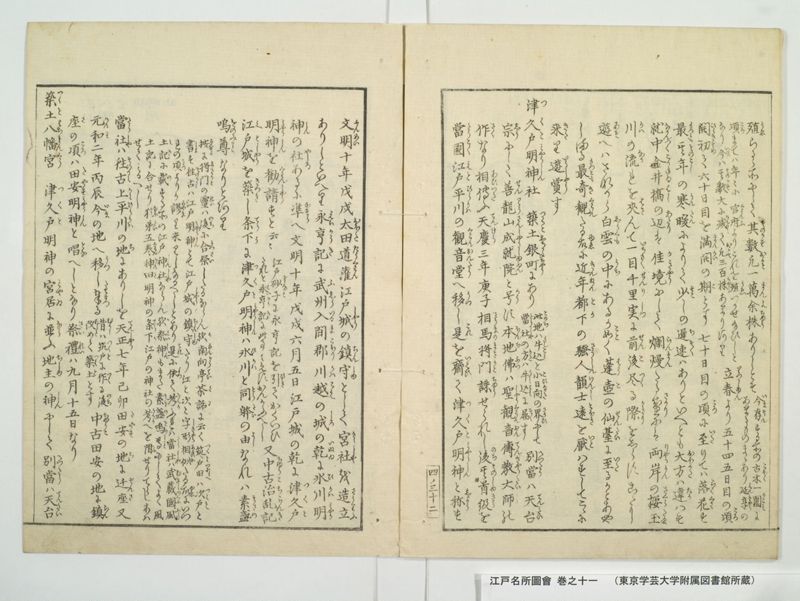
翻刻
【右丁】
殖(うゑ)らるゝ所にして其数(そのかす)凡(およそ)一万余株( まんよちゆう)ありしとそ《割書:今(いま)存(そん)する所の古木(こほく)一囲( かこみ)に|あまるものまゝあり延享(えんきやう)の》
《割書:頃(ころ)まては年々に 官府(くわんふ)よりこれを殖(うゑ)つかせ給ひしと|なり今(いま)は其数(そのかす)大に減(けんし)て凡(およそ)三百株( ちゆう)あまりあり》立春(りつしゆん)より五十四五日目の頃(ころ)
開初(ひらきそめ)て六十日目を満開(まんかい)の期(こ)とす七十日目の頃(ころ)に至(いた)りては落花(らくくわ)す
最(もつとも)其年(そのとし)の寒暖(かんたん)によりて少(すこ)しの遅速(ちそく)はありといへとも大方(おほかた)は違(たか)はす
就中(なかんつく)金井橋(こかねゐはし)の辺(あたり)は佳境(かきやう)にして爛漫(らんまん)たる盛(さかり)には両岸(りやうかん)の桜(さくら)玉(たま)
川(かは)の流(なか)れを夾(はさ)んて一目千里(いちもくせんり)実(しつ)に前後(せんこ)尽(つく)る際(かきり)をしらすこゝに
遊(あそ)へはさなから白雲(しらくも)の中(うち)にあるか如(こと)く蓬壺(はうこ)の仙台(せんたい)に至(いた)るかとあや
しまる最(もつとも)奇観(きくわん)たる故(ゆゑ)に近年(きんねん)都下(とか)の騒人(さうしん)韻士(いんし)遠(とほき)を厭(いと)はすしてこゝに
来(きた)り遊賞(いうしやう)す
津久戸明神社(つくとみやうしん ) 築土銀町(つくとしろかねちやう)にあり《割書:此地(このち)は牛込(うしこみ)と小日向(こひなた)の界(さかひ)にして|当社(たうしや)の方(かた)は牛込(うしこみ)に属(そく)す》別当(へつたう)は天台(てんたい)
宗(しう)にして善竜山(せんりうさん)成就院(しやうしゆゐん)と号(かう)す本地仏(ほんちふつ)は聖観音(しやうくわんおん)伝教大師(てんきやうたいし)の
作(さく)なり相伝(あひつた)ふ天慶(てんけう)三年庚子 相馬将門(さうまのまさかと)誅(ちゆう)せられし後(のち)其(その)首級(しゆきう)を
当国(たうこく)江戸(えと)平川(ひらかは)の観音堂(くわんおんたう)へ移(うつ)し是(これ)を斎(いはひ)て津久戸明神(つくとみやうしん)と称(しよう)す
【左丁】
文明(ふんめい)十年戊戌 太田道灌(おほたたうくわん)江戸城( しやう)の鎮守(ちんしゆ)として宮社(きうしや)を造立(さうりふ)
ありしといへり永享記(えいかうき)に武州(ふしう)入間郡(いるまこほり)川越(かはこえ)の城(しろ)の乾(いぬゐ)に氷川明(ひかはみやう)
神(しん)の社(やしろ)あるに準(なそら)へ文明十年戊戌六月五日江戸城の乾に津久戸(つくと)
明神(みやうしん)を勧請(くわんしやう)すと云々《割書:江戸砂子( すなこ)に永享記を引(ひき)てかくいひ|たれと永享記(えいかうき)に此事みえすかんかふへし》又 中古治乱記(ちゆうこちらんき)
江戸城(えとしやう)を築(きつき)し条下(てうか)に津久戸明神(つくとみやうしん)は氷川(ひかは)と同体(とうたい)の由(よし)なれは素盞(そさの)
鳴尊(をのみこと)なりとあり
《割書:按(あんする)に将門(まさかと)の霊(れい)は後(のち)に合祭(かつさい)したるならん歟(か)南向亭茶話(なんかうていさわ)に云く筑戸(つくと)旧(いにしへ)は次戸(つくと)と|書(しよ)す往古(そのかみ)は江戸明神( みやうしん)とて江戸城( しやう)の鎮守(ちんしゆ)たり江と次と字形(しきやう)相似(あいに)たる故(ゆゑ)にいつ》
《割書:れの頃(ころ)よりか謬(あやま)り来りしなるへしとあり是(これ)に依(よつ)て考(かんか)ふれは当社(たうしや)は武蔵国風(むさしのくにふう)|土記(とき)に載(の)する所の江戸神社( しんしや)ならん歟(か)祭神(さいしん)もまた素盞鳴尊(そさのをのみこと)にしてよく風》
《割書:土記に合せり猶(なほ)第五巻(たい くわん)神田明神(かんた )の条下(てうか)江戸の神社の考(かんか)へを附(ふ)せりてらしあは|せてみるへし》
当社(たうしや)は往古(そのかみ)上平川(かみひらかは)の地(ち)にありしを天正(てんしやう)七年己卯 田安(たやす)の地(ち)に遷座(せんさ)又
元和(けんわ)二年丙辰 今(いま)の地へ移(うつ)し奉(たてまつ)る《割書:昔(むかし)は筑戸(つくと)に作(つく)る後(のち) |改(あらた)めて築土(つくと)とす》中古(ちゆうこ)田安の地に鎮(ちん)
座(さ)の頃(ころ)は田安明神(たやすみやうしん)と唱(とな)へしとなり祭礼(さいれい)は九月十五日なり
築土八幡宮(つくとはちまんくう) 津久戸明神(つくと )の宮居(みやゐ)に並(なら)ふ地主(ちしゆ)の神(しん)にして別当(へつたう)は天台(てんたい)
現代語訳
【右丁】
(桜は)植えられたものであり、その数はおよそ一万余株あったという。〔今も現存する古木で、一抱え以上のものが多くある。延享(1744〜1748)の頃までは、毎年幕府よりこれを植えさせなさったとのことである。今はその数が大いに減り、およそ三百株余りある。〕立春から五十四、五日目の頃に咲き始め、六十日目が満開の時期となる。七十日目の頃には散り始める。もっとも、その年の寒暖によって多少の早い遅いはあるといえども、おおよそは違わない。
とりわけ小金井橋のあたりは景色が格別で、爛漫と咲き誇る盛りには、両岸の桜が玉川の流れを挟んで一望千里、まことに前後の果てを知らない。ここに遊べば、まるで白雲の中にいるようであり、蓬壺(ほうこ)の仙台(神仙の世界)に至ったかと怪しまれるほどの、この上もない奇観である。それゆえ近年、江戸の詩人・風流の士たちが遠い道のりをいとわずここに来て遊び、景色を楽しんでいる。
**津久戸明神社** 築土銀町にある。〔この地は牛込と小日向の境であり、当社の方は牛込に属する。〕別当は天台宗にして、善竜山成就院と号する。本地仏は聖観音で、伝教大師の作と伝えられる。伝えによれば、天慶三年(940)庚子、相馬将門(平将門)が誅せられた後、その首級を当国(武蔵国)江戸・平川の観音堂へ移し、これを祀って津久戸明神と称したという。
【左丁】
文明十年(1478)戊戌、太田道灌が江戸城の鎮守として宮社を造立したと伝えられる。『永享記』に、武州入間郡川越の城の乾(北西)の方角に氷川明神の社があるのに倣い、文明十年戊戌六月五日、江戸城の乾の方角に津久戸明神を勧請したと云々。〔『江戸砂子』に『永享記』を引用してこのように言っているが、『永享記』にはこの事が見えないので考慮すべきである。〕また、『中古治乱記』の江戸城を築いた条には、津久戸明神は氷川と同体であるから素戔嗚尊(すさのおのみこと)であると記されている。
〔按ずるに、将門の霊は後に合祀されたのであろうか。『南向亭茶話』に言う、「筑戸は古くは『次戸』と書いた。往古は『江戸明神』といって江戸城の鎮守であった。『江』と『次』の字形が互いに似ているため、いつの頃からか誤り伝えてきたのであろう」とある。これによって考えれば、当社は『武蔵国風土記』に載せるところの江戸神社であろうか。祭神もまた素戔嗚尊であって、風土記によく合致する。なお、第五巻の神田明神の条に江戸の神社についての考察を附しているので、照らし合わせてみるべきである。〕
当社は往古、上平川の地にあったが、天正七年(1579)己卯、田安の地に遷座し、また元和二年(1616)丙辰、現在の地へ移し奉った。〔昔は「筑戸」と書いたが、後に改めて「築土」とした。〕中古、田安の地に鎮座していた頃は、田安明神と唱えていたとのことである。祭礼は九月十五日である。
**築土八幡宮** 津久戸明神の宮居に並ぶ、地主の神であり、別当は天台〔宗……〕
英語訳
【Right Page】
(The cherry trees) were planted, and their number was said to be approximately ten thousand or more. [Among those that survive today, many old trees exceed one arm's span in girth. Until around the Enkyō era (1744–1748), the shogunate had trees planted here year after year. Now the number has greatly diminished, with approximately three hundred trees remaining.] Around the fifty-fourth or fifty-fifth day after the beginning of spring (*risshun*), they begin to open, and the sixtieth day marks the period of full bloom. Around the seventieth day, the petals begin to fall. Depending on the warmth or cold of that particular year, there may be some slight variation in timing, but by and large it holds true.
Above all, the area around Koganei Bridge is of particularly exquisite beauty. At the height of the profuse bloom, the cherry trees on both banks flank the flow of the Tamagawa, stretching a thousand *ri* before the eye, with no discernible end in sight ahead or behind. To stroll here is much like being within white clouds, and one is left to marvel whether one has arrived at the immortal palace of *Hōko* — it is truly a spectacle of the highest order. For this reason, in recent years poets and men of refined taste from the capital think nothing of the long journey and come here to enjoy the scenery.
**Tsukudo Myōjin Shrine** — Located in Tsukudo Shirokanechō. [This area lies on the border of Ushigome and Kohinata, with the shrine itself belonging to the Ushigome district.] The *bettō* (administrative temple) is of the Tendai sect, known as Senryūzan Jōjuin. The *honji* Buddha (the Buddhist counterpart of the deity) is the Shō Kannon, said to have been carved by the Great Master Dengyō (Saichō). According to tradition, in the third year of Tengyō (940), the year of *Kanoe-ne*, after Soma no Masakado (Taira no Masakado) was slain, his severed head was transferred to the Kannon Hall at Hirakawa in Edo in this province, enshrined there, and came to be called Tsukudo Myōjin.
【Left Page】
It is said that in the tenth year of Bunmei (1478), the year of *Tsuchinoe-Inu*, Ōta Dōkan constructed the shrine as the guardian deity (*chinju*) of Edo Castle. The *Eikyōki* states that, following the example of the Hikawa Myōjin Shrine located to the northwest (*inu-i*) of Kawagoe Castle in Iruma District, Musashi Province, Tsukudo Myōjin was invited (*kanjō*) to the northwest of Edo Castle on the fifth day of the sixth month of Bunmei 10, year of *Tsuchinoe-Inu*, and so forth. [The *Edo Sunago* cites the *Eikyōki* to make this claim, but since this matter does not appear in the *Eikyōki* itself, it warrants further consideration.] Furthermore, in the *Chūko Chiranki*, in the section on the construction of Edo Castle, it states that Tsukudo Myōjin is of the same essence (*dōtai*) as Hikawa and is therefore Susanoo no Mikoto.
[Upon reflection, the spirit of Masakado was most likely enshrined here jointly at a later date. The *Nankōtei Sawa* states: "Tsukudo was written in antiquity as *Tsukuto* (次戸). In ancient times it was called 'Edo Myōjin' and served as the guardian deity of Edo Castle. Because the characters 江 (*e*) and 次 (*tsu*) are similar in form, it must have come to be mistakenly transmitted from some point in time." Considering this, the shrine may well be the Edo Shrine recorded in the *Musashi no Kuni Fudoki*. The enshrined deity is also Susanoo no Mikoto, which accords well with the *Fudoki*. See also the notes on the Edo shrine appended to the entry on Kanda Myōjin in Volume Five for further reference.]
The shrine was originally located in the area of Kami-Hirakawa, but in the seventh year of Tenshō (1579), the year of *Tsuchinoto-U*, it was relocated to the Tayasu area; and again in the second year of Genna (1616), the year of *Hinoe-Tatsu*, it was moved to its present location. [In former times it was written as 筑戸 (*Tsukuto*), later revised to 築土 (*Tsukudo*).] During the middle ages, when enshrined at the Tayasu site, it was called Tayasu Myōjin. The festival is held on the fifteenth day of the ninth month.
**Tsukudo Hachiman Shrine** — Adjacent to the precinct of Tsukudo Myōjin, this is the shrine of the local tutelary deity (*chishu no kami*), with the *bettō* being of the Tendai [sect…]