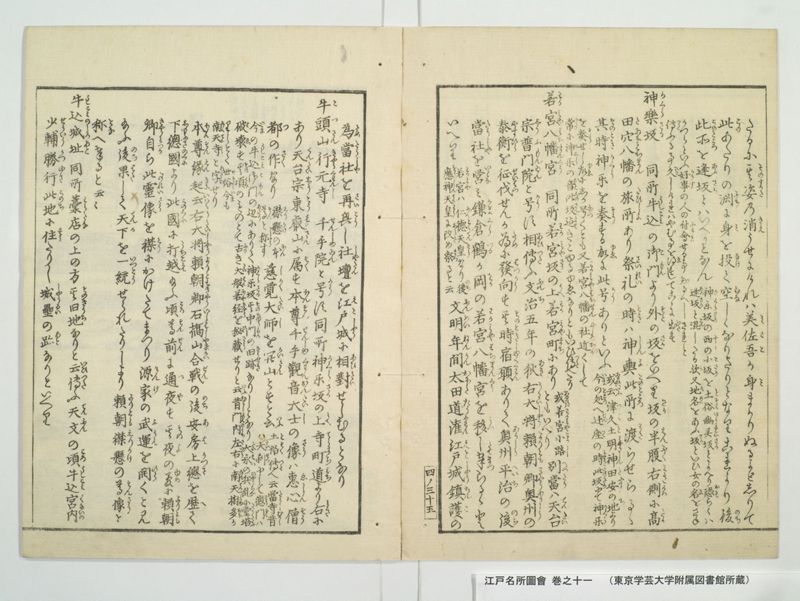
翻刻
【右丁】
たるに其姿(そのすかた)の消(きえ)うせにけれは美佐吾(みさこ)か身(み)まかりぬるよとしりて
此(この)あたりの淵(ふち)に身(み)を投(なけ)て空(むな)しくなりたりとなりこれより後(のち)
此所(このところ)を逢坂(あふさか)とはいへりとなん《割書:神楽坂(かくらさか)の西(にし)の小坂(こさか)を土俗(とそく)幽霊坂(ゆうれいさか)とよへり恐(おそ)らくは|逢坂(あふさか)と混(こん)したる歟(か)又 地名(ちめい)を《振り仮名:あふ坂| さか》といひ女の名(な)をさね》
《割書:かつらといふ好事(かうす)の人の付会(ふくわい)せる事知るへしされと|伝(つた)ふる事 久(ひさ)しけれはやむ事を得(ゑ)すしてこゝに出(いた)す》
神楽坂(かくらさか) 同所 牛込(うしこみ)の御門(こもん)より外(そと)の坂(さか)をいへり坂(さか)の半腹(はんふく)右側(みきかは)に高(たか)
田穴八幡(たあなはちまん)の旅所(たひしよ)あり祭礼(さいれい)の時(とき)は神輿(しんよ)此所(このところ)に渡(わた)らせらるゝ
其時(そのとき)神楽(かくら)を奏(そう)する故(ゆゑ)に此号( かう)ありといふ《割書:或云(あるひはいふ)津久土明神(つくとみやうしん)田安(たやす)の地(ち)より|今(いま)の処(ところ)へ遷座(せんさ)の時(とき)此坂(このさか)にて神楽(かくら) 》
《割書:を奏(そう)せし故(ゆゑ)にしか号(なつ)くとも又 若宮八幡(わかみやはちまん)の社(やしろ)近(ちか)くして|常(つね)に神楽(かくら)の音(おと)此坂(このさか)迄(まて)きこゆるゆゑなりともいひ伝(つた)へたり》
若宮八幡宮(わかみやはちまんくう) 同所 若宮坂(わかみやさか)の上(うえ)若宮町(わかみやまち)にあり《割書:或(あるひは)若宮小路(わかみやこうし)|ともいへり》別当(へつたう)は天台(てんたい)
宗(しう)普門院(ふもんゐん)と号(かう)す相伝(あひつた)ふ文治(ふんち)五年の秋(あき)右大将(うたいしやう)頼朝卿(よりともきやう)奥州(あうしう)の
泰衡(やすひら)を征伐(せいはつ)せんか為(ため)に発向(はつかう)す其時(そのとき)宿願(しゆくくわん)ありて奥州(あうしう)平治(へいち)の後(のち)
当社(たうしや)を営(いとな)み鎌倉(かまくら)《振り仮名:鶴か岡|つる おか》の若宮八幡宮(わかみやはちまんくう)を移(うつ)し奉(たてまつ)らるゝと
いへり《割書:若宮(わかみや)は仁徳天皇(にんとくてんわう)なり後(のち)|応神天皇(をうしんてんわう)に改(あらた)め祭(まつ)ると云》文明年間(ふんめいねんかん)太田道灌(おほたたうくわん)江戸城(えとしやう)鎮護(ちんこ)の
【左丁】
為(ため)当社(たうしや)を再興(さいこう)し社壇(しやたん)を江戸城(えとしやう)に相対(あひたい)せしむるとなり
牛頭山(こつさん)行元寺(きやうくわんし) 千手院(せんしゆゐん)と号(かう)す同所 神楽坂(かくらさか)の上(うえ)寺町道(てらまちみち)より右(みき)に
あり天台宗(てんたいしう)東叡山(とうえいさん)に属(そく)す本尊(ほんそん)千手観音大士(せんしゆくわんおんたいし)の像(さう)は恵信僧(ゑしんそう)
都(つ)の作(さく)なり《割書:《振り仮名:襟懸の本|えりかけ ほん》|尊(そん)と称(しよう)す》慈覚大師(しかくたいし)を開山(かいさん)とすと云(いふ)《割書:土俗(とそく)伝(つた)へ云 当寺(たうし)昔(むかし)
|は大刹(たいせつ)にして総門(さうもん)は》
《割書:今(いま)の牛込御門(うしこみこもん)の辺(あたり)にありて神楽坂(かくらさか)其(その)中門(ちゆうもん)の旧跡(きうせき)なりしとなり大永(たいえい)の兵乱(ひやうらん)に堂塔(たうたふ) |破壊(はゑ)す其頃(そのころ)のものとて古(ふる)き大般若経(たいはんにやきやう)を秘蔵(ひさう)せりと云(いふ)昔(むかし)門内(もんのうち)左右(さいう)に南天樹(なんてんしゆ)多(おほ)か》
《割書:りしとて世俗(せそく)今(いま)も|南天寺(なんてんし)と字(あさな)せり》
本尊縁起云(ほんそんえんきにいはく)右大将(うたいしやう)頼朝卿(よりともきやう)石橋山合戦(いしはしやまかつせん)の後(のち)安房(あは)上総(かつさ)を歴(へ)て
下総国(しもふさのくに)より此国(このくに)に打越(うちこえ)給ふ頃(ころ)尊前(そんせん)に通夜(つや)す其夜(そのよ)の夢(ゆめ)に頼朝(よりとも)
卿(きやう)自(みつか)ら此(この)霊像(れいさう)を襟(えり)にかけたてまつり源家(けんけ)の武運(ふうん)を開(ひら)くと見
給ふ後(のち)果(はた)して天下(てんか)を一統(いつとう)せられたりしより《振り仮名:頼朝襟懸の尊像|よりともえりかけ そんさう》と
称(とな)へ奉ると云々
牛込城址(うしこみのしろあと) 同所 稾店(わらたな)の上の方 其(その)旧地(きうち)なりと云伝(いひつた)ふ天文(てんふん)の頃(ころ)牛込宮内(うしこみくないの)
少輔勝行(せういうかつゆき)此地(このち)に住(すみ)たりし城塁(しやうるい)の跡(あと)なりといへり
現代語訳
【右丁】
……(夢の中で美佐吾に会えたと思い、しばしむつみ語らおうとした)ところ、その姿が消え失せてしまった。美佐吾が亡くなっていたのだと悟り、さねかずらはこの辺りの淵に身を投げて、はかなくなってしまったという。それ以来、この場所を「逢坂(あふさか)」と呼ぶようになったとのことである。
(神楽坂の西にある小さな坂を、土地の人々は「幽霊坂」と呼んでいる。おそらく逢坂と混同されたものであろう。また、地名を「逢坂」と言い、女の名を「さねかずら」というのは、好事家が後から結びつけた話であることは知るべきである。しかしながら、伝え来ること久しいので、やむを得ずここに記す。)
---
**神楽坂** 同所・牛込御門より外側の坂のことをいう。坂の中腹の右手に高田穴八幡の旅所がある。祭礼の際には神輿がこの場所に渡御される。その時に神楽を奏するため、この名があるといわれる。
(ある説によれば、津久土明神が田安の地から現在の場所へ遷座の際、この坂で神楽を奏したためにそのように名付けられたともいう。また、若宮八幡の社が近くにあって、常に神楽の音がこの坂まで聞こえてくるためだとも伝えられている。)
---
**若宮八幡宮** 同所・若宮坂の上、若宮町にある(あるいは若宮小路ともいう)。別当は天台宗・普門院と号す。伝えによれば、文治五年(1189)の秋、右大将・頼朝卿が奥州の泰衡を征伐しようと出陣した際、宿願があって、奥州平定の後に当社を建立し、鎌倉の鶴ヶ岡の若宮八幡宮を勧請し奉ったとのことである。
(若宮は仁徳天皇であるが、のちに応神天皇に改めて祀るようになったと云う。)
文明年間、太田道灌は江戸城鎮護のため、
【左丁】
当社を再興し、社壇を江戸城と向かい合わせるようにしたとのことである。
---
**牛頭山行元寺** 千手院と号す。同所・神楽坂の上、寺町道より右にある。天台宗にして東叡山(寛永寺)に属す。本尊の千手観音大士の像は恵心僧都(源信)の作である。(「襟懸けの本尊」と称される。)慈覚大師を開山とすると言われる。
(土俗の伝えによれば、当寺はかつては大きな寺院であって、総門は今の牛込御門の辺りにあり、神楽坂はその中門の旧跡であったとのこと。大永の兵乱(1521年頃)で堂塔が破壊された。その頃のものとして、古い大般若経を秘蔵しているという。昔、門の内の左右に南天の木が多くあったことから、世俗では今も「南天寺」と呼んでいる。)
本尊の縁起に云う——右大将・頼朝卿が石橋山の合戦の後、安房・上総を経て、下総国からこの国(武蔵)へ打ち越えられた頃、(この寺の)尊前に通夜された。その夜の夢に、頼朝卿がみずからこの霊像を襟にかけ奉り、源氏の武運を開くと御覧になった。後にはたして天下を一統なされたことから、「頼朝襟懸けの尊像」と称え奉るとのことである。
---
**牛込城址** 同所・稾店(わらたな)の上の方がその旧地であると伝えられている。天文年間(1532〜1555)の頃、牛込宮内少輔勝行がこの地に住んでいた城塁の跡であるといわれる。
英語訳
【Right Page】
…When (Sanekazura, believing she had found Misako in her dream) was on the verge of enjoying a tender reunion, his figure vanished before her eyes. Realizing then that Misako had truly died, she threw herself into the deep pool nearby and perished. It is said that from this time on, the place came to be called *Ōsaka* ("Meeting Slope").
(A small slope to the west of Kagurazaka is called *Yūrei-zaka* ["Ghost Slope"] by the local people — this is likely a confusion with *Ōsaka*. One should also be aware that linking the place name *Ōsaka* ["Meeting Slope"] with the woman's name *Sanekazura* is almost certainly the fanciful invention of some enthusiastic storyteller. Nevertheless, as the tale has been handed down for so long, we include it here despite our reservations.)
---
**Kagura-zaka** — This refers to the slope outside the Ushigome Gate in the same district. Halfway up the slope on the right side is the *tabisho* (temporary resting place for a portable shrine) of Takada Ana Hachiman. During the festival, the sacred palanquin (*mikoshi*) is carried in procession to this spot, and *kagura* (sacred Shinto music and dance) is performed there — hence the name.
(According to one account, when the Tsukuto Myōjin deity was relocated from Tayasu to its present site, *kagura* was performed on this slope, and thus the slope received its name. Another tradition holds that the Wakamiya Hachiman Shrine is nearby, and the sounds of *kagura* music could always be heard as far as this slope — and hence the name.)
---
**Wakamiya Hachiman Shrine** — Located in the same district, at the top of Wakamiya-zaka in Wakamiya-chō (also referred to as Wakamiya Kōji). Its administrative temple (*bettō*) is the Tendai sect's Fumon'in. According to tradition, in the autumn of the fifth year of Bunji (1189), the Right General Lord Yoritomo set out to subjugate Fujiwara no Yasuhira of Ōshū (northern Honshu). He had made a vow that after the pacification of Ōshū, he would establish this shrine and enshrine therein the Wakamiya Hachiman deity from Tsurugaoka in Kamakura.
(The *wakamiya* ["young shrine"] deity is Emperor Nintoku; later, it is said, worship was changed to Emperor Ōjin.)
During the Bunmei era, Ōta Dōkan rebuilt the shrine for the protection of Edo Castle,
【Left Page】
and arranged the shrine precinct to face Edo Castle directly.
---
**Gozusan Gyōganji Temple** — Also called Senjuin. Located in the same district, above Kagura-zaka, to the right of the temple-town road (*teramachi michi*). It belongs to the Tendai sect, affiliated with Tōeizan (Kan'eiji Temple). The principal image — a statue of Thousand-Armed Kannon (Senju Kannon Daishi) — was carved by Eshin Sōzu (Genshin). (It is venerated under the name "Yoritomo's Collar-Hanging Statue.") The temple claims Jikaku Daishi (Ennin) as its founder.
(Local tradition holds that this temple was once a great monastery, with its main gate (*sōmon*) standing around the present-day Ushigome Gate, and that Kagura-zaka itself was the site of the middle gate (*chūmon*). The halls and pagodas were destroyed in the military disturbances of the Daiei era (around 1521). An ancient copy of the *Dai Hannya-kyō* (the Great Prajñāpāramitā Sūtra) from that period is said to be kept here as a treasure. As there were once many nandina (*nanten*) trees growing on both sides of the gate, the common people still refer to the temple as *Nantenji* ["Nandina Temple"].)
The temple's account of the principal image reads as follows: After the Battle of Ishibashiyama, Lord Yoritomo passed through Awa and Kazusa provinces and was making his way from Shimōsa Province into this province (Musashi). He spent a night in vigil (*tsuya*) before this sacred image. That night, he dreamed that he himself placed the sacred image around his own collar and thereby opened up the martial fortunes of the Minamoto clan. It later came to pass exactly so — he unified the realm under his rule — and therefore the image has ever since been venerated as "The Sacred Image That Yoritomo Wore at His Collar."
---
**Site of Ushigome Castle** — It is traditionally said that the area above *Waratana* (the straw goods market) in the same district is the former site of the castle. It is said to be the remains of a fortification where Ushigome Kunai-no-shō Katsuyuki resided during the Tenbun era (1532–1555).