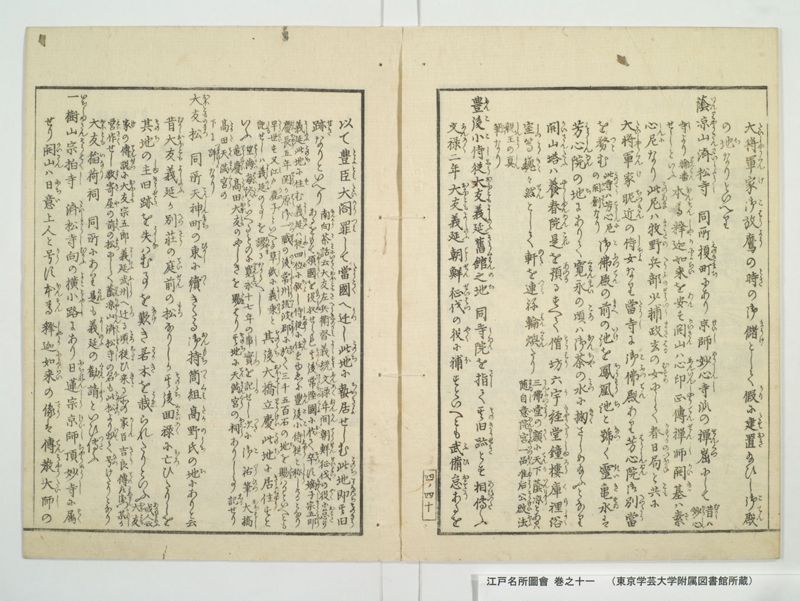
翻刻
【右丁】
大将軍家(たいしやうくんけ)御放鷹(こはうよう)の時(とき)の御儲( まうけ)として仮(かり)に建置(たておき)給ひし御殿(こてん)
の地(ち)なりといへり
䕃凉山(いんりやうさん)済松寺(さいしようし) 同所 榎町(えのきまち)にあり京師(けいし)妙心寺派(めうしんし )の禅崫(せんくつ)にして《割書:昔(むかし)は|妙心(めうしん)》
《割書:寺(し)より輪番(りんはん)|せしといふ》本尊(ほんそん)釈迦如来(しやかによらい)を安(あん)す開山(かいさん)は心印正伝禅師(しんいんしやうてんせんし)開基(かいき)は素(そ)
心尼(しんに)なり此尼(このあま)は牧野兵部少輔政玄(まきのへうふのせういうまさはる)の女(むすめ)にして春日局(かすかのつほね)と共(とも)に
大将軍家(たいしやうくんけ)昵近(ちつきん)の侍女(しちよ)なり当寺(たうし)に御仏殿(こふつてん)あり芳心院(はうしんゐん)御別当( へつたう)
を務(つと)む《割書:此寺(このてら)は芳心尼(はうしんに)|の開創(かいさう)なり》御仏殿(こふつてん)の前(まへ)の池(いけ)を鳳凰池(ほうわうち)と号(なつ)く霊亀水(れいきすゐ)は
芳心院(はうしんゐん)の地(ち)にありて寛永(くわんえい)の頃(ころ)は御茶(おんちや)の水(みつ)に掬(きく)さしめ給ふとなり
開山塔(かいさんたふ)は養春院(やうしゆんゐん)是(これ)を預(あつか)るすへて僧坊(そうはう)六宇( う)経堂(きやうたう)鐘楼(しゆろう)庫裡(くり)浴(よく)
室(しつ)等(たう)巍々然(きゝせん)として軒(のき)を連(つら)ね輪煥(りんくわん)たり《割書:三仏堂(さんふつたう)の額(かく)に天下䕃凉(てんかいんりやう)とあるは|随自意院宮一品准后公啓(すゐしいゐんのみやいつほんしゆこうこうけいほふ)》
《割書:親王(しんわう)の真(しん)
|筆(ひつ)なり》
豊後小侍従大友義延(ふんここししうおほともよしのふ)旧館之地(きうくわんのち) 同 寺院(しゐん)を指(さし)て其(その)旧跡(きうせき)とす相伝(あひつた)ふ
文禄(ふんろく)二年 大友義延(おほともよしのふ)朝鮮征伐(てうせんせいはつ)の役(やく)に補(ほ)すといへとも武備(ふひ)怠(おこたり)あるを
【左丁】
以て豊臣大閤(とよとみたいかう)罪(つみ)して当国(たうこく)へ遷(うつ)し此地(このち)に蟄居(ちつきよ)せしむ此地(このち)即(すなはち)其(その)旧(きう)
跡(せき)なりといへり《割書:南向茶話云(なんかうさわにいはく)大友左兵衛督義統(おほともさへうゑのかみよしすみ)文禄年間(ふんろくねんかん)朝鮮征伐(てうせんせいはつ)の役(やく)に怠(おこた)り|あるをもて領国(りやうこく)を没収(もつしゆ)せられ其後(そのゝち)常陸国(ひたちのくに)に於(おい)て卒(そつ)す嫡子(ちやくし)宗五郎(そうこらう) 》
《割書:義延(よしのふ)此地(このち)に住(す)む義延(よしのふ)は従四位(しゆしゐ)に叙(ちよ)し侍従(ししゅう)に任(にん)すゆゑに豊後小侍従(ふんここししゆう)と称(しよう)しけるとなり|慶長(けいちやう)五年《振り仮名: 関か原|せきかはら》御一戦(こいつせん)の後(のち)常州(しやうしう)筑波郡(つくはこほり)に於(おい)て三千五百石の地(ち)を賜(たま)はるといへとも》
《割書:早世(さうせい)す又 《振り仮名:江戸鹿子|え かのこ》といへる草紙(さうし)に義乗(よしのり)と|記(しる)せしは義延(よしのふ)の事を謬(あやま)るなるへし》其後(そのゝち)大橋立慶(おほはしりうけい)此地(このち)に居住(きよちゆう)すと
いふ《割書:望海毎談(はうかいはいたん)といへるものに寛永(くわんえい)十七年の事実(ししつ)を記(しる)せし次(つき)に御祐筆(こいうひつ)大橋(おほはし) |竜慶(りうけい)高田(たかた)大友(おほとも)のやしきを賜(たま)はり其地(そのち)に天満宮(てんまんぐう)の祠(ほこら)ありし事 記(しる)せり》
《割書:高田天満宮(たかたてんまんくう)の|下に詳(つまひらか)なり》
大友松(おおとものまつ) 同所 天神町(てんしんまち)の東(ひかし)に続(つゝ)きたる御持筒組(おんもちつゝくみ)高野氏(たかのうち)の地(ち)にありと云
昔(むかし)大友義延(おほともよしのふ)か別荘(へつさう)の庭前(ていせん)の松(まつ)なりしか其後(そのゝち)回録(くわいろく)に亡(ほろ)ひたりしを
其地(そのち)の主(しゆ)旧跡(きうせき)を失(うしな)はむ事を歎(なけ)き若木(わかき)を栽(うゑ)られたりといふ《割書:或人云(あるひといふ)|大友(おほとも)》
《割書:家(け)の伝説(てんせつ)に大友宗五郎義延(おほとも よしのふ)武州(ふしう)へ遷(うつ)る頃(ころ)従(したか)ひ来(きた)る所の家臣(かしん)吉良伝左衛門(きらてんさゑもん)某(それかし)か|営作(えいさく)せし数寄屋(すきや)の前(まえ)の松(まつ)にして䕃凉山(いんりやうさん)済松寺(さいしようし)の名(な)も此松(このまつ)より出(いて)て号(なつ)けたりとなり》
大友稲荷祠(おほともいなり ) 同所にあり是(これ)も義延(よしのふ)の勧請(くわんしやう)といひ伝(つた)ふ
一樹山(いちしゆさん)宗柏寺(そうはくし) 済松寺(さいしようし)向(むかふ)の横小路(よここふし)にあり日蓮宗(にちれんしう)京師(けいし)頂妙寺(ちやうめうし)に属(そく)
せり開山(かいさん)は日意上人(にちい )と号(かう)す本尊(ほんそん)釈迦如来(しやかによらい)の像(さう)は伝教大師(てんきやうたいし)の
現代語訳
## 【右丁】
**蔭涼山 済松寺** 同所・榎町にある。京都妙心寺派の禅刹であり、〔割書:昔は妙心寺より輪番で住職を務めたという。〕本尊は釈迦如来を安置する。開山は心印正伝禅師、開基は素心尼である。この尼は牧野兵部少輔政玄の娘であり、春日局とともに将軍家に親しく仕えた侍女である。当寺には御仏殿があり、芳心院が御別当を務める。〔割書:この寺は芳心尼の開創である。〕御仏殿の前の池を鳳凰池と称する。霊亀水は芳心院の地にあり、寛永の頃はお茶の水として汲ませ給うたという。
開山塔は養春院がこれを預かる。すべて僧坊六棟、経堂・鐘楼・庫裡・浴室などが、威風堂々と軒を連ねて輪奐たる〔立派な〕たたずまいである。〔割書:三仏堂の額に「天下蔭涼」とあるのは、随自意院宮一品准后公啓親王の真筆である。〕
---
**豊後小侍従 大友義延旧館の地** 同〔済松寺〕を指してその旧跡とする。伝えによれば、文禄二年(1593)、大友義延は朝鮮征伐の役に従軍したが、武備を怠ったとして豊臣太閤に罪せられ、当国(武蔵国)へ移され、この地に蟄居させられた。この地すなわちその旧跡であるという。
〔割書:『南向茶話』にいう——大友左兵衛督義統は、文禄年間の朝鮮征伐の役に怠りがあったとして領国を没収され、その後、常陸国において卒す。嫡子・宗五郎義延はこの地に住んだ。義延は従四位に叙せられ侍従に任じられたため、「豊後小侍従」と称されたという。慶長五年(1600年)の関ヶ原の御一戦の後、常州筑波郡において三千五百石の地を賜ったというが、早世した。また『江戸鹿子』という草紙に「義乗」と記しているのは、義延のことを誤ったものであろう。〕
## 【左丁】
その後、大橋竜慶がこの地に居住したという。〔割書:『望海毎談』というものに、寛永十七年(1640年)の事実を記した次に、御祐筆・大橋竜慶が高田の大友のやしきを賜り、その地に天満宮の祠があったことが記されている。〕〔割書:高田天満宮の条に詳しい。〕
---
**大友松** 同所・天神町の東に続く御持筒組・高野氏の地にあるという。昔、大友義延の別荘の庭前の松であったが、その後、火災に遭って失われたため、その地の主が旧跡を失うことを嘆き、若木を植えたという。〔割書:ある人がいう——大友家の伝説によれば、大友宗五郎義延が武州へ移る頃、従ってきた家臣・吉良伝左衛門某が造営した数寄屋の前の松であり、蔭涼山済松寺の名もこの松より出て号けられたという。〕
---
**大友稲荷祠** 同所にある。これも義延の勧請であると伝えられている。
---
**一樹山 宗柏寺** 済松寺向かいの横小路にある。日蓮宗・京都頂妙寺に属する。開山は日意上人と号す。本尊・釈迦如来の像は伝教大師の……〔以下、次丁へ続く〕
---
〔※冒頭の一節——将軍家御放鷹の時の御設けとして仮に建て置かれた御殿の地なりといえり。〕
英語訳
## [Right Page]
*(Prefatory note, continued from the previous entry:)*
It is said that this was the site of a temporary pavilion (*goten*) erected as a facility (*mōke*) for the Shogunal household during falconry excursions (*gohōyō*).
---
**Inryōzan Saishōji Temple** — Located in Enokimachi, in the same district. It is a Zen temple belonging to the Myōshinji branch of Rinzai Zen from Kyoto. [Marginal note: *In former times, the head priest was appointed in rotation from Myōshinji.*] The principal image enshrined here is Śākyamuni (Shaka Nyorai). The founder (*kaisan*) is the Zen master Shin'in Shōden Zenji, and the founding patron (*kaiki*) is the nun Soshin-ni. This nun was a daughter of Makino Hyōbu-no-shōyū Masaharu, and together with Kasuga no Tsubone, she served as a lady-in-waiting in close attendance upon the Shogunal household. The temple has an *Ofutsuden* (Shogunal Buddha Hall), administered by the Hōshin'in sub-temple. [Marginal note: *This temple was founded by the nun Hōshin-ni.*] The pond in front of the *Ofutsuden* is called the Hōōchi (Phoenix Pond). The Reiki-sui (Auspicious Tortoise Spring) is located within the precincts of Hōshin'in, and it is said that during the Kan'ei era, water was drawn from it for the Shogun's tea.
The founder's memorial stupa (*kaisantō*) is under the care of the Yōshun'in sub-temple. Altogether, there are six monks' quarters, along with a sutra hall, a bell tower, a kitchen quarters, a bathhouse, and other structures — all standing in magnificent rows, presenting an imposing and splendid appearance. [Marginal note: *The tablet on the Sanbutsudō (Three Buddhas Hall) reading "Tenka Inryō" ("Shade and Cool for All Under Heaven") is in the personal brushwork of Imperial Prince Zuishii'in-no-Miya, First Rank, Jugo Kōkei Hōshin'nō.*]
---
**Site of the Former Residence of Bungo Kojijū Ōtomo Yoshinobu** — The temple [Saishōji] itself is identified as the site of his former estate. According to tradition, in the second year of Bunroku (1593), Ōtomo Yoshinobu took part in the Korean campaign, but was punished by the Taikō Toyotomi [Hideyoshi] for negligence in military preparedness, was transferred to this province (Musashi), and was placed under house confinement (*chikkyō*) at this location. This place is said to be the remnant of that former residence.
[Marginal note: *The* Nankō Sawa *states: Ōtomo Saheie-no-kami Yoshimune, during the Korean campaign of the Bunroku years, had his domain confiscated for dereliction of duty, and thereafter died in Hitachi Province. His eldest son, Sōgorō Yoshinobu, resided at this place. Because Yoshinobu was raised to Junior Fourth Rank and appointed as Jijū (Chamberlain), he was styled "Bungo Kojijū" (the Minor Chamberlain of Bungo). After the Battle of Sekigahara in the fifth year of Keichō (1600), he was granted 3,500 koku of land in Tsukuba District, Hitachi Province, but died young. Also, the booklet known as the* Edo Kanoko *refers to him as "Yoshinori," which appears to be an error for Yoshinobu.*]
## [Left Page]
Thereafter, Ōhashi Ryūkei is said to have resided at this location. [Marginal note: *In the work known as the* Bōkai Maidan*, following the account of events from the seventeenth year of Kan'ei (1640), it is recorded that the Shogunal secretary (*oyūhitsu*) Ōhashi Ryūkei was granted the former Ōtomo estate in Takada, and that there was a small shrine to Tenjin (Tenmangu) on the property.*] [Marginal note: *See the entry on Takada Tenmangu for further detail.*]
---
**The Ōtomo Pine** — Said to be located on the grounds of the Omochidzutsu-gumi (Musket-bearer Corps) retainer of the Takano clan, to the east of Tenjin-machi in the same district. It was formerly the pine tree that stood in the garden of Ōtomo Yoshinobu's villa, but was subsequently lost to fire. The owner of the land, lamenting the loss of this historic remnant, planted a young tree in its place. [Marginal note: *One person relates: According to a tradition preserved in the Ōtomo family, it was the pine tree standing before the tea-ceremony arbour (*sukiya*) built by the retainer Kira Den'zaemon (whose personal name is unknown), who followed Ōtomo Sōgorō Yoshinobu when he was relocated to Musashi Province; and it is said that the name of Inryōzan Saishōji temple itself derives from this very pine tree.*]
---
**Ōtomo Inari Shrine** — Located in the same district. It is also said by tradition to have been established (*kanjō*) by Yoshinobu.
---
**Ichijuzan Sōhakuji Temple** — Located in a side lane (*yokokōji*) facing Saishōji. It belongs to the Nichiren sect, affiliated with Chōmyōji in Kyoto. The founder (*kaisan*) bears the title of the Venerable Nichii. The principal image, a statue of Śākyamuni, is [said to have been carved by] Dengyō Daishi... *(continued on the following page)*