翻刻
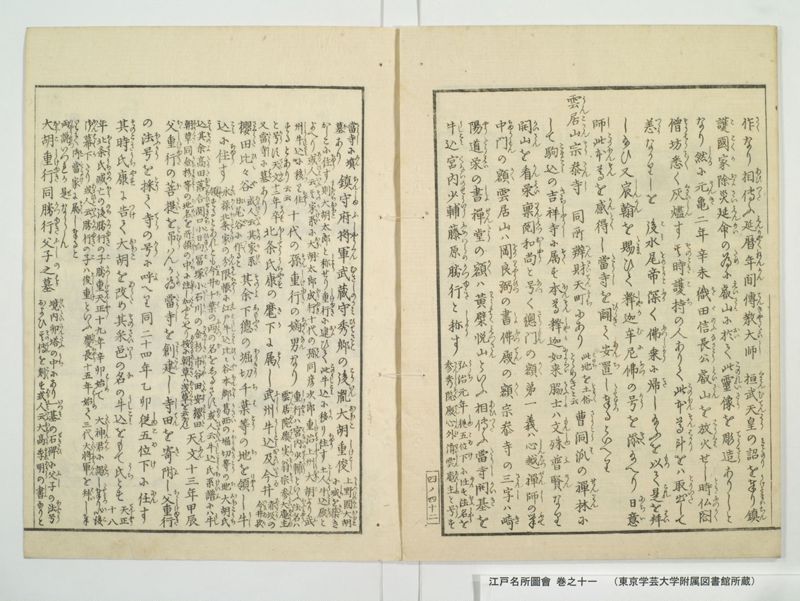
【右丁】
作(さく)なり相伝(あひつた)ふ延暦年間(えんりやくねんかん)伝教大師(てんきやうたいし) 桓武天皇(くわんむてんわう)の詔(みことのり)を承(うけたまは)り鎮(ちん)
護国家(ここくか)除災延命(ちよさいえんめい)の為(ため)に叡山(えいさん)に於(おい)て此(この)霊像(れいさう)を彫造(てうさう)ありしと
なり然(しかる)に元亀(けんき)二年辛未 織田信長公(をたのふなかこう)叡山(えいさん)を放火(はうくわ)せし時(とき)仏閣(ふつかく)
僧坊(そうはう)悉(こと〳〵)く灰燼(くわいしん)す其時(そのとき)護持(こち)の人ありて此(この)本尊(ほんそん)計(はかり)をは取出(とりいた)して
恙(つゝか)なかりしを 後水尾帝(こみをのみかと)深(ふか)く仏乗(ふつしよう)に帰(き)し給ふを以(もつ)て是(これ)を拝(はい)
し給ひ又 宸翰(しんかん)を賜(たま)ひて釈迦牟尼仏(しやかむにふつ)の号(かう)を添(そへ)給へり日意(にちい)
師(し)此(この)本尊(ほんそん)を感得(かんとく)し当寺(たうし)を闢(ひらき)て安置(あんち)し奉(たてまつ)るといへり
雲居山(うんこさん)宗参寺(そうさんし) 同所 弁財天町(へんさいてんまち)にあり《割書:此地(このち)を土俗(とそく)|とゝめきと云》曹洞派(さうとうは)の禅林(せんりん)に
して駒込(こまこみ)の吉祥寺(きちしやうし)に属(そく)す本尊(ほんそん)釈迦如来(しやかによらい)脇士(けふし)は文殊(もんしゆ)普賢(ふけん)なり
開山(かいさん)を看栄稟閲和尚(かんえいりんえつおしやう)と号(なつ)く総門(さうもん)の額(かく)第一義は心越禅師(しんゑつせんし)の筆(ふて)
中門(ちゆうもん)の額(かく)雲居山は岡良弼(をかりやうひつ)の書(しょ)仏殿(ふつてん)の額(かく)宗参寺の三字(さんし)は崎(き)
陽道栄(やうたうえい)の書(しよ)禅堂(せんたう)の額(かく)は黄檗悦山(わうはくえつさん)といふ相伝(あひつた)ふ当寺(たうし)開基(かいき)を
牛込宮内少輔藤原勝行(うしこみくないのせういうふちはらのかつゆき)と称(しよう)す《割書:弘治(こうち)元年 従五位下(しゆこゐけ)に任(にん)す法名(ほふみやう)を|参秀院殿心外清雲庵主(さんしうゐんてんしんけせいうんあんしゆ)と号(かう)す》
【左丁】
《割書:当寺(たうし)に墳(ふん)|墓(ほ)あり》鎮守府将軍(ちんしゆふしやうくん)武蔵守秀郷(むさしのかみひてさと)の後胤(こういん)大胡重俊(おほこしけとし)《割書:上野国(かうつけのくに)大胡(おほこ)|に城(しろ)を築(きつ)き》
《割書:かしこに住(ちゆう)す則(すなはち)大胡太郎(おほこ )と称(しよう)せり重行(しけゆき)に逮(およ)ひて此(この)牛込(うしこみ)に移(うつ)り住(ちゆう)す土人(としん)牛込殿(うしこみとの)と|よへり或人云(あるひといふ)其(その)家系(かけい)に大胡太郎成行(おほこ なりゆき)十代の孫(そん)同 彦次郎重治( しけはる)上州(しやうしう)大胡(おほこ)より武(ふ)》
《割書:州(しう)牛込(うしこみ)に移(うつ)り住(ちゆう)|するとあり云々》十代の孫(そん)重行(しけゆき)の嫡男(ちやくなん)なり《割書:重行(しけゆき)は宮内少輔(くないのせういう)といふ法名(ほふみやう)は|雲居院殿実翁宗参大庵主(うんこゐんてんしつをうそうさんたいあんしゆ)》
《割書:と号(かう)す天文(てんふん)十二年 卒(そつす)|又 当寺(たうし)に墓(はか)あり》北条氏康(ほうてううちやす)の麾下(きか)に属(そく)し武州(ふしう)牛込(うしこみ)及(およひ)今井(いまゐ)《割書:赤坂(あかさか)の|今井(いまゐ)歟(か)》
桜田(さくらた)比々谷(ひゝや)《割書:或人云(あるひといふ)其(その)家系(かけい)|比尾谷(ひゝや)に作(つく)ると》其余(そのよ)下総(しもふさ)の堀切(ほりきり)千葉(ちは)等(とう)の地(ち)を領(りやう)し牛(うし)
込(こみ)に住(ちゆう)す《割書:永禄(えいろく)北条家(ほうてうけ)の分限帳(ふんけんちやう)に江戸(えと)牛込(うしこみ)比々谷(ひゝや)本郷(ほんかう)葛西(かさい)の堀切(ほりきり)等(とう)の地(ち)大胡氏(おほこうち) |領(りやう)するとあれとも今井(いまゐ)千葉(ちは)の両(ふたつ)の名(な)を記さす或人云(あるひといふ)牛込氏系譜(うしこみうちけいふ)には牛(うし)》
《割書:込(こみ)其余(そのよ)高田(たかた)落合(おちあひ)関口(せきくち)小日向(こひなた)冨塚(とつか)小石川(こいしかは)の金杉(かなすき)市谷(いちかや)田安(たやす)桜田(さくらた)
|朝草(あさくさ)同 金杉(かなすき)等(とう)の地名(ちめい)を所領(しよりやう)の中(うち)に注(ちゆう)し加(くは)ふといへり按(あんする)に朝草(あさくさ)は浅草(あさくさ)を云ならん》天文(てんふん)十三年甲辰
父(ちゝ)重行(しけゆき)の菩提(ほたい)を弔(とむら)はんか為(ため)当寺(たうし)を創建(さうこん)し寺田(してん)を寄附(きふ)し父(ちゝ)重行(しけゆき)
の法号(ほふかう)を採(とり)て寺(てら)の号(かう)に呼(よ)へり同二十四年乙卯 従五位下(しゆこゐけ)に任(にん)す
其時(そのとき)氏康(うちやす)に告(つけ)て大胡(おほこ)を改(あらた)め其(その)采邑(さいいう)の名(な)の牛込(うしこみ)をもて氏(うち)とす《割書:天正(てんしやう)|十八》
《割書:年 北条氏(ほうてううち)滅亡(めつほう)の後(のち)勝行(かつゆき)の子(こ)勝重(かつしけ)天正(てんしやう)十九年辛卯 始(はしめ)て 大神君(たいしんくん)に謁(えつ)し奉(たてまつ)り以後(いこ)|御幕下(おんはくか)たり或人云(あるひといふ)勝行(かつゆき)の子(こ)は俊重(とししけ)といふ慶長(けいちやう)十五年 始(はしめ)て三代 大将軍(たいしやうくん)を拝(はい)し奉》
《割書:りて御当家(こたうけ)に属(そく)し奉ると|両説(りやうせつ)いつれか是(せ)ならん)》
大胡重行(おほこしけゆき)同 勝行父子之墓(かつゆきふしのはか)《割書:境内(けいたい)卵塔(らんたふ)の中(うち)にあり一基(いつき)の石碑(せきひ)に父子(ふし)の法号(ほふかう)|およひ其伝(そのてん)を刻(こく)す或人云(あるひといふ)大高季明(おほたかすゑあきら)の書(しよ)なりと》
現代語訳
## 【右丁】
(前項より続き)
…の作と伝えられる。延暦年間(782〜806)、伝教大師(最澄)が桓武天皇の詔を承り、鎮護国家・除災延命のために比叡山においてこの霊像を彫造されたと伝わる。しかるに元亀二年(1571年)辛未、織田信長公が比叡山を焼き討ちした際、仏閣・僧坊ことごとく灰燼に帰した。その時、護持する人があってこの本尊だけを取り出し、無事であったものを、後水尾天皇が深く仏法に帰依されたことにより、これを拝され、また宸翰(天皇直筆の文書)を賜り「釈迦牟尼仏」の号を添えられた。日意師はこの本尊を感得し、当寺を開いて安置申し上げたと伝える。
---
### 雲居山(うんきょざん)宗参寺(そうさんじ)
同所・弁財天町にある。〔この地を土俗(地元の人々)は「とどめき」と言う。〕曹洞派の禅林であり、駒込の吉祥寺の末寺である。本尊は釈迦如来、脇侍は文殊・普賢である。開山を「看栄稟閲(かんえいりんえつ)和尚」と号する。総門の額「第一義」は心越禅師の筆。中門の額「雲居山」は岡良弼の書。仏殿の額「宗参寺」の三字は崎陽道栄の書。禅堂の額は「黄檗悦山(おうはくえつざん)」と伝える。当寺の開基を「牛込宮内少輔藤原勝行(うしごめ くないのしょうゆう ふじわらのかつゆき)」と称する。〔弘治元年(1555年)、従五位下に任じられた。法名を「参秀院殿心外清雲庵主」と号する。〕
## 【左丁】
〔当寺に墳墓あり。〕鎮守府将軍・武蔵守秀郷(ひでさと)の後裔、大胡重俊(おおごしげとし)〔上野国大胡に城を築き、そこに住んだ。すなわち「大胡太郎」と称した。〕は重行の代に至ってこの牛込に移り住んだ。土地の人は「牛込殿」と呼んだ。ある人が言うには、その家系に「大胡太郎成行、十代の孫・同 彦次郎重治が上州大胡より武州牛込に移り住んだ」とあると、云々。
十代の孫・重行の嫡男(長男)である。〔重行は「宮内少輔」といい、法名は「雲居院殿実翁宗参大庵主」と号す。天文十二年(1543年)に卒した。また当寺に墓あり。〕北条氏康の麾下に属し、武州牛込および今井〔赤坂の今井か〕・桜田・比々谷(ひびや)〔ある人が言うには、その家系には「比尾谷」と書くと〕、その他、下総の堀切・千葉などの地を領し、牛込に住んだ。〔永禄年間の北条家分限帳に、江戸・牛込・比々谷・本郷・葛西の堀切などの地を大胡氏が領すると記されているが、今井・千葉の両名は記されていない。ある人が言うには、牛込氏系譜には、牛込のほかに高田・落合・関口・小日向・冨塚・小石川の金杉・市谷・田安・桜田・浅草・同 金杉などの地名が所領の中に注記されているという。按ずるに「朝草」は「浅草」のことであろう。〕
天文十三年(1544年)甲辰、父・重行の菩提を弔うために当寺を創建し、寺田(寺の田地)を寄附し、父・重行の法号を採って寺の名とした。同二十四年(1555年)乙卯、従五位下に任じられた。その時、氏康に申し出て「大胡」の姓を改め、その采邑の名である「牛込」をもって氏とした。〔天正十八年(1590年)、北条氏滅亡の後、勝行の子・勝重は天正十九年辛卯に初めて大神君(徳川家康公)に拝謁申し上げ、以後、御幕下となった。ある人が言うには、勝行の子は「俊重」といい、慶長十五年(1610年)に初めて三代将軍を拝し奉り、御当家(徳川家)に属し奉ったとも言う。両説のいずれが正しいか。〕
**大胡重行・同 勝行父子の墓**
〔境内の卵塔(らんとう)群の中にある。一基の石碑に父子の法号およびその伝記を刻む。ある人が言うには、大高季明の書であるとのこと。〕
英語訳
## [Right Page]
*(Continuation from the previous entry — likely Saishōji)*
...and is said to have been made by [the aforementioned master]. It is transmitted that during the Enryaku era (782–806), the Great Teacher Dengyō (Saichō, founder of the Tendai sect) received an imperial decree from Emperor Kanmu and, for the purpose of protecting the nation and warding off calamity and prolonging life, carved this sacred image on Mount Hiei. However, in the second year of Genki (1571), the year of Kanoto-Hitsuji, when Oda Nobunaga set fire to Mount Hiei, all the Buddhist halls and monks' quarters were reduced to ashes. At that time, a devoted guardian managed to rescue only this principal icon and kept it safe. Later, Emperor Gomizunoo, being deeply devoted to the Buddhist teaching, paid reverence to this image and further bestowed his own imperial calligraphy, adding the honorific title "Śākyamuni Buddha." Master Nichii received this principal image with deep reverence, opened this temple, and enshrined the image here — or so it is said.
---
### Unkyōzan Sōsanji Temple
Located in the same district, at Benzaiten-chō. [The locals call this area *Todomeki*.] It is a Zen temple of the Sōtō school, affiliated with Kichijōji temple in Komagome. The principal image is Śākyamuni Tathāgata, with Mañjuśrī (Monju) and Samantabhadra (Fugen) as attendant bodhisattvas. The founding abbot is known by the name "Kan'ei Rinnetsu Oshō." The plaque above the main gate (*sōmon*), reading "The First Principle" (*Daiichigi*), is in the hand of Zen Master Shin'etsu. The plaque above the inner gate (*chūmon*), reading "Unkyōzan," is by Oka Ryōhitsu. The three characters "Sōsanji" on the plaque of the main Buddha Hall (*butsuden*) are by Kiyō Dōei. The plaque of the meditation hall (*zendō*) is said to be by Ōbaku Etsuzan. The founding patron (*kaiki*) of this temple is referred to as "Ushigome Kunaishōyū Fujiwara no Katsuyuki." [He was appointed to the Junior Fifth Rank, Lower Grade (*Jugoi-no-ge*) in the first year of Kōji (1555). His posthumous Buddhist name is "Sanshūin-dono Shinge Seiun Annushi."]
## [Left Page]
[There are graves within this temple's precinct.] Ōgo Shigetoshi, a descendant of Chinjufu Shōgun Musashi-no-kami Hidesato [who built a castle in Ōgo, Kōzuke Province, and resided there, and was thus called "Ōgo Tarō"] — by the time of Shigeyuki, the family moved to live in Ushigome here. The local people called them "Ushigome-dono" (Lord of Ushigome). According to one account, a certain genealogy states: "Ōgo Tarō Nariyuki — his tenth-generation descendant, Hikojirō Shigeharu, moved from Ōgo in Jōshū (Kōzuke Province) to Ushigome in Bushū (Musashi Province)," and so forth.
[Shigeyuki] was the eldest son of the tenth-generation descendant Shigeyuki. [Shigeyuki held the title of Kunaishōyū; his posthumous Buddhist name was "Unkyōin-dono Jitsuō Sōsan Daian-nushi." He died in the twelfth year of Tenbun (1543). There is also a grave at this temple.] He served under the command of Hōjō Ujiyasu and held domains in Ushigome in Musashi Province, as well as Imai [possibly the Imai in Akasaka], Sakurada, and Hibiya [one account says the genealogy writes it as *Hibiya* with different characters], and further, Horikiri and Chiba in Shimōsa Province, and other lands, residing in Ushigome.
[In the Eiroku-era domain register (*bunken-chō*) of the Hōjō clan, the domains of Edo, Ushigome, Hibiya, Hongō, and Horikiri in Kasai are listed as being held by the Ōgo clan, though the names Imai and Chiba do not appear. According to one account, the Ushigome clan genealogy lists among the clan's holdings: Ushigome, and further Takada, Ochiai, Sekiguchi, Kohinata, Totsuka, Kanasuki in Koishikawa, Ichigaya, Tayasu, Sakurada, Asakusa (*Asakusa* written as *Asakusa*), and Kanasuki in the same area, among other place names. Note: the document's "Asakusa" (朝草) is presumably a variant writing of "Asakusa" (浅草).]
In the thirteenth year of Tenbun (1544), the year of Kinoe-Tatsu, in order to pray for the repose of his deceased father Shigeyuki's soul, [Katsuyuki] founded this temple, donated temple lands (*jitta*), and named the temple after his father Shigeyuki's posthumous Buddhist title. In the twenty-fourth year of the same era (1555), the year of Kinoto-U, he was appointed to the Junior Fifth Rank, Lower Grade. At that time, he informed Ujiyasu and changed the family surname from "Ōgo" to "Ushigome," taking the name of his principal fief.
[In the eighteenth year of Tenshō (1590), after the fall of the Hōjō clan, Katsuyuki's son Katsushige, in the nineteenth year of Tenshō (1591), first had the honor of an audience with the Great Divine Lord (Tokugawa Ieyasu), and thereafter served under his banner. According to another account, Katsuyuki's son was named Toshishige, and in the fifteenth year of Keichō (1610) he first paid respects to the Third Shōgun and entered the service of the Tokugawa house. Which of these two accounts is correct remains unclear.]
**Graves of Ōgo Shigeyuki and his son Katsuyuki**
[Located within the temple grounds, among the *rantō* (egg-shaped grave markers). A single stone stele is engraved with the posthumous Buddhist names of father and son and a record of their biographies. According to one account, it is in the hand of Ōtaka Sueakira.]