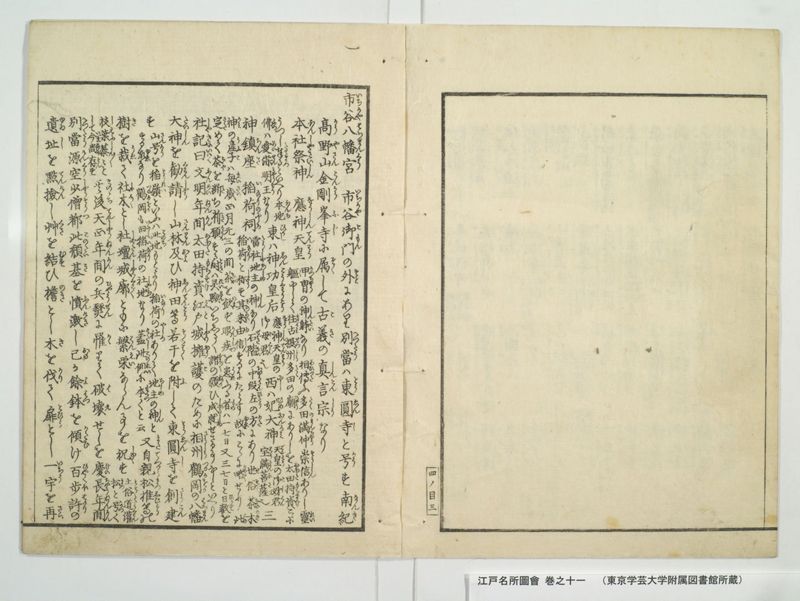
翻刻
【右丁 白紙】
【左丁】
市谷八幡宮(いちかやはちまんくう) 市谷御門(いちかやこもん)の外(そと)にあり別当(へつたう)は東円寺(とうゑんし)と号(かう)す南紀(なんき)
高野山(かうやさん)金剛峯寺(こんかうふじ)に属(そく)して古義(こき)の真言宗(しんこんしう)なり
本社祭神(ほんしやさいしん) 応神天皇(をうしんてんわう) 《割書:甲冑(かつちゆう)の神体(しんたい)なり相伝(あひつた)ふ多田満仲(たゝのまんちゆう)崇信(そうしん)ありし霊(れい)|躯(く)にして往古(そのかみ)摂州(せつしう)多田(たゝ)の廟(ひやう)にありしを太田持資(おほたもちすけ)こゝに》
《割書:うつし奉(たてまつ)るといへり本地(ほんち)|仏(ふつ)は愛染明王(あいせんみやうわう)なり》東(ひかし)は神功皇后(しんこうくわうこう)《割書:応神天皇(をうしんてんわう)の|御 母君(ほくん)也》西(にし)は妃大神(ひめおんかみ)《割書:天皇(てんわう)の御姉君(こしくん)|宝満菩薩(はうまんほさつ)也》三
神 鎮座(ちんさ) 稲荷祠(いなりのやしろ)《割書:当社(たうしや)地主(ちしゆ)の神(しん)なり石階(せきかい)の中段(ちゆうたん)左(ひたり)の方(かた)にあり世俗(せそく)茶木(ちやのき)|稲荷(いなり)と称(しよう)す其(その)来由(らいゆ)信(しん)するにたらす故(ゆゑ)にこゝに略(りやく)せり此(この) 》
《割書:神(かみ)の産子(うふこ)は毎歳(まいさい)正月元三の間 茶(ちや)を飲(のま)ず眼疾(かんしつ)を患(うれ)ふる者(もの)は一七日又三七日と日数(ひかす)を
|定(さた)めて茶(ちや)を断(た)ち祈願(きくわん)する時(とき)は霊験(れいけん)いちしるく諸(もろ〳〵)の願(ねか)ひ成就(しやうしゆ)せさる事なしといへり》
社記(しやきに)曰(いはく)文明年間(ふんめいねんかん)太田持資(おほたもちすけ)江戸城(えとしやう)擁護(おうこ)のために相州(さうしう)鶴岡(つるかをか)の八幡(はちまん)
大神(たいしん)を勧請(くわんしやう)し山林(さんりん)及(およ)ひ神田(しんてん)等(とう)若干(そくはく)を附(ふ)して東円寺(とうゑんし)を創建(さうこん)
す《割書:山号(さんかう)を稲嶺(とうれい)といふは此地(このち)もとより稲荷(いなり)の社(やしろ)ありて地主(ちしゆ)の神(しん)と|する故(ゆゑ)なり鶴岡(つるかをか)も旧(いにしへ)稲荷(いなり)の社地(しやち)なり蓋(けたし)此例(このれい)に本(もとつ)くと云》又(また)自親(てつから)松椎(まつしひ)等(とう)の
樹(き)を栽(うゑ)て社木(しやほく)とし社壇(しやたん)城廓(しやうくわく)ともに繁栄(はんえい)ならん事を祝(しゆく)す《割書:土俗(とそく)道灌(たうくわん)|松(まつ)と号(なつ)く》
《割書:枝葉(しえふ)蓁々(しん〳〵)と|して今尚(いまなお)存(そん)す》其後(そのゝち)天正年間(てんしやうねんかん)の兵燹(ひやうせん)に罹(かゝ)りて破壊(はえ)せしを慶長年間(けいちやうねんかん)
別当(へつたう)源空少僧都(けんくうしやうそうつ)此(この)頽基(たいき)を憤激(ふんけき)し己(おの)か余鉢(よはつ)を傾(かたむ)け百歩(ひやくほ)許(はかり)の
遺址(ゆゐし)を点撿(てんけん)し艸(くさ)を結(むす)ひ檐(のき)とし木(き)を伐(かり)て扉(とひら)とし一宇(いちう)を再(さい)
現代語訳
【右丁 白紙】
【左丁】
市谷八幡宮 市谷御門の外にあり、別当は東円寺と号す。南紀高野山金剛峯寺に属して古義の真言宗なり。
本社祭神 応神天皇(甲冑の神体なり。相伝うところによれば多田満仲崇信ありし霊躯にして、往古摂州多田の廟にありしを太田持資がここにうつし奉るという。本地仏は愛染明王なり) 東は神功皇后(応神天皇の御母君なり) 西は妃大神(天皇の御姉君、宝満菩薩なり) 三神鎮座
稲荷祠(当社地主の神なり。石階の中段左の方にあり。世俗茶木稲荷と称す。その来由信するに足らず故にここに略せり。この神の産子は毎歳正月元三の間茶を飲まず。眼疾を患う者は一七日又三七日と日数を定めて茶を断ち祈願する時は霊験いちじるく、諸々の願い成就せざることなしという)
社記に曰く、文明年間太田持資江戸城擁護のために相州鶴岡の八幡大神を勧請し、山林及び神田等若干を付して東円寺を創建す(山号を稲嶺というは、この地もとより稲荷の社ありて地主の神とする故なり。鶴岡も旧稲荷の社地なり。けだしこの例に基づくという)。また自ら松椎等の樹を栽えて社木とし、社壇城郭ともに繁栄ならんことを祝す(土俗道灌松と号く。枝葉蓁々として今なお存す)。
その後天正年間の兵燹に罹りて破壊せしを、慶長年間別当源空少僧都この頽基を憤激し、己が余鉢を傾け百歩許りの遺址を点検し、草を結びて檐とし木を伐りて扉とし一宇を再建
英語訳
【Right page Blank】
【Left page】
Ichigaya Hachiman Shrine Located outside Ichigaya Gate, the betto (temple administrator) is called Toen-ji Temple. It belongs to Koya-san Kongobu-ji Temple in Nanki and follows the Kogi school of Shingon Buddhism.
Main shrine deity Emperor Ojin (The divine body is in the form of armor. According to tradition, it is the sacred remains that Tada no Mitsunaka venerated, which was originally at the Tada shrine in Settsu Province but was transferred here by Ota Mochisuke. The honji Buddha is Aizen Myo-o) To the east is Empress Jingu (mother of Emperor Ojin) To the west is Hime-okami (elder sister of the emperor, also Homan Bosatsu) Three deities are enshrined
Inari Shrine (This is the local tutelary deity of the shrine grounds. Located on the left side of the middle level of the stone steps. Commonly called Chanoki Inari. Its origin is not credible, so it is omitted here. The parishioners of this deity do not drink tea during the first three days of the New Year every year. Those suffering from eye diseases set a period of seven days or twenty-one days, abstain from tea and pray, whereupon the divine efficacy is remarkable and all wishes are fulfilled without exception)
The shrine records state: During the Bunmei era, Ota Mochisuke invited the great deity Hachiman from Tsurugaoka in Sagami Province to protect Edo Castle, and created Toen-ji Temple, endowing it with some mountain forests and shrine fields (The mountain name Torei comes from the fact that there was originally an Inari shrine on this land serving as the local tutelary deity. Tsurugaoka was also formerly the site of an Inari shrine. This presumably follows that precedent). He also personally planted pine and chinquapin trees as sacred trees, praying that both the shrine altar and castle would prosper (Locally called Dokan Pine. Its branches and leaves are luxuriant and still exist today).
Later it was destroyed by the fires of war during the Tensho era, but during the Keicho era, the betto priest Genko Shoso-zu was indignant at this ruined foundation, emptied his own alms bowl, surveyed the ruins of about a hundred paces, bound grass for eaves and cut wood for doors to rebuild one hall