翻刻
【右丁】
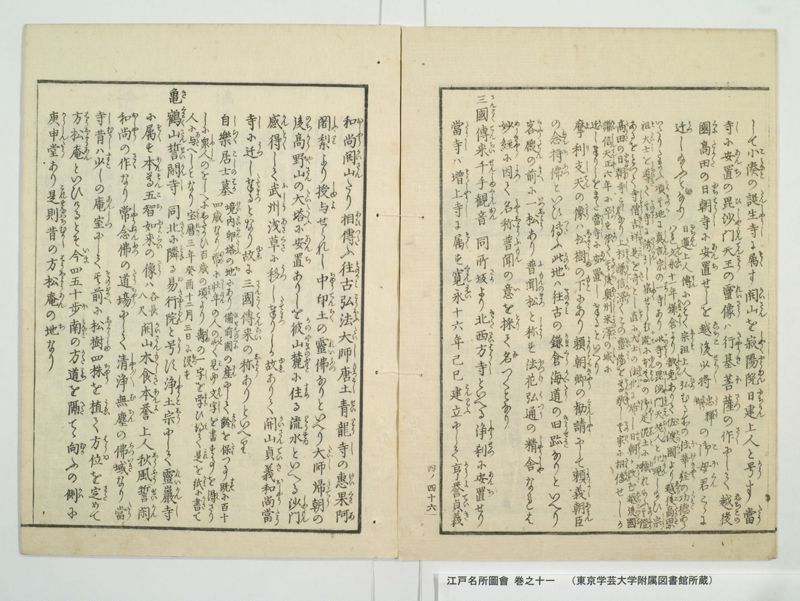
して小湊(こみなと)の誕生寺(たんしやうし)に属(そく)す開山(かいさん)を寂陽院日建上人(しやくやうゐんにちけん )と号(かう)す当(たう)
寺(し)に安置(あんち)の毘沙門天王(ひしやもんてんわう)の霊像(れいさう)は行基菩薩(きやうきほさつ)の作(さく)にして越後(ゑちこの)
国(くに)高田(たかた)の日朝寺(にちてうし)に安置(あんち)せしを越後少将(ゑちこせう〳〵 )《割書:忠輝(たゝてる)|卿(きやう)》の御母君(こほくん)こゝに
遷(うつ)し給ふとなり《割書:日蓮上人伝(にちれん てん)にいはく宗祖上人(しうそ )弘(ひろ)むる所の法華経(ほけきやう)の功徳(くとく)あら|はれ文永(ふんえい)十一年 鎌倉(かまくら)より赦免(しやめん)ありて佐渡国(さとのくに)より越後(ゑちこ)高田(たかた)に》
《割書:いたりたまふ頃(ころ)其地(そのち)に真言宗(しんこんしう)の一寺(いちし)あり此寺(このてら)の毘沙門天(ひしやもんてん)老人(らうしん)と化現(けけん)し給ひ宗(しう)|祖大士(そたいし)を導(みちひき)て其寺(そのてら)に誘引(いういん)し宿(しゆく)せしむ既(すて)に本尊(ほんそん)の御足(みあし)泥土(ていと)に穢(けか)れ給ふ其(その)証(しやう)》
《割書:あるをもつて寺僧(しそう)吉祥(きちしやう)是(これ)を奇(き)とし直(すく)に大士(たいし)の法化(ほふけ)に帰(き)し日朝(にちてう)と改(あらた)む越後国(ゑちこのくに) |高田(たかた)の日朝寺(にちてうし)これなり上杉謙信(うえすきけんしん)深(ふか)くこの霊像(れいさう)を尊敬(そんきやう)し其家(そのいへ)に相伝(そうてん)せしか》
《割書:謙信(けんしん)天正(てんしやう)六年に卒(そつ)す依(よつ)て其後(そのゝち)奥州(あうしう)米沢(よねさわ)の城(しろ)に|遷(うつ)し奉りしをまた当寺(たうし)に安置(あんち)し奉るといへり》
摩利支天(まりしてん)の像(さう)は松樹(しようしゆ)の下(もと)にあり頼朝卿(よりともきやう)の勧請(くわんしやう)にして頼義朝臣(よりよしあそん)
の念持仏(ねんちふつ)といひ伝(つた)ふ此地(このち)は往古(そのかみ)の鎌倉海道(かまくらかいたう)の旧跡(きうせき)なりといへり
客殿(きやくてん)の前(まへ)に一松(いつしよう)あり普聞松(ふもんのまつ)と称(しよう)す法花(ほつけ)弘通(くつう)の精舎(しやうしや)なれは
妙経(めうきやう)に因(よつ)て名称(みやうしよう)普聞(ふもん)の意(い)を採(とり)て名(な)つくとなり
三国伝来千手観音(さんこくてんらいせんしゆくわんおん) 同所 坂(さか)より北(きた)西方寺(さいはうし)といへる浄刹(しやうせつ)に安置(あんち)せり
当寺(たうし)は増上寺(そうしやうし)に属(そく)す寛永(くわんえい)十六年己巳 建立(こんりふ)にして享誉貞義(かうよていき)
【左丁】
和尚(おしやう)開山(かいさん)たり相伝(あひつた)ふ往古(そのかみ)弘法大師(こうほふたいし)唐土(もろこし)青竜寺(せいりうし)の惠果阿(けいくわあ)
闍梨(しやり)より授与(しゆよ)せられし中印土(ちゆうてんちく)の霊仏(れいふつ)なりといへり大師(たいし)帰朝(きてう)の
後(のち)高野山(かうやさん)の大塔(たいたふ)に安置(あんち)ありしを彼(かの)山麓(やまのふもと)に住(すめ)る流水(りうすゐ)といへる沙門(しやもん)
感得(かんとく)して武州(ふしう)浅草(あさくさ)に移(うつ)し奉(たてまつ)りしか故(ゆゑ)ありて開山(かいさん)貞義和尚(ていきおしやう)当(たう)
寺(し)に遷(うつ)し奉(たてまつ)るとなり故(ゆゑ)に三国伝来(さんこくてんらい)の称(しよう)ありといへり
自楽居士墓(しらくこしのはか)《割書:境内(けいたい)卵塔(らんたふ)の地(ち)にあり備前国(ひせんのくに)の産(さん)にして齢(よはひ)を保(たも)つ事 既(すて)に百十|四歳なり常(つね)に壮年(さうねん)の人の如(こと)く見(み)ゆ文字(もんし)を書す事を得(え)さり》
《割書:しに衆人(しゆしん)のをしへにしたかひ百歳の頃(ころ)より寿(しゆ)の一字( し)を学(まな)ひ得(え)て是(これ)を紙(かみ)に書(かき)て|人に与(あた)へしとなり宝暦(はうれき)三年癸酉十二月三日に没(ほつ)す》
亀鶴山(きくわくさん)誓閑寺(せいかんし) 同 北(きた)に隣(とな)る易行院(ゐきやうゐん)と号(かう)す浄土宗(しやうとしう)にして霊巌寺(れいかんし)
に属(そく)す本尊(ほんそん)五智如來(こちによらい)の像(さう)は《割書:各長|八尺》開山(かいさん)木食本誉上人(もくしきほんよ ) 秋風誓閑(しうふうせいかん)
和尚(おしやう)の作(さく)なり常念仏(しやうねんふつ)の道場(たうちやう)にして清浄無塵(しやう〳〵むちん)の仏域(ふついき)なり当(たう)
寺(し)昔(むかし)は少(すこ)しの庵室(あんしつ)にして其前(そのまへ)に松樹(しようしゆ)四株( ちゆう)を植(うゑ)て方位(はうゐ)を定(さた)めて
方松庵(はうしようあん)といひけるとそ今(いま)四五十歩( ほ)南(みまみ)の方(かた)道(みち)を隔(へた)てゝ向(むか)ふの側(かは)に
庚申堂(かうしんたう)あり是(これ)則(すなはち)昔(むかし)の方松庵(はうしようあん)の地(ち)なり
現代語訳
【右丁】
(前頁より続く)…小湊の誕生寺に属し、開山を寂陽院日建上人と号す。当寺に安置されている毘沙門天王の霊像は行基菩薩の作で、越後国高田の日朝寺に安置されていたものを、越後少将(忠輝卿)の御母君がここに遷されたという。
〔割書〕日蓮上人伝によれば、宗祖上人が弘める法華経の功徳が現れ、文永十一年に鎌倉より赦免があり、佐渡国より越後高田にいたられた頃、その地に真言宗の一寺があった。この寺の毘沙門天が老人に化現され、宗祖大士を導いてその寺に誘い入れ、宿らせた。やがて本尊のお足が泥土に穢れておられた。その証拠があったことから、寺僧・吉祥はこれを奇異に思い、直ちに大士の法化に帰依して日朝と名を改めた。越後国高田の日朝寺とはこれである。上杉謙信はこの霊像を深く尊敬し、その家に相伝していたが、謙信が天正六年に没したため、その後、奥州米沢の城に遷し奉ったものを、またこの当寺に安置し奉ったという。〔割書終〕
摩利支天の像は松の木の下にあり、頼朝卿の勧請によるもので、頼義朝臣の念持仏と言い伝えられている。この地は往古の鎌倉街道の旧跡であるという。
客殿の前に一本の松があり、普聞松(ふもんのまつ)と称する。法華経を弘める精舎であるため、妙経(法華経)にちなんで、普門(観音の普く聞こし召すの意)の意をとって名付けたという。
**三国伝来千手観音** 同所、坂より北、西方寺という浄刹に安置されている。当寺は増上寺に属し、寛永十六年己巳の建立にして、享誉貞義
【左丁】
和尚が開山である。言い伝えによれば、往古、弘法大師が唐(中国)の青龍寺の恵果阿闍梨より授与された中印度の霊仏であるという。大師帰朝の後、高野山の大塔に安置されていたのを、あの山麓に住む流水という沙門が感得して、武州浅草に移し奉ったが、ご縁があって開山・貞義和尚が当寺に遷し奉ったという。それゆえに三国伝来の称があるという。
**自楽居士の墓** 〔割書〕境内の卵塔(墓地)の地にあり。備前国の産にして、齢すでに百十四歳なり。常に壮年の人のように見えた。文字を書くことを得なかったが、衆人の教えにしたがい、百歳の頃より「寿」の一字を学び得て、これを紙に書いて人に与えたという。宝暦三年癸酉十二月三日に没す。〔割書終〕
**亀鶴山誓閑寺** 同じく北に隣る。易行院と号す。浄土宗にして、霊巌寺に属す。本尊・五智如来の像(各々高さ八尺)は、開山・木食本誉上人、秋風誓閑和尚の作なり。常念仏の道場にして、清浄無塵の仏域である。当寺はかつては小さな庵室で、その前に松の木を四株植えて方位を定め、方松庵と称していたという。今から四、五十歩ほど南の方、道を隔てた向かい側に庚申堂があるが、これはすなわち昔の方松庵の地である。
英語訳
【Right Page】
(Continued from previous page) …affiliated with Tanjō-ji Temple in Kominato. The founder is known as Jakuyōin Nichiken Shōnin. The sacred image of Bishamonten (Vaiśravaṇa) enshrined in this temple is a work of the Bodhisattva Gyōki, and was originally enshrined at Nichō-ji Temple in Takada, Echigo Province, from which it was moved here by the mother of Echigo Shōshō (Lord Tadateru).
[Inset note] According to the biography of the Venerable Nichiren: When the merits of the Lotus Sutra propagated by the founding master became manifest, and in the eleventh year of Bun'ei he was pardoned by Kamakura and traveled from Sado Province to Takada in Echigo, there was a Shingon-sect temple in that place. The Bishamonten of this temple transformed into an old man, guided the founding master, led him into the temple, and gave him lodging. The feet of the principal image had become soiled with mud, and because there was evidence of this, the temple monk Kichishō found it wondrous and immediately took faith in the master's teachings, changing his name to Nichō. This is the origin of Nichō-ji Temple in Takada, Echigo Province. Uesugi Kenshin held this sacred image in deep reverence and it was passed down in his family; after Kenshin died in the sixth year of Tenshō, it was moved to the castle at Yonezawa in Ōshū, and from there it was enshrined in this temple. [End of inset note]
The image of Marici (Marishiten) stands beneath a pine tree. It is said to have been requested through prayer (kanjō) by Lord Yoritomo, and is traditionally held to have been the personal devotional image of Yoriyoshi no Ason. This site is said to be the remains of the ancient Kamakura Highway.
In front of the guest hall stands a single pine, called the Fumon no Matsu (Pine of Universal Hearing). Because this is a temple devoted to the propagation of the Lotus Sutra, it was named by taking the meaning of "fumon" (universal hearing) from the sacred sutra.
**Sangoku Denrai Senju Kannon (Thousand-Armed Kannon Transmitted Through Three Countries)** In the same area, north of the slope, this image is enshrined at the pure temple called Saihō-ji. This temple is affiliated with Zōjō-ji, founded in the sixteenth year of Kan'ei (己巳, 1639), with Kōyo Teigi
【Left Page】
as its founding abbot. According to tradition, this is a sacred Buddhist image from Central India that was bestowed upon Kōbō Daishi (Kūkai) by Huiguo Ācārya of Qinglong Temple (Seiryū-ji) in Tang China. After the Daishi's return to Japan, it was enshrined in the Great Pagoda on Mount Kōya, from where a monk called Ryūsui, who lived at the foot of that mountain, spiritually received it and moved it to Asakusa in Musashi Province. Through a special connection, the founding abbot Teigi then moved it to this temple. It is for this reason that it bears the name "Transmitted Through Three Countries (India, China, and Japan)."
**Tomb of Jiraku Koji** [Inset note] Located in the burial ground (rantō area) within the temple precincts. A native of Bizen Province, he preserved his life to the age of one hundred and fourteen. He always appeared as vigorous as a man in the prime of life. He was unable to write characters, but following the instruction of the people around him, from around his hundredth year he learned to write the single character "寿" (longevity), and would write it on paper and give it to people. He passed away on the third day of the twelfth month of the third year of Hōreki (癸酉, 1753). [End of inset note]
**Kikkakuzan Seikanji Temple** Neighboring to the north of the same area. It is also known as Igyō-in. Of the Jōdo sect, it is affiliated with Reigan-ji. The principal image of the Five Wisdom Tathāgatas (each eight shaku in height) is the work of the founding abbot, Mokujiki Hon'yo Shōnin, and monk Shūfū Seikan. It is a place of continuous nembutsu practice and a pure, dust-free Buddhist sanctuary. The temple was formerly a small hermitage, in front of which four pine trees were planted to mark the cardinal directions; it was called Hōshō-an (Cardinal-Pine Hermitage). Some forty or fifty paces to the south, across the road, is a Kōshin-dō (Hall of Kōshin), which is precisely the site of the former Hōshō-an.