翻刻
【右丁】
稲荷祠(いなり ) 《割書:境内(けいたい)にあり開山(かいさん)誓閑和尚(せいかんおしやう)はすへて仏像(ふつさう)を作(つく)る事を得(え)て常(つね)に吹革(ふいこ)を|もつて種々(しゆ〳〵)の細工(さいく)をなせり此故(このゆゑ)に境内(けいたい)に稲荷(いなり)を勧請(くわんしやう)し十一月八日には》
《割書:吹革祭(ふいこまつり)をなせしとなり今(いま)も|その余風(よふう)にて年々(とし〳〵)その事あり》垂枝桜(したりさくら)《割書:本堂(ほんたう)の前(まへ)にあり菊岡沾涼(きくをかせんりやう)かいはゆる《振り仮名:しらぬ桜| さくら》|と名付(なつけ)しもの是(これ)なり附(つけ)て云 当寺(たうし)境内(けいたい)に横(よこ)》
《割書:たはれる小溝(こみそ)の流(なか)れをもつて豊島郡(としまこほり)と荏原郡(えはらこほり)|との堺(さかひ)とす当寺(たうし)鐘(かね)の銘(めい)にも其事を挙(あけ)たり》
金川(かなかは) 同所 穴八幡(あなはちまん)の前(まへ)を早稲田(わせた)の方(かた)へ流(なか)るゝ小川(をかは)を云(いふ)となり《割書:今(いま)は古川(ふるかは)と|唱(とな)へたり》
水源(みなもと)は戸山御庭中(とやまおんていちゆう)より発(はつ)する所(ところ)なり文明年間(ふんめいねんかん)太田道灌(おほたたうくわん)遊猟(いうりやう)の
時(とき)急雨(きうう)に逢(あひ)しは此地(このところ)にて昔(むかし)は川(かは)の幅(はゝ)も広(ひろ)かりしとなり其頃(そのころ)は加(か)
奈川(なかは)又 加能川(かのかは)とも称(よひ)けるとなり《割書:或(あるひ)は蟹川(かにかは) |に作(つく)る》
髙田八幡宮(たかたはちまんくう) 牛込(うしこみ)の総鎮守(さうちんしゆ)にして髙田(たかた)にあり《割書:世(よ)に穴八幡(あなはちまん)|とよへり》此地(このち)を戸塚(とつか)
と云 別当(へつたう)は真言宗(しんこんしう)にして光松山(くわうしようさん)放生会寺(はうしやうゑし)と号(かう)す《割書:旧名(きうみやう)は威盛院(ゐしやうゐん)中(なか) |之坊( はう)と唱(とな)へしと》
《割書:なり祭礼(さいれい)は八月十五日にて放生会(はうしやうゑ)あり|旅所(たひしよ)は牛込(うしこみ)神楽坂(かくらさか)の中腹(ちゆうふく)にあり》
社記云(しやきにいはく)寛永(くわんえい)十三年丙子 御弓隊( ゆみくみ)の長(おさ)松平新五左衛門尉源直次(まつたひらしんこさゑもんのせうみなもとのなほつく)に
与力(よりき)の輩(ともから)射術(しやしゆつ)練習(れんしふ)の為(ため)此地(このち)に的山(まとやま)築立(つきたて)らる八幡宮(はちまんくう)は源家(けんけ)の
宗廟(そうひやう)にしてしかも弓箭(ゆみや)の守護神(しゆこしん)なれはとて此地(このち)に勧請(くわんしやう)せん事を
【左丁】
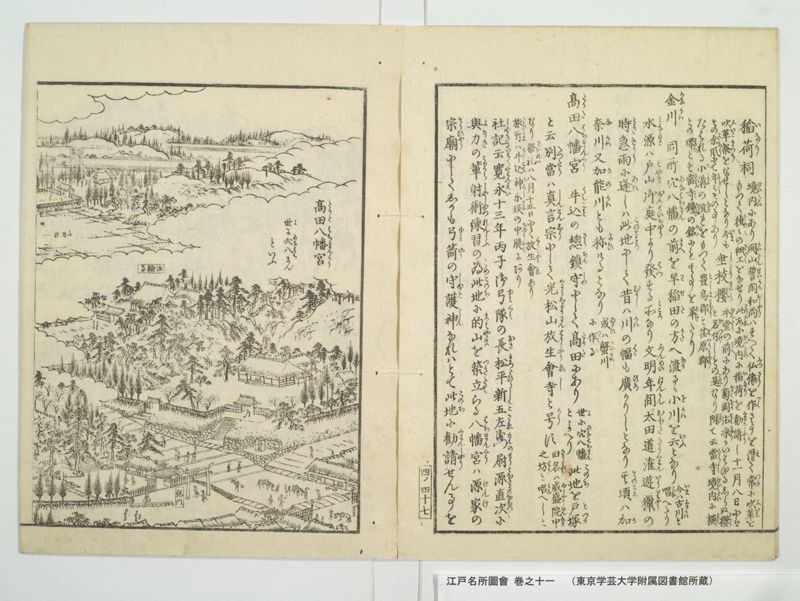
髙田八幡宮(たかたはちまんくう)
《割書:世(よ)に《振り仮名:穴八まん|あなはち 》| といふ》
【図絵中】
聖天
法輪寺 総門
水いなり
裏門
現代語訳
【右丁】
**稲荷祠** 〔割書〕境内にあり。開山・誓閑和尚はあらゆる仏像を作ることができ、常にふいご(鞴)を用いて種々の細工をした。このため境内に稲荷を勧請し、十一月八日にはふいご祭りを行ったという。今もその風習が続き、年々その行事がある。〔割書終〕
**垂れ枝桜(しだれ桜)** 〔割書〕本堂の前にあり。菊岡沾涼が「しらぬ桜」と名付けたのはこれである。付記して云う。当寺の境内を横に流れる小溝の流れをもって、豊島郡と荏原郡との境界とする。当寺の鐘の銘にもその事が記されている。〔割書終〕
**金川(かなかわ)** 同所、穴八幡の前を早稲田の方へ流れる小川をいう。〔割書〕今は古川と称している。〔割書終〕 水源は戸山御庭の中より発する。文明年間に太田道灌が遊猟(狩猟)の際、急な雨に遭ったのはこの地であり、昔は川の幅も広かったという。その頃は加奈川、また加能川とも称していたという。〔割書〕あるいは蟹川とも書く。〔割書終〕
**高田八幡宮** 牛込の総鎮守にして、高田にある。〔割書〕世に穴八幡と呼ばれている。〔割書終〕この地を戸塚という。別当は真言宗にして、光松山放生会寺と号す。〔割書〕旧名は威盛院中之坊と称していた。祭礼は八月十五日にて放生会あり。旅所は牛込神楽坂の中腹にある。〔割書終〕
社記に云う。寛永十三年丙子、御弓組の長・松平新五左衛門尉源直次に与力する人々が、射術練習のためにこの地に的山を築き立てた。八幡宮は源氏の宗廟にして、しかも弓矢の守護神であるからとして、この地に勧請しようと…
【左丁】
**高田八幡宮**
〔割書〕世に穴八幡という。〔割書終〕
【図絵中】
(境内図)
聖天
法輪寺 総門
水稲荷
裏門
英語訳
【Right Page】
**Inari Shrine** [Inset note] Located within the temple precincts. The founding abbot Seikan was skilled at crafting all manner of Buddhist images and always used a bellows (fuigo) to produce various works of metalwork. For this reason, he invited Inari to be enshrined within the precincts, and on the eighth day of the eleventh month, a Fuigo Festival (Bellows Festival) was held. This custom continues to this day, with the event taking place every year. [End of inset note]
**Weeping Cherry (Shidare-zakura)** [Inset note] Located in front of the main hall. This is the cherry tree that Kikuoka Senryō named "Shiranu Zakura" (The Unrecognized Cherry). Additional note: The small channel running horizontally through this temple's precincts serves as the boundary between Toshima District and Ebara District. This fact is also recorded in the inscription on the temple bell. [End of inset note]
**Kanakawa (River)** In the same area, this refers to the small river that flows from in front of Ana Hachiman shrine toward Waseda. [Inset note] It is now called Furukawa (Old River). [End of inset note] Its source originates from within the Toyama御庭 (Toyama Garden). During the Bunmei era, when Ōta Dōkan was out hunting and was caught in a sudden rainstorm, it was at this very location; in those days, the river was said to have been much wider. At that time it was called Kanakawa or alternatively Kanōkawa. [Inset note] It is also written as Kanikawa (Crab River). [End of inset note]
**Takada Hachiman Shrine** The chief tutelary shrine (sō-chinjusha) of Ushigome, located in Takada. [Inset note] It is commonly known as Ana Hachiman (The Pit Hachiman). [End of inset note] This area is called Totsuka. The bettō (administrative temple) is of the Shingon sect, known as Kōshōzan Hōjōe-ji. [Inset note] Its former name was Ishōin Nakanobō. The festival is held on the fifteenth day of the eighth month, at which a Hōjōe (life-releasing ceremony) is performed. The temporary shrine resting place (tabisho) is located on the hillside of Kagurazaka in Ushigome. [End of inset note]
According to the shrine records: In the thirteenth year of Kan'ei (丙子, 1636), the head of the Archery Unit, Matsudaira Shingozaemon no Jō Minamoto no Naonori, together with his subordinate yoriki, constructed an archery target mound (matoyama) at this location for the purpose of practicing archery. Since Hachiman Shrine is the ancestral shrine of the Minamoto clan and moreover the guardian deity of bow and arrow, it was decided to enshrine it at this location…
【Left Page】
**Takada Hachiman Shrine**
[Inset note] Commonly known as Ana Hachiman. [End of inset note]
【In the Illustration】
(Map of the precincts)
Shōten (Gaṇeśa Hall)
Hōrin-ji Temple Main Gate
Mizu Inari (Water Inari Shrine)
Rear Gate