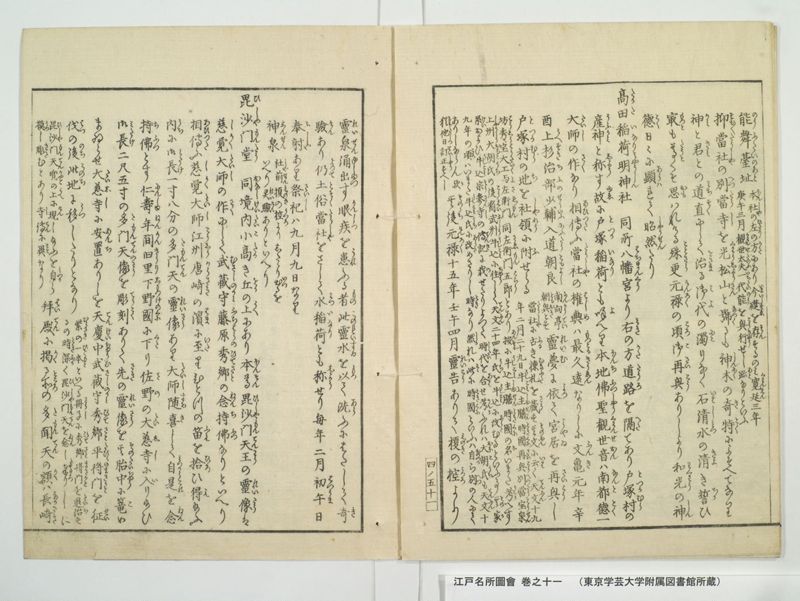
翻刻
【右丁】
能舞台址(のうふたいのあと)《割書:本社(ほんしや)の左(ひたり)の方(かた)にあり今(いま)礎(いしすゑ)を存(そん)するのみ寛延(くわんえん)三年|庚午三月 観世太夫(くわんせたいふ)一代能(いちたいのう)を興行(こうきやう)せし跡(あと)なりといふ》
抑(そも〳〵)当社(たうしや)の別当寺(へつたうし)を光松山(くわうしようさん)と号(なつく)るも神木(しんほく)の奇特(きとく)によそへてなり
神(かみ)と君(きみ)との道(みち)直(すく)にして治(をさま)る御代(みよ)の濁(にこ)りなく石清水(いはしみつ)の清(きよ)き誓(ちか)ひ
最(もつと)も尊(たうと)くそ思(おも)はれける殊更(ことさら)元禄(けんろく)の頃(ころ)御再興(こさいこう)ありしより和光(わくわう)の神(しん)
徳(とく)日々に顕(あらは)れて昭然(しやうせん)たり
髙田稲荷明神社(たかたいなりみやうしん ) 同所 八幡宮(はちまんくう)より右(みき)の方(かた)道路(たうろ)を隔(へた)てあり戸塚村(とつかむら)の
産神(うふかみ)と称(しよう)す故(ゆゑ)に戸塚稲荷(とつかいなり)とも呼(よ)へり本地仏(ほんちふつ)聖観世音(しやうくわんせおん)は南都(なんと)徳一(とく )
大師(たいし)の作(さく)なり相伝(あひつた)ふ当社(たうしや)の権輿(はしめ)は最(もつとも)久遠(きうゑん)なりしに文亀(ふんき)元年辛
酉 上杉治部少輔入道朝良(うえすきちふのせういふにふたうともよし)《割書:南向亭(なんかうてい)|朝興(ともおき)とす》霊夢(れいむ)に依(よつ)て宮居(みやゐ)を再興(さいこう)し
戸塚村(とつかむら)の地(ち)を社領(しやれう)に附(ふ)せらる《割書:当社(たうしや)に古(ふる)き棟札(むなふた)を蔵(さう)す其文(そのふん)に云(いは)く天文(てんふん)十九|年二月二十九日 牛込主膳時国(うしこみしゆせんときくに)再興(さいこう)別当(へつたう)宝泉(はうせん)》
《割書:坊秀宝(はうしうはう)大工(たいく)与左衛門(よさゑもん)同 左衛門五郎(さゑもんこらう)とあり按(あんする)に牛込主膳時国(うしこみしゆせんときくに)の名(な)いまた考(かんか)えす|上州(しやうしう)大胡氏(おほこうち)の後裔(こうえい)武州(ふしう)牛込(うしこみ)に住(ちゆう)して天文(てんふん)二十四年 氏(うち)を牛込(うしこみ)に改(あらた)むるといふ事 其(その)家(か)》
《割書:系(けい)およひ牛込(うしこみ)宗参寺(そうさんし)の伝記(てんき)に載(の)せたりよつて時代(したい)を合(あは)せ考(かんか)ふれは大胡氏(おほこうち)も天文(てんふん)十|九年の頃(ころ)はいまた牛込氏(うしこみうち)に改(あらた)めさりし時(とき)なり然(しか)れは此(こゝ)に時国(ときくに)といふは自(おのつか)ら別(へつ)の人にて》
《割書:ありしならん歟(か)|猶(なほ)他日(たしつ)訂正(ていしやう)すへし》其後(そのゝち)元禄(けんろく)十五年壬午四月 霊告(れいこう)ありて榎(えのき)の椌(うつろ)#1より
【左丁】
霊泉(れいせん)涌出(ゆしゆつ)す眼疾(かんしつ)を患(うれ)ふる者(もの)此(この)霊水(れいすゐ)を以(もつ)て洗(あら)ふにはたして奇(き)
験(けん)あり仍(よつて)土俗(とそく)当社(たうしや)をさして水稲荷(みついなり)とも称(しよう)せり毎年二月 初午日(はつうま )
奉射(ふしや)あり祭祀(さいし)は九月九日なり
神泉(しんせん)《割書:社前(しやせん)榎(えのき)の椌(うつろ)#1よりしたゝり出(いつ)るを|いへり霊験(れいけん)ありといへり》
毘沙門堂(ひしやもんたう) 同(おなし)境内(けいたい)小高(こたか)き丘(をか)の上(うえ)にあり本尊(ほんそん)毘沙門天王(ひしやもんてんわう)の霊像(れいさう)は
慈覚大師(しかくたいし)の作(さく)にして武蔵守藤原秀郷(むさしのかみふちはらのひてさと)の念持仏(ねんちふつ)なりといへり
相伝(あひつた)ふ慈覚大師(しかくたいし)江州(こうしう)唐崎(からさき)の浜(はま)に至(いた)りひとつの笛(ふえ)を拾(ひろ)ひ得(え)給ふ
内(うち)に御長(みたけ)一寸八分の多門天(たもんてん)#2の霊像(れいさう)あり大師(たいし)随喜(すゐき)して自(みつから)是(これ)を念(ねん)
持仏(ちふつ)とす仁寿年間(にんしゆねんかん)旧里(きうり)下野国(しもつけのくに)に下(くた)り佐野(さの)の大慈寺(たいしし)に入(い)り給ひ
御長(みたけ)二尺五寸の多門天像(たもんてんのさう)#2を彫刻(てうこく)ありて先(さき)の霊像(れいさう)を其(その)胎中(たいちゆう)に篭(こ)め
まゐらせ大慈寺(たいしし)に安置(あんち)ありしを天慶中(てんけいちゆう)武蔵守秀郷(むさしのかみひてさと)平将門(たひらのまさかと)を征(せい)
伐(はつ)の後(のち)此地(このち)に移(うつ)したりとなり《割書:《振り仮名:紫の一本|むらさき ひともと》といへる冊子(さうし)に秀郷(ひてさと)将門(まさかと)を退治(たいち)す|るの時(とき)深(ふか)く毘沙門天(ひしやもんてん)を念(ねん)し奉(たてまつ)りしに》
《割書:毘沙門天(ひしやもんてん)兜(かふと)の上(うへ)に現(けん)し給ふを自(みつか)ら|摸(うつ)し彫(きさ)むとあり寺伝(してん)に異(こと)なり》拝殿(はいてん)に掲(かく)る所(ところ)の多聞天(たもんてん)の額(かく)は長崎(なかさき)
現代語訳
【右丁】
**能舞台址(のうぶたいのあと)**
本社の左手にあり、今は礎石が残るのみである。寛延三年(1750)庚午三月、観世太夫が一代能を興行した跡であるという。
そもそも当社の別当寺を光松山と号するのも、神木の奇特(不思議な霊験)にちなんでのことである。
「神と君との道 直くして治まる御代の 濁りなく 石清水の清き誓ひ」
(神と君主への道が真っ直ぐで、御代が平和に治まり、石清水のように清らかな誓いよ。)
この神徳は最も尊く思われることである。とりわけ元禄の頃に御再興があってより、和光(わこう)の神徳が日々に顕れて明らかである。
---
**髙田稲荷明神社(たかたいなりみょうじんしゃ)**
同所、八幡宮より右手の道路を隔てたところにある。戸塚村の産土神(うぶすながみ)と称するゆえに、戸塚稲荷とも呼ばれる。本地仏・聖観世音は南都(奈良)の徳一大師の作である。
伝えるところによれば、当社の起源は非常に古いが、文亀元年(1501)辛酉の年、上杉治部少輔入道朝良(南向亭の記録では「朝興」とする)が霊夢によって宮居を再興し、戸塚村の地を社領として附された。
(当社に古い棟札を蔵しており、その文に云く、「天文十九年二月二十九日、牛込主膳時国再興、別当宝泉坊秀宝、大工与左衛門、同左衛門五郎」とある。按ずるに、牛込主膳時国の名はいまだ詳細に考証できていない。上州・大胡氏の後裔が武州牛込に住し、天文二十四年に氏を牛込に改めるという事が、その家系および牛込・宗参寺の伝記に載せられている。よって時代を合わせて考えれば、大胡氏も天文十九年の頃はいまだ牛込氏に改めていない時であった。さすれば、ここに時国というのは自ずと別の人であったのであろうか。なお他日、訂正すべし。)
その後、元禄十五年(1702)壬午四月、霊告があって榎(えのき)の洞(うつろ)より
【左丁】
霊泉が涌き出した。眼の病を患う者がこの霊水をもって洗うと、はたして不思議な験(しるし)があった。それゆえ土地の人々は当社を指して「水稲荷(みついなり)」とも称するようになった。毎年二月の初午の日に奉射(ほうしゃ、弓を奉納射ること)があり、祭祀は九月九日である。
**神泉(しんせん)**
社前の榎の洞よりしたたり出るものをいう。霊験があるという。
---
**毘沙門堂(びしゃもんどう)**
同じ境内の小高い丘の上にある。本尊・毘沙門天王の霊像は慈覚大師(じかくだいし)の作であって、武蔵守藤原秀郷(ひでさと)の念持仏(ねんじぶつ)であるという。
伝えるところによれば、慈覚大師が江州(近江国)唐崎の浜に至り、一つの笛を拾い得られた。その中に、御丈一寸八分の多聞天(毘沙門天)の霊像があった。大師は随喜(深く感激)してみずからこれを念持仏とされた。仁寿年間(851~854)に故郷の下野国に下り、佐野の大慈寺に入られ、御丈二尺五寸の多聞天像を彫刻し、先の霊像をその胎中に収めて大慈寺に安置された。その後、天慶年間(938~947)に武蔵守秀郷が平将門を征伐した後、この地に移したとのことである。
(「紫の一本(むらさきひともと)」という冊子には、「秀郷が将門を退治する時、深く毘沙門天を念じ奉ったところ、毘沙門天が兜の上に現れられたので、みずからそれを模して彫んだ」とあり、寺伝(当堂の伝記)とは異なる。)
拝殿に掲げられている多聞天の額は、長崎……(続く)
英語訳
**【Right Page】**
**Site of the Nō Stage (Nōbutai no Ato)**
This is located to the left of the main shrine; today only the foundation stones remain. It is said to be the site where the Kanze Tayū performed a "lifetime Nō" (ichidai nō) performance in the third month of the third year of Kan'en (1750), the year of Kōgo.
It is noteworthy that the bettō-ji (administrative Buddhist temple) of this shrine is named Kōshōzan, a name derived from the wondrous virtues of the sacred tree. The poem composed in praise reads:
*"The way of the gods and the sovereign is straight and true; the reign is at peace without murkiness — like the clear oath of Iwashimizu."*
This divine virtue is held in the deepest reverence. Especially since the shrine's restoration during the Genroku era, the divine grace (wakō) has manifested day by day with brilliant clarity.
---
**Takata Inari Myōjin Shrine (髙田稲荷明神社)**
This shrine is located in the same area, across the road to the right of the Hachiman Shrine. It is called the tutelary deity (ubusuna-gami) of Totsuka Village, and is therefore also known as Totsuka Inari. The honji-butsu (original Buddhist form) of the deity — the Sacred Kannon (Shō Kanzeon) — is said to be the work of Tokuichi Daishi of Nanto (Nara).
According to tradition, the origins of this shrine are extremely ancient. However, in the first year of Bunki (1501), the year of Kanoto-Tori, Uesugi Jibu-shōyu Nyūdō Tomoyoshi (recorded in the Nankōtei as "Tomooki") rebuilt the shrine's sacred precincts following a divine dream (reimu) and granted the lands of Totsuka Village as shrine domains.
*(The shrine preserves an old ridge plaque (munafuda) whose inscription reads: "Rebuilt on the 29th day of the 2nd month of the 19th year of Tenbun [1550], by Ushigomi Shuzen Tokikuni; bettō: Hōsen-bō Shūhō; carpenters: Yozaemon and Saemon-Gorō." Upon investigation, the name of Ushigomi Shuzen Tokikuni has yet to be fully verified. It is recorded in the family genealogy and the records of Sōzan-ji temple in Ushigomi that the descendants of the Ōgo clan of Jōshū (Kōzuke Province), having settled in Ushigomi in Musashi Province, changed their clan name to Ushigomi in the 24th year of Tenbun [1555]. Reconciling the dates, the Ōgo clan would not yet have changed their name to Ushigomi at the time of Tenbun 19. Therefore, the "Tokikuni" mentioned here must presumably have been a different individual altogether. This point requires further correction at a later date.)*
Thereafter, in the 4th month of the 15th year of Genroku (1702), the year of Mizunoe-Uma, a divine revelation was received, and from the hollow of a hackberry tree (enoki),
**【Left Page】**
a sacred spring (reisen) gushed forth. Those suffering from eye ailments who washed their eyes with this sacred water found, to their amazement, remarkable efficacy. Consequently, the local people also came to call this shrine "Mizu Inari" (Water Inari). Each year on the first Day of the Horse (Hatsu-Uma) in the second month, there is a ceremonial archery offering (hōsha), and the principal festival is held on the ninth day of the ninth month.
**Sacred Spring (Shinsen)**
This refers to the water that trickles out from the hollow of the hackberry tree before the shrine. It is said to possess miraculous powers.
---
**Bishamondō (Hall of Bishamonten)**
This is situated on a small elevated hill within the same precincts. The principal sacred image of Bishamonten (the Heavenly King of the North) is said to have been carved by Jikaku Daishi and to have served as the personal devotional image (nenjibutsu) of Musashi no Kami Fujiwara no Hidesato.
According to tradition, Jikaku Daishi arrived at the shore of Karasaki in Gōshū (Ōmi Province), where he happened to find a flute. Inside it was a sacred image of Tamonten (another name for Bishamonten), measuring one sun and eight bu (approximately 5.5 cm) in height. Deeply moved with joy, the Daishi took this as his own devotional image. During the Ninju era (851–854), he traveled down to his home province of Shimotsuke, entered the Daiji-ji temple in Sano, and carved a new image of Tamonten measuring two shaku and five sun (approximately 75 cm) in height, enshrining the earlier small sacred image within its body cavity (taichū), and installed it at Daiji-ji. It is said that during the Tengyō era (938–947), after Musashi no Kami Hidesato's subjugation of Taira no Masakado, the image was relocated to this present location.
*(A book called "Murasaki Hitomoto" (A Single Stalk of Murasaki) states that when Hidesato was subduing Masakado, he prayed deeply to Bishamonten, who then appeared atop his helmet, and Hidesato himself modeled and carved the image from this vision — a tradition that differs from the temple's own account.)*
The votive tablet (gaku) of Tamonten hanging in the worship hall was [produced in] Nagasaki…… (continued)