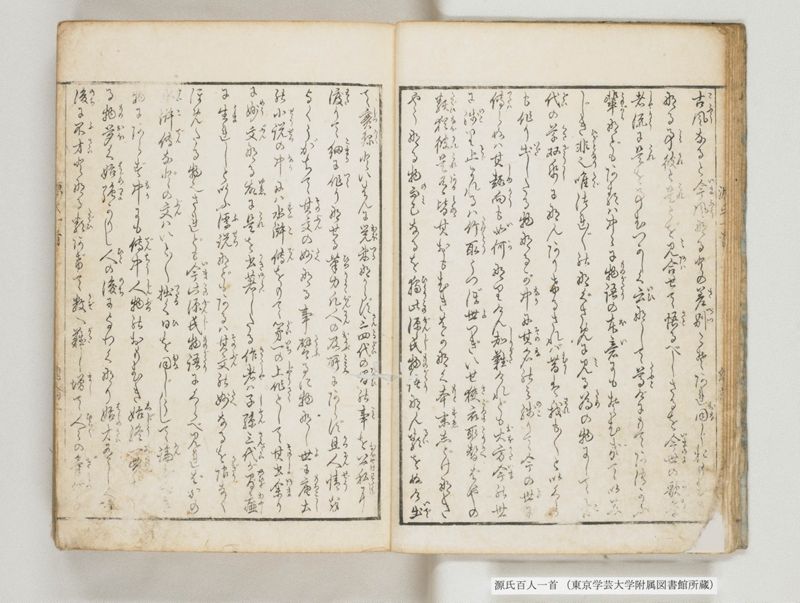
翻刻
【右丁】
古風(こふう)なると今風(いまふう)なるとの差別(さべつ)こそあれ同(おな)じおもむき
なる事(こと)彼(かれ)と是(これ)とを見合(みあは)せて悟(さと)るべしさるを今世(いまのよ)の歌学(かかく)【別本による】
者流(しやりう)に是(これ)を事むつかしく云(いひ)なして尊(たふと)げにもてあつかふ
輩(ともがら)などもあるは中々に物語(ものがたり)の本意(ほい)にもそむきていみ
じき非(ひがこと)也(なり)唯(たゞ)つれ〴〵のなぐさめに見(み)る為(ため)の物にして古(こ)
代(だい)の草双紙(くさざうし)になんありけるされば昔(むかし)は我(われ)も〳〵といくら
も作り出(いだ)したる物なるが中(なか)に其名(そのな)のみ残(のこ)りて今の世(よ)に
伝(つたは)らぬは其 趣向(しゆかう)も如何(いか)なりけん知難(しりがた)けれども大方(おほかた)今(いま)の世
に残(のこ)り止(とゞ)まれるは竹取(たけとり)うつぼ世(よ)つぎいせ狭衣(さごろも)取替(とりかへ)ばやの
類(たぐひ)猶(なほ)彼是(かれこれ)有(ある)皆(みな)其おもむきはかなく本末(もとすゑ)しどけなき
やうなる物 而已(のみ)なるを独(ひとり)此(この)源氏物語(げんじものがたり)なん類(るい)をぬけ出(いで)
【左丁】
て実録(じつろく)といはんに覚束(おぼつか)なからず三四代(さんよだい)の間(あはひ)の事(こと)を公(おほやけ)私(わたくし)に
渡(わた)りて細(こまか)に作(つく)りなせる筆力(ひつりよく)凡人(ぼんにん)の及(およぶ)所(ところ)にあらず且(かつ)人情(にんぜう)を
よくうがちてそ其(その)文(ぶん)の玅(たへ)なる事 譬(たとふ)るに物なし世(よ)に唐土(もろこし)
の小説(せうせつ)の中(なか)には水滸伝(すいこでん)をもて第一(だいいち)の上作(じやうさく)として其書(そのしよ)余(あま)り
に妙文(めうぶん)なる故(ゆゑ)に是(これ)を書著(かきあらは)したる作者(さくしや)は子孫(しそん)三代(さんだい)が間(あひだ)瘂(おふし)
に生(うま)れしといふ浮説(ふせつ)などもあるは其文(そのぶん)の妙(たへ)なるを限(かぎり)なく
ほめたる物也されども今(いま)此(この)源氏物語(げんじものがたり)にくらべ見ればかの
水滸伝(すいこでん)などの文(ぶん)はいと〳〵拙(つたな)く日(ひ)を同(おな)じうして論(ろん)ずべき
物にあらず中(なか)にも伝中(でんちう)人物(じんぶつ)のおもむき始終(しじう)一貫(いつくわん)せざ【別本による】
る物(もの)多(おほ)く始(はじめ)強(つよ)かりし人(ひと)の後(のち)によわくなり始(はじめ)才(さい)有し人の
後(のち)に不才(ふさい)となる類(たぐひ)あげて数(かぞ)へ難(がた)し増(まし)て人々(ひと〴〵)の気質(きしつ)の
現代語訳
【右丁】
古風であるか今風であるかの違いこそあれ、同じ趣向であることは、あちらとこちらを見比べて理解すべきである。ところが今の世の歌学者の流派には、これを難しく解釈して尊いもののように扱う人々などもいるが、かえって物語の本来の意図に背いて、ひどい間違いである。ただ退屈しのぎの慰めに見るためのものであって、古代の草双紙だったのである。したがって昔は、我も我もと数多く作り出されたものだが、その中で名前だけが残って今の世に伝わらないものは、その趣向もどのようなものだったか分からない。しかし大体今の世に残り伝わっているのは、竹取物語、うつぼ物語、世継物語、伊勢物語、狭衣物語、とりかへばや物語の類で、なおあれこれあるが、皆その趣向ははかなく、始終まとまりのないようなものばかりである。ところが独りこの源氏物語だけは、同類から抜け出て
【左丁】
実録と言っても疑わしくない。三、四代の間の事を公私にわたって詳細に作り上げた筆力は、凡人の及ぶところではない。かつ人情をよく見抜いて、その文章の素晴らしさは比べるものがない。世に中国の小説の中では水滸伝をもって第一の優れた作品としており、その書があまりに巧妙な文章であるがゆえに、これを書き著した作者は子孫三代の間、口がきけずに生まれたという浮説などもあるのは、その文章の素晴らしさを限りなく褒めたものである。しかし今この源氏物語と比べて見ると、あの水滸伝などの文章は非常に拙く、同じレベルで論じるべきものではない。中でも伝中の人物の性格が始終一貫していないものが多く、初めは強かった人が後に弱くなり、初めは才能があった人が後に無才になる類は、数え上げることが困難である。まして人々の気質の
英語訳
【Right Page】
There may be differences between what is old-fashioned and what is contemporary, but that they share the same basic approach should be understood by comparing one with the other. However, among today's schools of poetic scholarship, there are those who make this unnecessarily complicated and treat it as something venerable, but this actually goes against the original intent of monogatari and is a terrible mistake. These are simply things meant to be read for idle entertainment and comfort, being the kusazōshi of ancient times. Therefore, in the past, everyone tried to create many such works, but among them, those whose names alone remain without being transmitted to the present world—we cannot know what their conception was like. However, what has generally survived and been transmitted to the present world includes the likes of the Tale of the Bamboo Cutter, Utsubo Monogatari, Yotsugi Monogatari, Ise Monogatari, Sagoromo Monogatari, and Torikaebaya Monogatari, with various others besides. All of these have ephemeral plots and seem disjointed from beginning to end. But this Tale of Genji alone stands apart from its peers,
【Left Page】
and could be called a true record without doubt. The literary skill that created such detailed accounts of events spanning three or four generations, both public and private, is beyond what ordinary people could achieve. Moreover, it penetrates human emotions so well that the excellence of its prose is incomparable. In the world of Chinese novels, the Water Margin is considered the finest masterwork, and because that book's prose is so exquisite, there are even unfounded stories that its author's descendants were born mute for three generations—such tales arise from limitless praise for the excellence of its writing. However, when compared to this Tale of Genji, the prose of the Water Margin and such works is quite crude and should not be discussed on the same level. Particularly, many of the characters in that work lack consistency from beginning to end—people who were strong at first become weak later, and those who were talented at first become untalented later. Such examples are too numerous to count. Moreover, regarding people's temperaments,