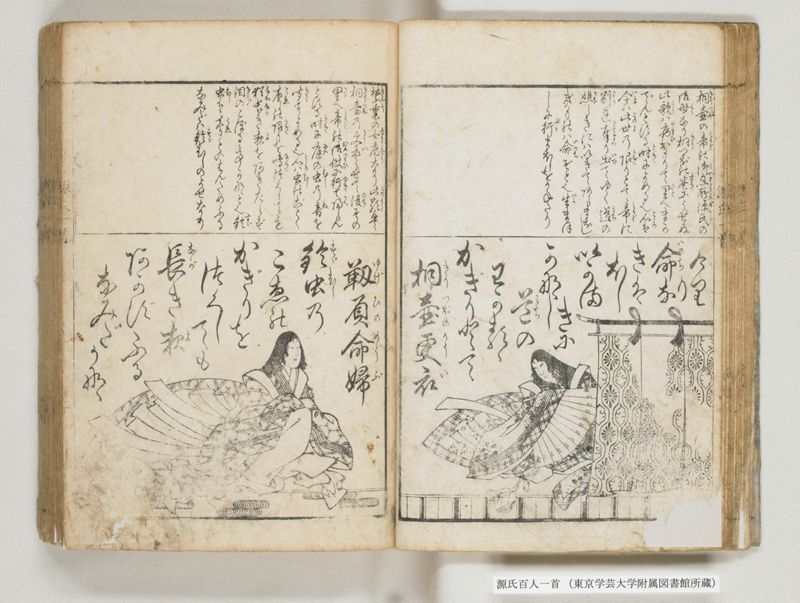
翻刻
【右丁 上段】
桐壺(きりつぼ)の帝(みかど)の御息所(みやすどころ)源氏(げんじ)の
御 母(はゝ)なり桐(きり)つぼの巻(まき)にうせぬ
此 歌(うた)は病(やまひ)おのりて里(さと)へまか
でんとする時(とき)によめる也 心(こゝろ)は
今(いま)は此世(このよ)の限(かぎ)りとて帝(みかど)に
別(わか)れ奉(たてまつ)り出(いで)てゆく道(みち)の
悲(かな)しきにはいきてあらまほし
き【注】ものは命(いのち)ぞと也 生(いか)まほ
しに行(いか)まほしをかねたり
【注 「ぎ」に見えるが別本にて確認。濁点に見える左側はよごれか。右側は「幾」を字母とする仮名の戈づくりの「点」。】
【同 下段 左から読む】
けり
り
命(いのち)な
きは
ほし
いかま
きに
かなし
道(みち)の
わかるゝ
かぎりとて
桐壺更衣(きりつぼのかうい)
【左丁 上段】
禁裏(きんり)の女房(にようばう)なり此歌(このうた)は
桐壺(きりつぼ)の更衣(かうい)うせて後(のち)その
里(さと)へ帝(みかど)の御使(おんつかひ)に行(ゆき)て帰(かへ)らん
とする時(とき)に庭(には)の虫(むし)の音(ね)を
聞(きゝ)てよめるな也 心(こゝろ)は虫(むし)のごとく
声(こゑ)の限(かぎ)りを鳴(なき)つくしても
猶(なほ)長(なが)き夜(よ)をあきたらず
泪(なみだ)のこぼるゝ事かなと也 鈴(すゞ)
虫(むし)は声(こゑ)といはんためふる
なみだは鈴(すゞ)むしのよせなり
【同 下段】
靫負(ゆげひの)【靱は誤】命婦(めうぶ)
鈴虫(すゞむし)の
こゑの
かぎりを
つくし
ても
長(なが)き夜(よ)
あかずふる
なみだかな
現代語訳
【右丁 上段】
桐壺帝の御息所で、源氏の母である。桐壺の巻で亡くなった。この歌は病気が重くなって里へ退出しようとする時に詠んだものである。歌の意味は、今はこの世の最期として帝とお別れ申し上げて出て行く道の悲しさには、生きていたいものは命であるということである。「生きまほし」に「行きまほし」を掛けている。
【同 下段】
桐壺更衣
限りとて
別るる道の
悲しきに
いかまほしきは
命なりけり
【左丁 上段】
禁裏の女房である。この歌は桐壺の更衣が亡くなった後、その実家へ帝の御使いとして行って帰ろうとする時に、庭の虫の声を聞いて詠んだものである。歌の意味は、虫のように声の限りを鳴き尽くしても、なお長い夜を物足りなく涙を流すことよ、ということである。鈴虫は「声」と言うための序詞で、降る涙は鈴虫の寄せ(関連語)である。
【同 下段】
靫負命婦
鈴虫の
声の限りを
尽くしても
長き夜あかず
降る涙かな
英語訳
【Right Page, Upper Section】
This is Emperor Kiritsubo's consort and Prince Genji's mother. She died in the "Kiritsubo" chapter. This poem was composed when her illness worsened and she was about to withdraw to her family home. The meaning of the poem is: now that this is the end of this world, as I bid farewell to the emperor and depart, what I wish could live on in the sadness of this parting path is my life. There is a wordplay between "ikimahoshi" (wanting to live) and "yukimahoshi" (wanting to go).
【Same, Lower Section】
Lady Kiritsubo
When the time comes
to part on this path
of sorrow,
what I long for
is life itself
【Left Page, Upper Section】
This is a court lady of the imperial palace. This poem was composed when, after Lady Kiritsubo's death, she went as the emperor's messenger to the lady's family home and was about to return, hearing the voices of insects in the garden. The meaning is: like insects crying with all their voice until exhausted, I still find the long night insufficient and shed tears endlessly. "Suzumushi" (bell cricket) serves as a preface (jo-kotoba) to introduce "voice," and "falling tears" is associated with the bell cricket.
【Same, Lower Section】
Yugehi no Myōbu
Even after
the bell cricket
exhausts its voice,
the long night brings
unceasing tears