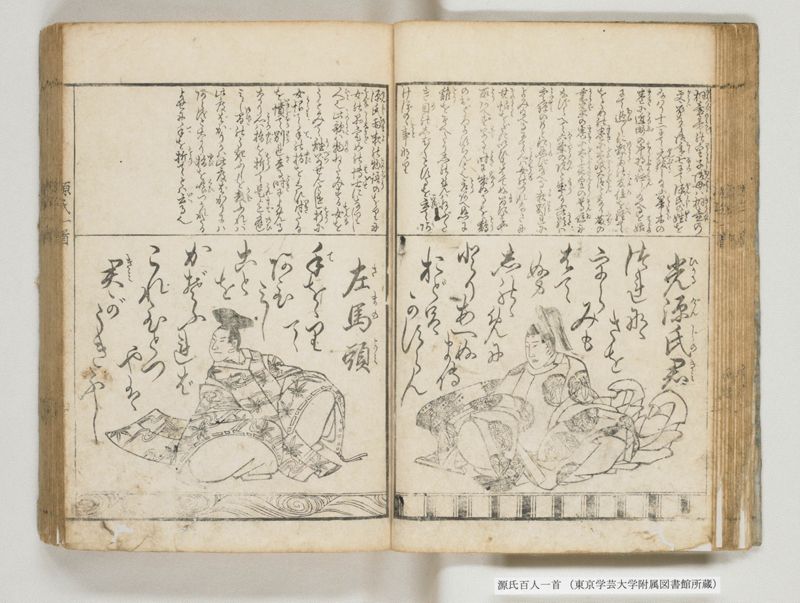
翻刻
【右丁 上段】
桐壺帝(きりつぼのみかど)の皇子(わうじ)御母(おんはゝ)は桐壺(きりつぼ)の
更衣(かうい)なり御 年(とし)七(なゝ つ)にて源氏(げんじ)の姓(せい)を
給はり十二にて元服(げんぶく)し給ふ帚木(はゝきゞ)【箒は俗字】の
巻(まき)に近衛(このゑ)の中将(ちうじやう)に任(にん)じ給へるを始(はじめ)
にて追(おひ)〳〵に数多(あまた)の官位(くはんゐ)を経(へ)て
をとめの巻(まき)に太政大臣(だいぜうだいじん)となり藤(ふぢ)の
裏葉(うらば)の巻(まき)に太上天皇(だじやうてんわう)の尊位(そんゐ)に
なずらへて六条(ろくでう)の院(ゐん)と成(なり)給ふ此 歌(うた)は
空蝉(うつせみ)のもとに忍(しの)び給へる夜(よ)別(わか)れに
よみ給へるにて心(こゝろ)は女(をんな)のつれなさに
其(その)恨(うらみ)をだにいひもはてぬ間(ま)にはや
取(とり)あへず別(わか)るゝ時(とき)に成(なり)ぬるを鶏(とり)
のおどろかすらんと也 取(とり)あへぬに
雞(とり)をそへたりしのゝめはねぶた
き目(め)のしば〳〵とするを云(いひ)てあ
けぼのゝ事(こと)【別本による】なり
【同 下段】
光源氏君(ひかるげんじのきみ)
つれな
さを
うら
みも
はて
ぬ
しのゝめに
とりあへぬ
まて
おどろ
かすらん
【左丁 上段】
源氏(けんじ)雨夜(あまよ)の物語(ものがたり)のをりに
女(をんな)の品定(しなさだ)めの博士(はかせ)になりし
人(ひと)也 此歌(このうた)は物(もの)ねたみする女(をんな)を
うとみて離別(りべつ)せんとせし折(をり)に
女 恨(うらみ)て手(て)の指(ゆび)をくひ付(つき)たる
を憤(いきどほり)て別(わか)れ去(さ)る時(とき)によめる
なり心(こゝろ)は指(ゆび)を折(をり)て是迄(これまで)逢(あひ)
みし間(あひだ)のうきふしを数(かぞ)ふれば
此度ばかりかは此度ばかりには
あらずとなり指(ゆび)を喰(くひ)つかれたる
よせに手(て)を折(をり)てとは云(いへ)る也
【同 下段】
左馬頭(さまのかみ)
手(て)をゝり
て
あひ
みし
こと
を
かぞふれば
これひとつ
やは
君(きみ)が
うきふし
現代語訳
【右丁 上段】
桐壺帝の皇子で、御母は桐壺の更衣である。御年七歳で源氏の姓を賜り、十二歳で元服なさった。「帚木」(箒は俗字)の巻で近衛中将に任じられたのを始めとして、次々と数多の官位を経て、「乙女」の巻で太政大臣となり、「藤裏葉」の巻で太上天皇の尊位になぞらえて六条院と成られた。この歌は空蝉のもとに忍んで行かれた夜、別れ際に詠まれたもので、歌の意味は、女のつれなさにその恨みさえ言い終えないうちに、早くも取り急ぎ別れる時になってしまったのを、鶏が知らせているのだろう、ということである。「取りあへぬ」に「鶏」を掛けている。「しののめ」は眠たげな目がしばしばするのを言って、あけぼののことである【別本による】。
【同 下段】
光源氏君
つれなさを
恨みもはてぬ
しののめに
鳥あへぬまで
驚かすらん
【左丁 上段】
源氏が雨夜の物語の折に、女の品定めの博士になった人である。この歌は嫉妬深い女を疎んじて離別しようとした折に、女が恨んで手の指を噛み付いたのに憤って別れ去る時に詠んだものである。歌の意味は、指を折って今まで逢い見た間の辛い出来事を数えれば、この度ばかりだろうか、この度ばかりではない、ということである。指を噛み付かれたことに寄せて「手を折りて」と言っているのである。
【同 下段】
左馬頭
手を折りて
あひ見し事を
数ふれば
これひとつやは
君がうき節
英語訳
【Right Page, Upper Section】
A prince of Emperor Kiritsubo, whose mother was Lady Kiritsubo. At the age of seven, he was granted the surname Genji, and at twelve he came of age. Beginning with his appointment as Middle Captain of the Inner Palace Guards in the "Hahakigi" (Broom Tree) chapter (hahaki is the vulgar form of the character), he successively held many court ranks and positions, becoming Chancellor in the "Otome" (Maidens) chapter, and in the "Fuji no Uraba" (Wisteria Leaves) chapter, he was honored with a title comparable to Retired Emperor and became known as Rokujō-in. This poem was composed on the night he secretly visited Utsusemi, at the moment of parting. The meaning is: the woman's coldness prevented him from even finishing expressing his resentment, and already the time had come to part hastily, which the rooster announces. There is a wordplay between "toriahenu" (cannot manage) and "tori" (bird/rooster). "Shononome" refers to drowsy eyes blinking frequently, meaning dawn [according to an alternative text].
【Same, Lower Section】
Prince Hikaru Genji
Your coldness—
my resentment unfinished
at dawn
the bird startles us
before we can manage
【Left Page, Upper Section】
This is the person who became an expert on evaluating women during Genji's rainy night conversations. This poem was composed when he was trying to separate from a jealous woman he had grown to dislike, and when the woman bit his finger in resentment, he became angry and left her. The meaning is: counting on his fingers the painful incidents during their meetings, was this the only time? No, it was not just this once. He uses the metaphor "folding fingers" (to count) in reference to having his finger bitten.
【Same, Lower Section】
Sama no Kami (Master of the Left Division of Bureau of Horses)
Folding my fingers
to count the times
we have met—
is this just one
of your painful moments?