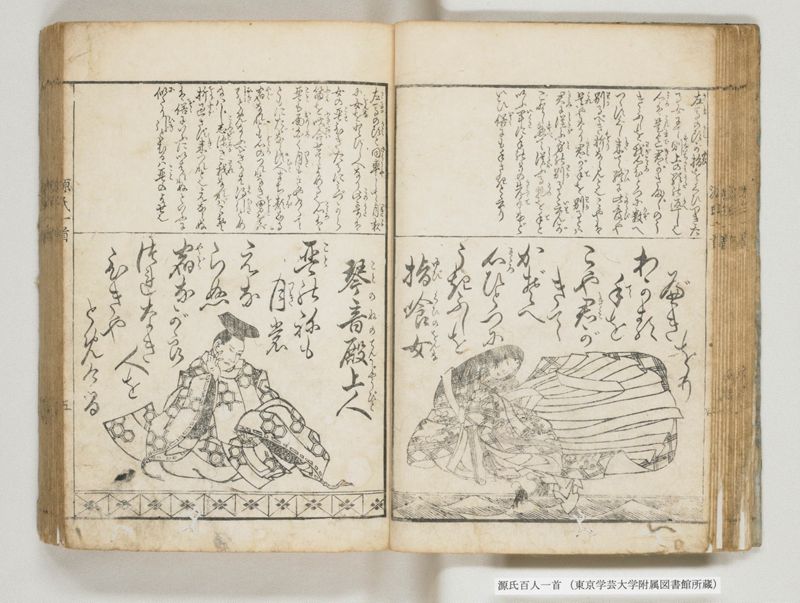
翻刻
【右丁 上段】
左馬(さま)の頭(かみ)が指(ゆび)をくひつきた
る女にて則(すなはち)上(かみ)の歌(うた)の返(かへ)し也
心(こゝろ)は是迄(これまで)君(きみ)がさま〴〵のう
きふしを我心(わがこゝろ)ひとつに数(かぞ)へ
つゝすぐし来(き)て終(つひ)に此度(このたび)や
別(わか)るべき折(をり)ならんと也こやは
是(これ)やなり君(きみ)が手(て)を別(わか)るとは
君(きみ)に従(したが)ふ身(み)の別(わか)ると云(いは)んが
ごとし総(すべ)【惣】て従(したが)ふる物(もの)を手(て)と
いふ軍(いくさ)に手のもの先手(さきて)など
いひ俗(ぞく)にも手さきと云り
【同 下段 左から読む】
をり
べき
わかる
手(て)を
こや君(きみ)が
きて
かぞへ
心(こゝろ)ひとつに
うきふしを
指喰女(ゆびくひのをんな)
【左丁 上段】
左馬(さま)の頭(かみ)と同車(どうしや)して月夜(つきよ)
に女(をんな)をとひし人なり此哥(このうた)は
女の琴(こと)ひきたるにみづから
笛(ふえ)を吹合(ふきあは)せてよめる也 心(こゝろ)は
琴(こと)も面白(おもしろ)く月(つき)もさやけくて
ともにたゞならず人(ひと)まち顔(がほ)なる
宿(やど)なれども心(こゝろ)のつれなき男(をとこ)をば
引(ひき)とめ給ふべきかは得(え)引(ひき)とめ
給はじ志(こゝろざし)深(ふか)き我(われ)なればこそ
折(をり)過(すご)さず来(き)つれと也えならぬ
は俗(ぞく)にいふにいはれぬといふに
似(に)たり引(ひき)とむるは琴(こと)のよせ也
【同 下段】
琴音(ことのねの)殿上人(てんじやうびと)
琴(こと)のねも
月(つき)も
えな
らぬ
宿(やど)ながら
つれなき
人を
ひきや
とめける
現代語訳
【右丁 上段】
左馬頭が指を噛み付いた女で、すなわち上の歌の返歌である。歌の意味は、今まで君のさまざまな辛い出来事を私の心一つで数えながら過ごしてきて、ついにこの度が別れるべき時なのだろうか、ということである。「こやは」は「これやは」である。「君が手を」別れるとは、君に従う身が別れると言うようなものである。総じて従うものを「手」という。軍では「手の者」「先手」などと言い、俗にも「手先」と言う。
【同 下段 左から読む】
指喰女(指を噛んだ女)
うき節を
心ひとつに
数へ来て
こや君が手を
別るべき折
【左丁 上段】
左馬頭と同じ車に乗って月夜に女を訪ねた人である。この歌は女が琴を弾いているのに自ら笛を吹き合わせて詠んだものである。歌の意味は、琴も面白く月も清らかで、共に格別であり、人を待つような様子の宿であるが、心のつれない男をお引き止めになることができようか、いやお引き止めになれないでしょう。志の深い私だからこそ、時を逃さずやって来たのです、ということである。「えならぬ」は俗に言う「言われぬ」というのに似ている。「引きとむる」は琴の縁語である。
【同 下段】
琴音殿上人
琴の音も
月もえならぬ
宿ながら
つれなき人を
引きやとめける
英語訳
【Right Page, Upper Section】
This is the woman who bit Sama no Kami's finger, and this is her reply to the previous poem. The meaning is: having counted in my heart alone all your various painful moments until now, is this finally the time we should part? "Koyaha" means "kore yaha" (is this?). "Separating from your hand" is like saying that one who follows you is separating. In general, those who follow are called "te" (hands). In military terms, they say "te no mono" (one's men) or "sakite" (vanguard), and colloquially "tesaki" (agent/subordinate).
【Same, Lower Section, read from left】
The Finger-Biting Woman
These painful moments
I have counted alone
in my heart—
is this the time
to part from your hand?
【Left Page, Upper Section】
This is the person who rode in the same carriage as Sama no Kami to visit women on a moonlit night. This poem was composed when he played his flute to accompany a woman playing the koto. The meaning is: both the koto music is delightful and the moon is clear, both are extraordinary, and though this dwelling seems to await someone, could you detain a man whose heart is cold? No, you could not detain him. It is because I am one of deep devotion that I have come without missing this moment. "E naranu" resembles the colloquial expression "iwarenu" (indescribable). "Hikitomuru" (to detain) is a related word to "koto" (both meaning "thing" and referring to the musical instrument).
【Same, Lower Section】
The Courtier of Koto Music
Though both koto music
and moon are beyond compare
at this dwelling,
could she detain
a man so cold-hearted?