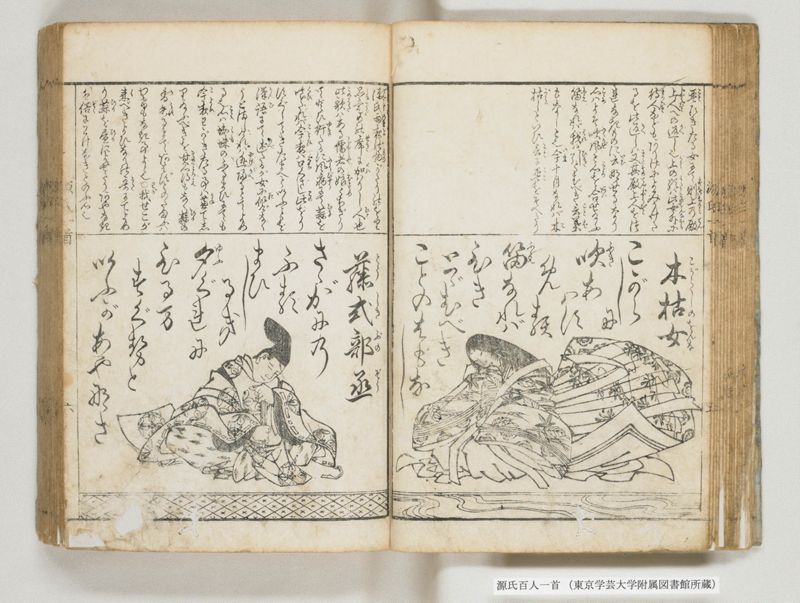
翻刻
【右丁 上段】
琴(こと)ひきたる女にて則(すなはち)上(かみ)の殿(てん)
上人(じやうびと)への返(かへ)し也 上(かみ)の歌(うた)は此女(このをんな)外(ほか)に
待人(まつひと)などもありげによみかけた
るを此 返(かへ)しは又(また)其(その)殿上人(てんじやうびと)をつ
れなきものに云(いひ)なせるなり
心(こゝろ)はよそ吹(ふく)風(かぜ)と心(こゝろ)を合(あは)せ給ふ
笛(ふえ)なれば我(われ)は引(ひき)とむべき言葉(ことば)
もなしと也 今(いま)十月なれば木(こ)
枯(がら)しといひ言(こと)に琴(こと)をそへたり
【同 下段】
木枯女(こがらしのをんな)
こがら
し
に
吹(ふき)あ
はす
める
笛(ふえ)なれば
ひき
とゞむべき
ことのはもな
し
【左丁 上段】
源氏(げんじ)雨夜(あまよ)の物(もの)がたりのをり
品定(しなさだ)めの席(せき)に加(くは)はりし人(ひと)也
此歌(このうた)はある儒者(じゆしや)の娘(むすめ)とちぎり
てとひ行(ゆき)たるに風病(ふうびやう)にて蒜(ひる)を
喰(くひ)たれば今夜(こよひ)は口(くち)くさし此(この)をり
すぐしてきたまへといふことを
漢語(かんご)にて述(のべ)たるが女に似げなく
うとましければ逃帰(にけかへ)るとてよめ
る也 心(こゝろ)は蜘蛛(くも)のふるまひにても
今夜(こよひ)わがきたる事は兼(かね)てし
りぬべきを其(その)心得(こゝろえ)もなく蒜(ひる)の
香(か)失(うす)るまであはずとのたまふは
わけもなき事よと也○我(わが)せこが
来(く)べきよひなりの哥(うた)にてよめ
り蒜(ひる)を昼(ひる)によせたりあやなき
は俗(ぞく)にわけなきといふ心也
【同 下段】
藤式部丞(とうしきぶのぞう)
さゝがにの
ふる
まひ
し
るき
夕(ゆふ)ぐれに
ひるま
すぐせと
いふがあやなさ
現代語訳
【右丁 上段】
琴を弾いた女で、すなわち上の殿上人への返歌である。上の歌はこの女の他に待つ人などもいそうに詠みかけたのを、この返歌はまたその殿上人をつれない者として言いくるめているのである。
歌の意味は、あちらこちらに吹く風と心を合わせなさる笛なので、私にはお引き止めする言葉もありません、ということである。今は十月なので木枯らしと言い、言葉に「琴」を添えている。
【同 下段】
木枚女(木枯らしの女)
木枯らしに
吹き合わせる
笛なれば
引き留むべき
言の葉もなし
【左丁 上段】
源氏が雨夜の物語の折、品定めの席に加わった人である。この歌はある儒者の娘と契りを交わして訪ね行ったところ、風邪で蒜を食べていたので「今夜は口が臭い、この時をやり過ごして来てください」ということを漢語で述べたのが、女らしくなく疎ましいので逃げ帰る時に詠んだものである。歌の意味は、蜘蛛の振る舞いでも今夜私が来ることは前もって知ることができるはずなのに、その心得もなく蒜の匂いが薄れるまで会わないとおっしゃるのは訳もないことですよ、ということである。○「わが背子が来べき夜なり」の歌によって詠んだものである。「蒜」を「昼」に寄せている。「あやなき」は俗に「わけなき」という意味である。
【同 下段】
藤式部丞
蜘蛛の
振る舞い知るき
夕暮れに
昼間過ぐせと
言ふがあやなさ
英語訳
【Right Page, Upper Section】
This is the woman who played the koto, and this is her reply to the above courtier. The previous poem was composed as if suggesting this woman had other people waiting for her, while this reply in turn portrays that courtier as a cold-hearted person.
The meaning is: since your flute harmonizes with winds that blow here and there, I have no words to detain you. Since it is now the tenth month, she speaks of "kogarashi" (autumn wind), adding "koto" (both meaning "word/thing" and referring to the musical instrument) to her words.
【Same, Lower Section】
The Woman of Autumn Winds
To the autumn wind
your flute harmonizes—
I have no words
with which
to detain you.
【Left Page, Upper Section】
This is the person who participated in the ranking of women during Genji's rainy night tales. This poem was composed when he had made a promise with a Confucian scholar's daughter and went to visit her, but she had eaten garlic due to a cold and said in Chinese "Tonight my breath smells bad, please wait until this time passes and then come." Since this was unbecoming of a woman and disagreeable, he composed this as he fled back home. The meaning is: even spiders' behavior can predict that I would come tonight, yet without such understanding, saying to wait until the garlic smell fades is unreasonable. ○This was composed based on the poem "waga seko ga ku beki yo nari" (this is the night my beloved will come). "Hiru" (garlic) is associated with "hiru" (daytime). "Ayanaki" means "wakenaki" (unreasonable) in common speech.
【Same, Lower Section】
Tō Shikibu no Jō
On this evening when
spider behavior reveals
[your coming],
saying "wait until daytime passes"—
how unreasonable!