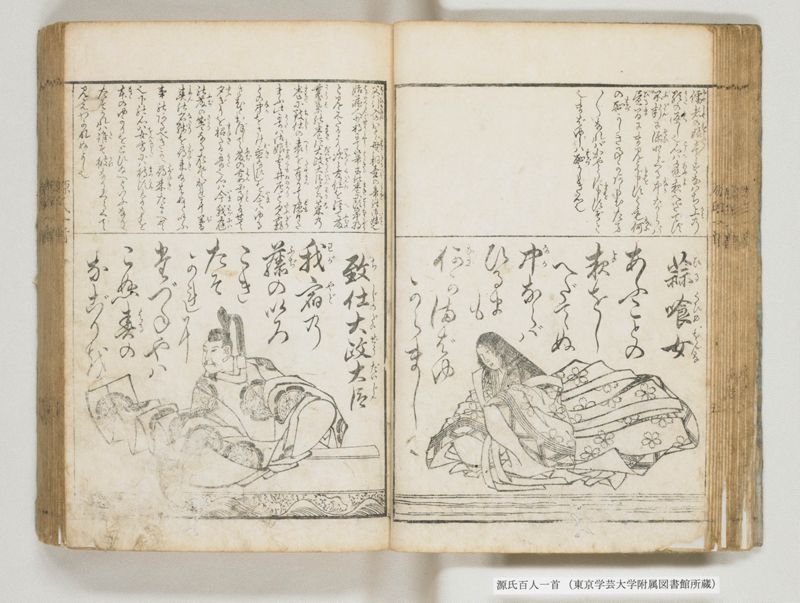
翻刻
【右丁 上段】
儒者(じゆしや)の娘(むすめ)にてすなはち上(かみ)の
歌(うた)の返(かへ)し也 心(こゝろ)は逢夜(あふよ)へだてず
不断(ぶだん)に添(そひ)とぐる中(なか)ならば
昼間(ひるま)にま見え申(まを)すとも何(なに)
の恥(はづ)かしき事かあらむたま
〳〵なればかやうに申(まを)すぞと
也まばゆしは恥(はづ)かしき心也
【同 下段】
蒜喰女(ひるくひのをんな)
あふことの
夜(よ)をし
へだてぬ
中(なか)ならば
ひるま
も
何(なに)かまばゆ
からまし
【左丁 上段】
父(ちゝ)は引入(ひきいれ)のおとゞ母(はゝ)は桐壺(きりつぼ)の帝(みかど)の御 妹(いもと)也
始(はじめ)蔵人少将(くらんどせうしやう)にて帚木(はゝきゞ)【箒は俗字】の巻(まき)に頭(とう)の中将(ちうじやう)
と見えたるより次々(つぎ〳〵)官位(くはんゐ)を経(へ)て藤(ふぢの)
裏葉(うらば)の巻(まき)に大政大臣(だいぜうたいじん)若菜(わかな)の
巻(まき)に致仕(ちじ)の表(へう)を奉(たてまつ)りて隠(こも)りた
まふ此 哥(うた)は御 娘(むすめ)雲井雁(くもゐのかり)と夕霧(ゆふぎり)
との中(なか)をさけ置(おき)給ひしを今(いま)はゆる
さむとおぼして藤(ふぢ)の宴(えん)に事(こと)よせて
夕(ゆふ)ぎりを招(まねき)たる哥(うた)也心は今(いま)我(わが)庭(には)
の藤(ふぢ)の盛(さかり)なるたそかれに暮(ぼ)
春(しゆん)の名残(なごり)を尋(たづね)来(き)給はぬといふ
事のあるべきかは尋(たづね)来(き)たまへと
也下の心は女方(をんながた)には待(まつ)頃(ころ)なるを
本(もと)のゆかりをとひ給へといふなり
たそかれは誰(た)そ彼(かれ)なりくらくて
見えわかれぬよし也
【同 下段】
致仕(ちじの)大政大臣(だいぜうだいじん)
我宿(わがやど)の
藤(ふぢ)のいろ
こき
たそ
かれに
たづねやは
こぬ春(はる)の
なごりを
現代語訳
【右丁 上段】
儒者の娘で、すなわち上の歌への返歌である。歌の意味は、逢う夜を隔てず不断に添い遂げる仲であるならば、昼間にお目にかかるとしても何の恥ずかしいことがあろうか。たまたまなのでこのように申し上げるのです、ということである。「まばゆし」は恥ずかしいという意味である。
【同 下段】
蒜食い女
逢うことの
夜をし隔てぬ
仲ならば
昼間も何か
まばゆからまし
【左丁 上段】
父は頭中将(後の致仕の大臣)、母は桐壺帝の御妹である。初めは蔵人少将として「帚木」【箒は俗字】の巻に頭中将と見えてから次々と官位を経て、「藤裏葉」の巻で大政大臣、「若菜」の巻で致仕の表を奉って隠居なさった。この歌は御娘の雲居雁と夕霧との仲を裂いて置かれたのを、今は許そうとお思いになって藤の宴に託して夕霧を招いた歌である。歌の意味は、今我が庭の藤が盛りの夕暮れに、暮春の名残を訪ね来られないということがあるだろうか、いや訪ね来てください、ということである。下の心は、女の方には待っている頃なので、元の縁を尋ねてくださいということである。「たそかれ」は「誰そ彼」のことで、暗くて見分けがつかない様子のことである。
【同 下段】
致仕の大政大臣
我が宿の
藤の色濃き
たそがれに
訪ねやは来ぬ
春の名残を
英語訳
【Right Page, Upper Section】
This is the Confucian scholar's daughter, and this is her reply to the above poem. The meaning of the poem is: if we were in a relationship where we met continuously without separating our meeting nights, what would be shameful about meeting during the daytime? Since it happens to be so, this is what I say. "Mabayushi" means "shameful" or "embarrassing."
【Same, Lower Section】
The Garlic-Eating Woman
If we were lovers
who did not separate
our meeting nights,
what would be shameful
about the daytime too?
【Left Page, Upper Section】
His father is Tō no Chūjō (later the retired Chancellor), and his mother is the sister of Emperor Kiritsubo. He first appeared as Kurōdo Shōshō in the "Hahakigi" chapter 【"hōki" is a vulgar character】 under the name Tō no Chūjō, then progressed through various court ranks, becoming Daijō Daijin in the "Fuji no Uraba" chapter, and submitting his retirement petition in the "Wakana" chapter to go into seclusion. This poem was composed when he decided to allow the relationship between his daughter Kumoi no Kari and Yūgiri, whom he had previously kept apart, and invited Yūgiri under the pretext of a wisteria banquet. The meaning is: would you not come to visit the lingering traces of late spring in this twilight when the wisteria in my garden is in full bloom? Please do come and visit. The underlying meaning is that the woman is waiting, so please come and renew your former connection. "Tasokare" means "who is that person" - referring to the dimness when people cannot be distinguished.
【Same, Lower Section】
The Retired Chancellor
At my residence,
in the twilight when
wisteria blooms deep-colored—
will you not come to seek
the remnants of spring?