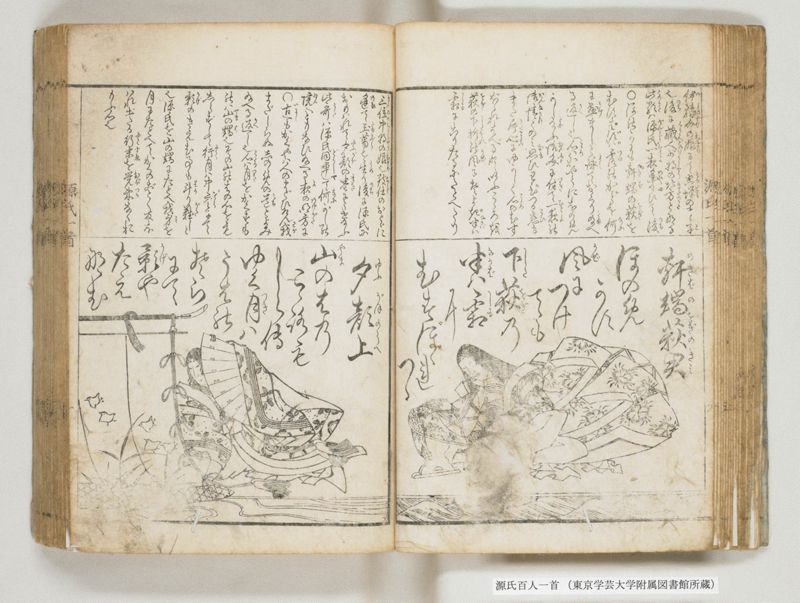
翻刻
【右丁 上段】
伊予介(いよのすけ)の娘(むすめ)にて空蝉(うつせみ)のまゝ子(こ)
也 後(のち)に蔵人少将(くらんどのせうしやう)の北方(きたのかた)となる
此歌(このうた)は源氏(げんじ)一夜(ひとよ)逢(あひ)給(たま)ひて後(のち)
○ほのかにも軒端(のきば)の荻(をぎ)を
むすばずば露(つゆ)のかごとを何(なに)
に懸(かけ)ましと詠(よみ)ておくり給(たま)へ
る返(かへ)し也 心(こゝろ)はかやうにほのめ
かし給(たま)ふ御文(おんふみ)に付(つき)て一夜(ひとよ)の
御情(おんなさけ)とのみ思(おも)ひわびつる恋(こひ)も
また片心(かたこゝろ)にゆかしく心(こゝろ)のむす
ぼゝれはべるといふこゝろを
荻(をぎ)の下折(したをれ)の風(かぜ)にそよぎ半(なかば)は
霜(しも)にこりたるにたとへたり
【同 下段】
軒端荻君(のきばのをぎのきみ)
ほのめ
かす
風(かぜ)につけ
ても
下荻(したをぎ)の
半(なかば)は霜(しも)
に
むすぼゝれ
つゝ
【左丁 上段】
三位中将(さんゐのちうじやう)の娘(むすめ)也 致仕(ちじ)のおとゞに
逢(あひ)て玉葛(たまかづら)を生(うめ)り後(のち)に源氏に
おもはれて夕顔(ゆふがほ)の巻(まき)にうせ給ふ
此 哥(うた)は源氏 同車(どうしや)して何(なに)がしの
院(ゐん)へともなひ給へる夜(よ)の明方(あけがた)に
○古(いにし)へもかくやは人のまどひけん我(わが)
まだしらぬしのゝめの道(みち)とよみ
給へる返(かへ)し也 心(こゝろ)は月(つき)をかくすも
のは山(やま)の端(は)也 その山のはの心をも
しらずして行(ゆく)月は中 空(ぞら)にて
影(かげ)のきえむ事も計(はか)り難(がた)しと
也源氏を山の端にたとへ我 身(み)を
月にたとへてかくのごとく友な
はれ出たる行末(ゆくすゑ)を覚束(おぼつか)なくお
もふ心也
【同 下段】
夕顔上(ゆふがほのうへ)
山(やま)のはの
こゝろも
しらて
ゆく月(つき)は
うはの
そら
にて
影(かげ)や
たえ
なむ
現代語訳
【右丁 上段】
伊予介の娘で空蝉の継子である。後に蔵人少将の北の方となる。この歌は源氏が一夜契りを交わされた後、「ほのかにも軒端の荻を結ばずば露の言いがかりを何にかけよう」と詠んで送られた返歌である。歌の意味は、このようにほのめかしてくださるお手紙によって、一夜のご愛情とだけ思い悩んでいた恋も、またこちらの片思いとして心が惹かれ、心が結ばれていますという意味を、荻の下折れが風にそよぎ、半分は霜で凍っているのに例えたものである。
【同 下段】
軒端荻君
ほのめかす
風につけても
下荻の
半ばは霜に
結ぼぼれつつ
【左丁 上段】
三位中将の娘である。致仕の大臣と契りを結んで玉鬘を産んだ。後に源氏に愛されて「夕顔」の巻で亡くなる。この歌は源氏と同車して某院へと共に行かれた夜の明け方に、「昔もこのように人は迷ったのだろうか。私はまだ知らない東雲の道を」と詠まれた返歌である。歌の意味は、月を隠すものは山の端である。その山の端の心も知らずに行く月は中空で、影が消えることも計り難いということである。源氏を山の端に例え、我が身を月に例えて、このように連れ出された行く末を心配に思う気持ちである。
【同 下段】
夕顔上
山の端の
心も知らで
行く月は
うわの空にて
影や絶えなん
英語訳
【Right Page, Upper Section】
She is the daughter of the Governor of Iyo and Utsusemi's stepdaughter. Later she becomes the principal wife of Kurando no Shōshō (Lesser Captain of the Inner Palace Guards). This poem is her reply to Genji's poem sent after they spent one night together: "If I had not even faintly tied the pampas grass at the eaves, what would I have blamed the dew's complaint upon?" The meaning is that through such suggestive letters from him, what she had been lamenting as merely one night of his affection has also become, from her side of unrequited love, something that draws her heart and binds her feelings—this she compares to the bent pampas grass swaying in the wind, half frozen with frost.
【Same, Lower Section】
Lady of the Eaves Pampas Grass
Hinting at feelings
carried on the wind,
the lower pampas grass
is half-bound
with frost.
【Left Page, Upper Section】
She is the daughter of Sanmi no Chūjō (Third Rank Middle Captain). She had relations with the Retired Minister and gave birth to Tamakazura. Later she was loved by Genji and died in the "Yūgao" chapter. This poem is her reply to Genji's poem composed at dawn on the night when they rode together in the same carriage to a certain mansion: "Did people in the past also lose their way like this? I still do not know this path of dawn." The meaning is that what hides the moon is the mountain's edge. The moon that travels without knowing the heart of that mountain's edge is in the middle sky, and it is difficult to predict when its reflection might disappear. She compares Genji to the mountain's edge and herself to the moon, expressing her anxiety about the uncertain future of being led away like this.
【Same, Lower Section】
Lady Yūgao
Not knowing the heart
of the mountain's edge,
the traveling moon
in the empty sky above—
will its reflection fade away?