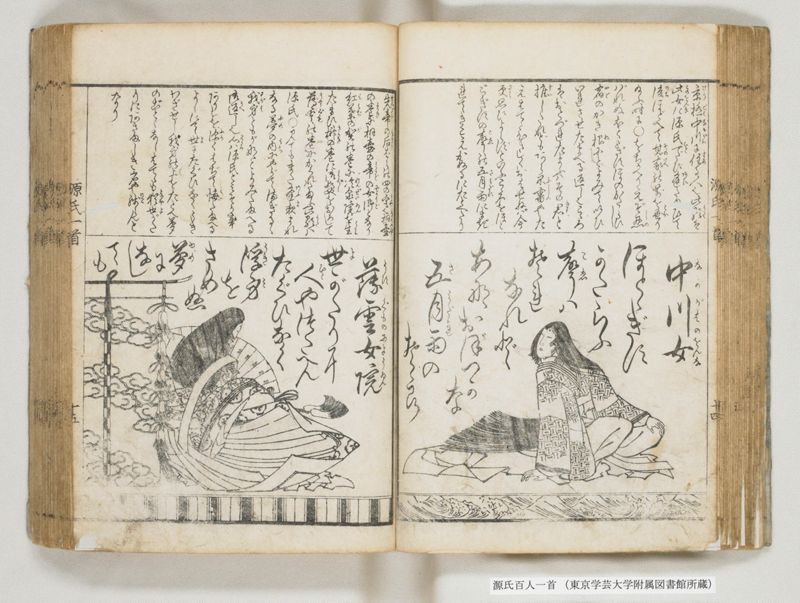
翻刻
【右丁 上段】
京極(けうごく)中川(なかがは)に住(すめ)る人也此 歌(うた)は
此女(このをんな)に源氏 一(ひと)だび逢(あひ)たまひて
後(のち)ほどへて其(その)家(いへ)の前を通(とほ)り
給ふ時に○をちかへりえぞ忍(しの)
ばれぬほとゝぎすほのかたらひし
宿(やど)のかき根(ね)にとよみていひ
いれさせたまへる返し也こゝろ
はおとづれたまふはその君(きみ)と
推(すい)したれどもあら不審(ふしん)やた
えはてゝひさしくおはせねば今
更(さら)思ひよらずといふこゝろをほと
とぎすの声(こゑ)の五月雨(さみだれ)にまぎ
れてきこえかぬるにたとへたり
【同 下段】
中川女(なかがはのをんな)
ほとゝぎす
かたらふ
声(こゑ)は
それ
なれど
あなおぼつか
な
五月雨(さみだれ)の
そら
【左丁 上段】
先帝(せんだい)の后(きさい)ばらの四(し)の宮(みや)也 桐壺(きりつぼ)
の巻(まき)に桐壺の帝(みかど)の女御(にようご)となり
紅葉(もみぢ)の賀(が)の巻に冷泉院(れんぜいゐん)を生(うみ)
たまひ榊(さかき)の巻に御髪(みぐし)をおろして
薄雲(うすぐも)の巻にかくれたまふ此 歌(うた)は
源氏○見てもまた逢夜(あふよ)まれ
なる夢(ゆめ)の内(うち)にやがてまぎるゝ
我身(わがみ)ともがなとよみたまへる
御 返(かへ)し也 心(こゝろ)は源氏とみそか事
ありしを深(ふか)くはぢて悔(くい)たまへる
よしにて世(よ)にたぐひなくうき
わざせし我身の上をたとへ夢
のごとくなしはてゝも猶(なほ)世(よ)がた
りにあさましき名や残(のこ)らんと
なり
【同 下段】
薄雲女院(うすぐものにようゐん)
世(よ)がたりに
人(ひと)やつたへん
たぐひなく
浮身(うきみ)
を
さめぬ
夢(ゆめ)
に
なし
て
も
現代語訳
【右丁 上段】
京極中川に住む人である。この歌は、この女に源氏が一度お逢いになった後、しばらく経ってその家の前を通りなさった時に、「立ち返りえぞ忍ばれぬほととぎす ほのか語らいし宿の垣根に」と詠んで言い入れさせなさった返歌である。歌の意味は、お訪ねくださるのはあの君と推察はするけれども、ああ不審なことよ、音信が絶えて久しくいらっしゃらないので、今更思いも寄らない、という心を、ほととぎすの声が五月雨に紛れて聞こえないことに例えたものである。
【同 下段】
中川の女
ほととぎす
語らう声は
それなれど
あな覚束な
五月雨の空
【左丁 上段】
先帝の后腹の四の宮である。「桐壺」の巻で桐壺帝の女御となり、「紅葉賀」の巻で冷泉院をお生みになり、「榊」の巻でお髪をおろして出家し、「薄雲」の巻でお隠れになる。この歌は、源氏が「見てもまた逢う夜まれなる夢の内に やがて紛るる我が身ともがな」と詠みなさったお返歌である。歌の意味は、源氏と密通したことを深く恥じて後悔なさっているということで、世にたぐいなく辛いことをした我が身の上を例えて、夢のように死んでしまっても、なお世間の語り草として恥ずかしい名が残るであろうか、ということである。
【同 下段】
薄雲女院
世語りに
人や伝えん
たぐいなく
憂き身を
覚めぬ夢に
なしても
英語訳
【Right Page, Upper Section】
This is a person who lived in Nakagawa in Kyōgoku. This poem is a reply to when Genji, after meeting this woman once, later passed by her house and sent in a poem: "I cannot help but return, cuckoo, to the hedge of the dwelling where we spoke briefly." The meaning is that while she surmises that the visitor is that lord, she expresses uncertainty, saying that since communication ceased and he has not come for so long, she cannot believe it now - this feeling is compared to the cuckoo's voice being inaudible, lost in the May rains.
【Same, Lower Section】
The Woman of Nakagawa
Cuckoo,
though the voice that speaks
is indeed yours,
how uncertain it is
in this rainy May sky
【Left Page, Upper Section】
This is the Fourth Princess, daughter of the previous emperor's consort. In the "Kiritsubo" chapter she becomes Imperial Consort to Emperor Kiritsubo, in the "Momiji no Ga" chapter she gives birth to Emperor Reizei, in the "Sakaki" chapter she takes the tonsure, and in the "Usugumo" chapter she dies. This poem is a reply to Genji's poem: "Would that I could be one who, even after seeing you, disappears into dreams where nights of meeting are rare." The meaning is that she deeply regrets and feels shame for her secret affair with Genji, and comparing her situation of having done something incomparably painful, she wonders whether, even if she were to die like a dream, her shameful reputation might still remain as gossip for generations.
【Same, Lower Section】
Lady Usugumo
Will people perhaps
tell in their tales
of this incomparably
sorrowful life,
even if I make it
a dream from which I never wake?