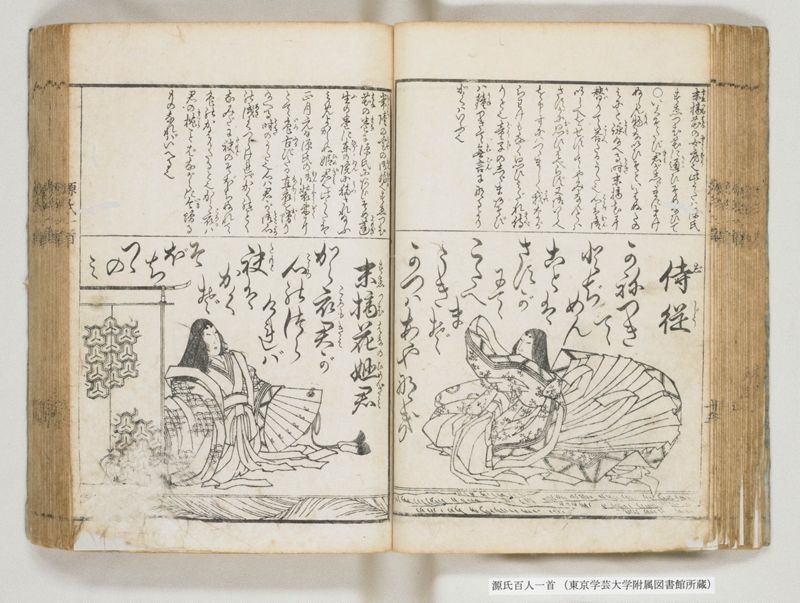
翻刻
【右丁 上段】
末摘花(すゑつむはな)の女房(にようばう)也此うたは源氏
すゑつむ花に通(かよ)ひそめ給ひて
○いくそたび君(きみ)がしゞまにまけ
ぬらん物(もの)ないひそといはぬこの
みにと詠(よみ)給へる時(とき)末摘花に
替(かは)りて答(こたへ)たるうた也 心(こゝろ)は御(おん)
いらへをせずしてやみなんとは
さすがに思(おも)ひはべらず又御いらへ
を申すにはつゝましく我(われ)なが
らわけもなく思ひみだれ侍(はべ)
りと也 童子(どうじ)のしゞまあそび
は鐘(かね)つきて無言(むごん)になるより
かくはいふ也
【同 下段】
侍従(じじう)
かねつき
て
とぢ
めん
ことは
さすが
にて
こたへ
ま
うきぞ
かつはあやなき
【左丁 上段】
常陸(ひたち)の宮(みや)の御娘(おんむすめ)也すゑつむ
花(はな)の巻(まき)に源氏にあひそめ蓬(よもぎ)
生(ふ)の巻に東(ひがし)の院(ゐん)に移(うつ)され給ふ
みめよからぬ姫君(ひめぎみ)也此うたは
正月元日源氏の御装束(おんしやうぞく)に
とて色(いろ)古(ふる)びたる直衣(なほし)を贈(おく)り
給へる時(とき)のうた也心は君が御心(みこゝろ)
の浅(あさ)くつらければかくのごとく
なみだに袂(たもと)のそぼちぬれて
色のかはりたると也から衣(ころも)は
君の枕(まくら)ことばながらに今(いま)贈る
ものなればいへる也
【同 下段】
末摘花(すゑつむはなの)姫君(ひめぎみ)
から衣(ころも)君(きみ)が
心(こゝろ)のつら
ければ
袂(たもと)は
かく
ぞ
そ
ぼ
ち
つゝ
の
み
現代語訳
【右丁 上段】
末摘花の女房である。この歌は、源氏が末摘花に通い始めなさって、「いく度となく君がしじまに負けぬらん 物な言いそと言わぬこの身に」と詠みなさった時、末摘花に代わって答えた歌である。歌の意味は、お返事をせずに済ませようとは、さすがに思っておりません。また、お返事を申し上げるには恥ずかしく、我ながら分別もなく思い乱れております、ということである。童子のしじま遊びは、鐘を突いて無言になることから、このように言うのである。
【同 下段】
侍従
鐘突きて
閉じめんことは
さすがにて
答えまうきぞ
かつは理由なき
【左丁 上段】
常陸宮のお娘である。「末摘花」の巻で源氏にお会いし始め、「蓬生」の巻で東の院に移されなさる。容貌の良くない姫君である。この歌は、正月元日に源氏のお召し物にと、色褪せた直衣を贈りなさった時の歌である。歌の意味は、君のお心が薄情で辛いので、このように涙で袂が濡れて色が変わったのです、ということである。「唐衣」は君の枕詞でありながら、今贈る物なので用いたのである。
【同 下段】
末摘花の姫君
唐衣
君が心の
つらければ
袂はかくぞ
そぼちつつのみ
英語訳
【Right Page, Upper Section】
This is a lady-in-waiting to Suetsumuhana (Princess Hitachi). This poem was composed when Genji began visiting Suetsumuhana and sent the poem: "How many times must I lose to your silence? This body that does not say 'do not speak.'" This is the reply given on behalf of Suetsumuhana. The meaning is: "I do not think I should simply remain without reply, but I am too embarrassed to respond, and I am confused and distressed by my own lack of composure." This refers to the children's "silence game" where they strike a bell and become silent.
【Same, Lower Section】
Lady-in-waiting (Jijū)
To strike the bell
and close [in silence]
is natural, yet
replying is painful—
how unreasonable it is
【Left Page, Upper Section】
This is the daughter of Prince Hitachi. In the "Suetsumuhana" chapter she first meets Genji, and in the "Yomogiu" chapter she is moved to the Eastern Palace. She is a princess of poor appearance. This poem was composed when she sent Genji a faded court robe as New Year's attire for the first day of the year. The meaning is: because your heart is shallow and cruel, my sleeves have become wet with tears and changed color like this. "Kara-koromo" (Chinese robe) is used as a pillow word for "kimi" (you), but it also refers to the actual garment being sent.
【Same, Lower Section】
Princess Suetsumuhana
Chinese robe—
because your heart
is so cruel,
my sleeves are thus
ever dampened with tears