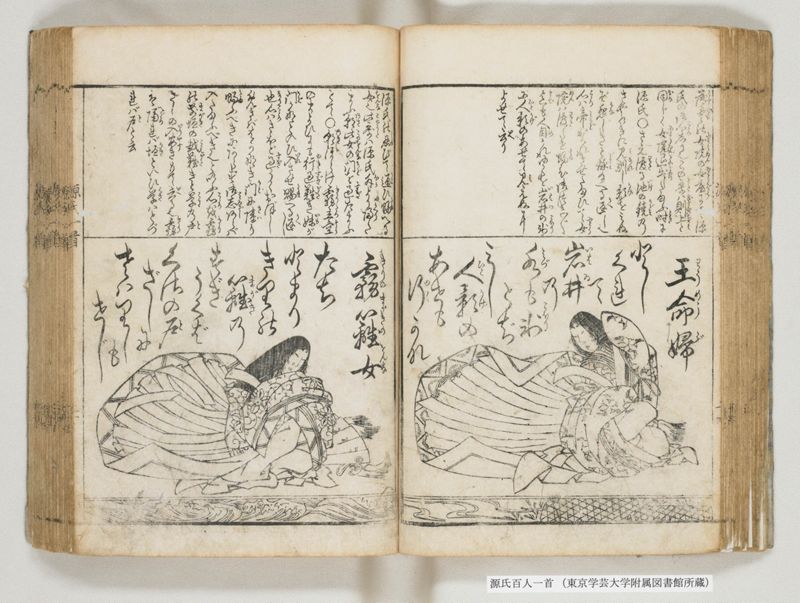
翻刻
【右丁 上部】
薄雲(うすぐも)の女院(にようゐん)の女房(にようばう)にて源
氏の御 心(こゝろ)しり也この哥(うた)は則(▢すなはち)上(かみ)と
同(おな)じく女院(にようゐん)退出(たいしゆつ)したまふ時(とき)に
源氏○さえ渡(わた)る池(いけ)の鏡(かゞみ)の
さやけきに見馴(みなれ)し影(かげ)をみぬ
ぞ悲(かな)しきと詠(よみ)給へる返(かへ)し也
心(こゝろ)は帝(みかど)かくれさせたまひて女(によう)
院(ゐん)は渡(わた)らせ賜(たま)ひ御つき〴〵
迄(まで)も人 目(め)かれゆくを岩井(いはゐ)の氷(こほり)
に人影(ひとかげ)のあせて見(み)えぬに
よせて云(いへ)り
【同 下段】
王命婦(わうめうぶ)
とし
くれ
て
岩井(いはゐ)
の
水(みづ)も氷(こほり)
とぢ
みし
人影(ひとかげ)の
あせも
行(ゆく)かな
【左丁 上段】
源氏の忍(しの)びて通(かよ)ひ賜(たま)へる
女(をんな)也 此哥(このうた)は源氏 外(ほか)より帰(かへり)た
まふ朝(あさ)此女(このをんな)の門(かど)を過(すぎ)たまふ
とて○朝(あさ)ぼらけ霧立(きりたつ)空(そら)
のまよひにも行過(ゆきすぎ)難(がた)き妹(いも)が
門(かど)かなといひ入(いれ)させ賜(たま)へる返(かへ)し
也(なり)心(こゝろ)はさほど過(すぎ)うくおぼし
めさばはかなき門(かど)に障(さは)り
賜(たま)ふべきにあらず御 志(こゝろざし)あらば
入たまふべき也といふ心(こゝろ)を霧(きり)
の前垣(まがき)の越(こえ)難(がた)きと草(くさ)の戸(と)
ざしの入安(いりやす)きもて云(いへ)る也 霧(きり)
は隔(へだつ)れば垣(かき)といひ草(くさ)はとづ
れば戸(と)と云
【同 下段】
霧籬女(きりのまがきのをんな)
たち
とまり
きりの
籬(まがき)の
すぎ
うくば
くさの戸(と)
ざしに
さはりしも
せじ
現代語訳
【右丁 上部】
薄雲の女院の女房で、源氏の心を知る人である。この歌は、すぐ上(前のページ)と同じく女院が退出される時に、源氏が「冴え渡る池の鏡の清らかに見慣れし影を見ぬぞ悲しき」と詠まれたその返歌である。歌の意味は、帝が崩御されて女院は移られ、お付きの人々まで人目が離れていくのを、岩井の氷に人影が薄れて見えなくなることに寄せて詠んだものである。
【同 下段】
王命婦
年暮れて
岩井の水も
氷閉じ
見し人影の
褪せも行くかな
【左丁 上段】
源氏が忍んで通われる女性である。この歌は、源氏が他所から帰られる朝、この女性の門を通り過ぎるとして「朝ぼらけ霧立つ空の迷いにも行き過ぎ難き妹が門かな」と言い入れされたその返歌である。歌の意味は、それほど通り過ぎることを嫌だと思われるなら、つまらない門に邪魔されることはないでしょう、お気持ちがあるならお入りになるべきです、という心を、霧の前垣の越え難いことと草の戸ざしの入りやすいことで表現したものである。霧は隔てるので垣といい、草は閉ざすので戸という。
【同 下段】
霧籬女
立ち止まり
霧の籬の
過ぎ憂くば
草の戸ざしに
障りしもせじ
英語訳
【Right Page, Upper Section】
She was a lady-in-waiting to Usugumo Lady (later Empress) and someone who understood Genji's heart. This poem is her reply to Genji's verse, composed at the same time as mentioned above when the Lady was withdrawing from court: "In the clear mirror of the frost-covered pond, how sad not to see the familiar reflection." The meaning refers to how after the Emperor's death, the Lady departed and even her attendants dispersed from sight, comparing this to how a person's reflection fades and becomes invisible in the ice of a rock well.
【Same, Lower Section】
Lady Ō-myōbu
As the year ends
and Iwai's waters
freeze over,
the reflection I once saw
also fades away.
【Left Page, Upper Section】
She was a woman to whom Genji secretly paid visits. This poem is her reply when Genji, returning from elsewhere one morning and passing by this woman's gate, sent in the message: "In the morning twilight's confusion of rising mist, how difficult it is to pass by my beloved's gate." The meaning is: if you find it so disagreeable to pass by, you need not be hindered by such a humble gate—if you have feelings, you should enter. She expresses this sentiment by contrasting the difficulty of crossing the mist barrier with the ease of entering through grass doors. Mist is called a fence because it separates, and grass is called a door because it closes off.
【Same, Lower Section】
The Woman of the Mist Barrier
If you pause
and find the mist barrier
troublesome to pass,
the grass door
will not hinder you.