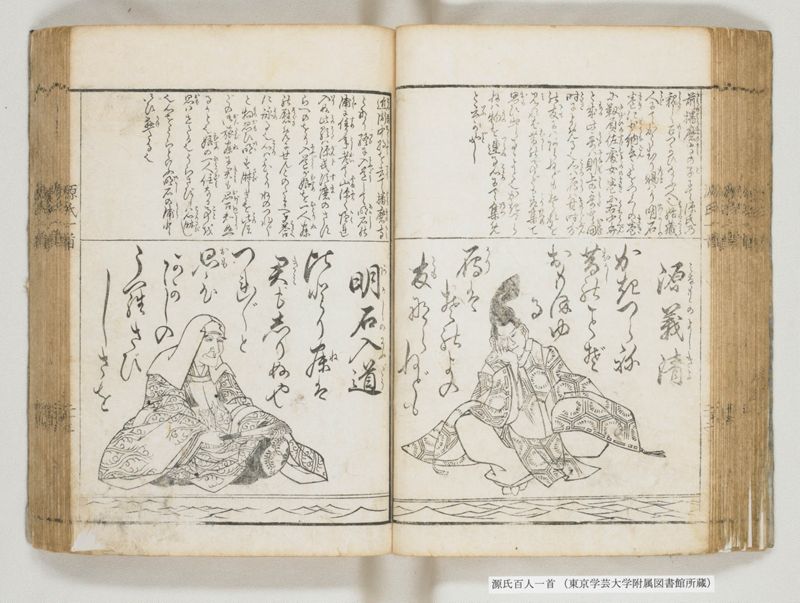
翻刻
【右丁 上段】
前(さきの)播磨守(はりまのかみ)の子(こ)にて源氏の
親(した)しく召(めし)つかひ給ふ人也 始(はじめ)蔵(くら)
人(うど)にてかうむり賜(たま)はり明石(あかしの)
巻(まき)に少納言(せうなごん)みをつくしの巻(まき)
に靫負佐(ゆげひのすけ)処女巻(をとめのまき)に右中弁(うちうべん)
と成(なる)此 哥(うた)は則(すなはち)上(かみ)の哥(うた)と同(おなじ)
時(とき)によめる也 心(こゝろ)は鴈(かり)は其(その)時分(じぶん)
の友(とも)にはあらねどもそれを
見(み)れば昔(むかし)の事ども取集(とりあつめ)て
思(おも)ひ出らるゝよと也かきつら
ねは物(もの)を連(つらぬ)る心(こゝろ)にて集(あつ)め
と云(いふ)が如(ごと)し
【同 下段】
源義清(みなもとのよしきよ)
かきつらね
昔(むかし)のことぞ
おもほゆ
る
鴈(かり)は
そのよの
友(とも)ならねども
【左丁 上段】
近衛中将(こんゑのちうじやう)を去(さり)て播磨守(はりまのかみ)
となり終(つひ)に入道(にふだう)して明石(あかし)の
浦(うら)に住(すめ)り年(とし)老(おい)て山(やま)深(ふか)く隠(かく)れ
入(いり)ぬ此歌(このうた)は源氏(げんじ)須磨(すま)のさす
らへのをり入道(にふだう)が娘(むすめ)を一人寐(ひとりね)
の慰(なぐさ)めにせんとのたまへる答(こたへ)
に詠(よめ)る也 心(こゝろ)はひとりねのつれ〴〵
と物思(ものおも)ひ明(あか)す淋(さび)しさを此(この)ほ
どの御旅寐(おんたびね)に君(きみ)も思召(おぼしめし)知(しり)ぬ
事かと也 娘(むすめ)の一人住(ひとりずみ)なる事(こと)を
思(おも)はせたる也うらさびしは心淋(こゝろさび)し
也心をうらといふ明石(あかし)の浦(うら)と
いひ懸(かけ)たる也
【同 下段】
明石入道(あかしのにふだう)
ひとり寐(ね)は
君(きみ)もしりぬや
つれ〴〵と
思(おも)ひ
あかしの
うらさび
しさを
現代語訳
【右丁 上段】
前播磨守の息子で、源氏が親しく召し使われた人である。最初は蔵人として元服を賜り、「明石」の巻では少納言、「澪標」の巻では靫負佐、「乙女」の巻では右中弁となる。この歌は、すなわち上の歌と同じ時に詠んだものである。歌の意味は、雁はその時代の友ではないけれども、それを見ると昔の出来事を取り集めて思い出されることだ、ということである。「かきつらね」は物事を連ねる意味で、「集める」と言うのと同じである。
【同 下段】
源義清
かき連ね
昔のことぞ
思ほゆる
雁は
その世の
友ならねども
【左丁 上段】
近衛中将を辞して播磨守となり、ついに出家して明石の浦に住んだ。年老いて山深く隠れ入った。この歌は、源氏が須磨でさすらっている折、入道が娘を一人寝の慰めにしてはどうかと申し上げた答えに詠んだものである。歌の意味は、一人寝のつれづれと物思いに明かす寂しさを、このごろの御旅寝で君もお思い知りになったことでしょうか、ということである。娘の一人住みの状況を思わせたのである。「うらさびし」は心寂しいということである。心を「うら」と言い、明石の浦と掛けている。
【同 下段】
明石入道
一人寝は
君も知りぬや
つれづれと
思い
明石の
浦寂しさを
英語訳
【Right Page, Upper Section】
He was the son of the former Governor of Harima, someone whom Genji employed with particular intimacy. Initially he was a Palace Attendant (kurōdo) and received his coming-of-age ceremony, in the "Akashi" chapter he became Minor Counselor (shō-nagon), in the "Miotsukushi" (Channel Buoys) chapter he became Assistant of the Quiver-Bearer (yugehi-no-suke), and in the "Otome" (The Maiden) chapter he became Middle Controller of the Right (u-chū-ben). This poem was composed at the same time as the poem above. The meaning is: although the wild geese are not friends from that era, seeing them brings back collected memories of past events. "Kakitsurane" means to string things together, similar to saying "to gather."
【Same, Lower Section】
Minamoto-no-Yoshikiyo
Stringing together,
memories of the past
come to mind—
though these geese
were not companions
of those days.
【Left Page, Upper Section】
He left his position as Middle Captain of the Palace Guards (konoe-no-chūjō) to become Governor of Harima, eventually took Buddhist vows and lived at Akashi Bay. In old age, he withdrew deep into the mountains. This poem was composed in response when Genji, during his wandering at Suma, was told by the lay priest that his daughter might provide comfort for his solitary nights. The meaning is: you must now understand through your recent traveling nights the loneliness of spending sleepless nights alone with melancholy thoughts. He made Genji think of his daughter's solitary dwelling. "Ura-sabishi" means lonely at heart. The heart is called "ura," creating a wordplay with Akashi Bay (ura).
【Same, Lower Section】
Akashi Lay Priest
Do you now know
the loneliness of sleeping alone,
spending melancholy hours
thinking of
Akashi Bay's
desolate sadness?