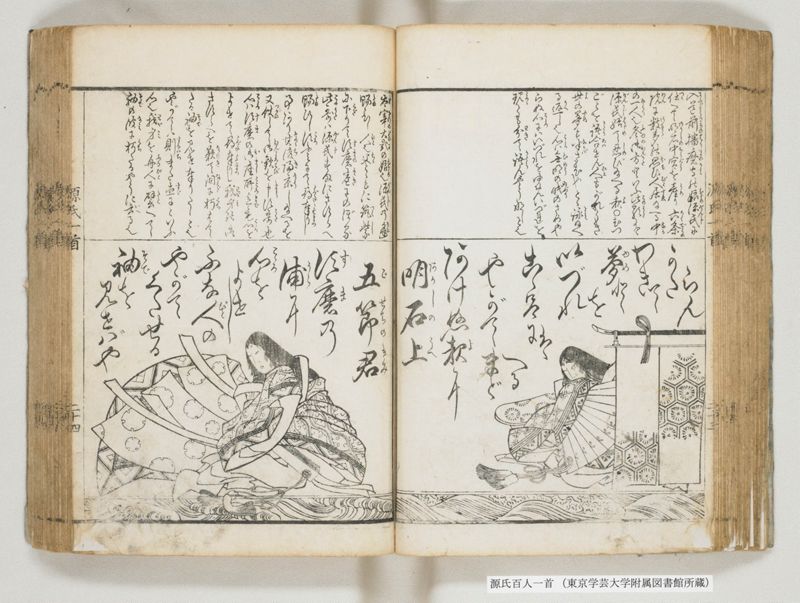
翻刻
【右丁 上段】
入道(にふだう)前(さきの)播磨守(はりまのかみ)の娘(むすめ)源氏(げんじ)に
仕(つか)へて明石中宮(あかしのちうぐう)を産(うめ)り六条(ろくでうの)
院(ゐん)に数多(あまた)の思(おも)ひ人(びと)居(すゑ)給へる中(なか)
の一人(ひとり)也 冬御方(ふゆのおんかた)といふ此歌(このうた)は
源氏(げんじ)始(はじめ)て忍(しの)び給へる夜(よ)○むつ
ごとを語合(かたりあは)せん人(ひと)もがなうき
世(よ)の夢(ゆめ)も半(なかば)さむやとゝ詠(よみ)給へ
る返(かへ)し也 心(こゝろ)は無明(むめう)の眠(ねぶり)のさめや
らぬ心(こゝろ)にはいづれをゆめいづれを
現(うつゝ)とも分(わき)て語(かたら)んやうなしと也
【同 下段 左から読む】
らん
かた
て
わき
夢(ゆめ)と
を
いづれ
は
こゝろに
へる
やがてまど
あけぬ夜(よ)に
明石上(あかしのうへ)
【左丁 上段】
太宰大弐(だざいのだいに)の娘(むすめ)也 源氏(げんじ)の逢(あひ)
賜(たま)ひし人(ひと)也 父(ちゝ)とゝもに筑紫(つくし)
に下(くだ)りて須磨巻(すまのまき)にのぼる
此哥(このうた)は源氏すまにさすらへ
賜(たま)ひし頃(ころ)ふみにて尋(たづね)奉(たてまつ)りし
事あり其後(そのゝち)帰京(きけう)し給へるを
又 使(つかひ)して御歓(おんよろこび)を申(まう)す哥(うた)也
心(こゝろ)は須磨(すま)の御座所(おましところ)迄(まで)も心(こゝろ)を
よせて尋(たづね)奉(たてまつ)りし我身(わがみ)の御
さすらへを歎(なけき)て泪(なみだ)に朽(くち)はて
たる袖(そで)を見せ奉りたしと也
やがては則(すなはち)また直(すぐ)にといふ
心也 我身(わがみ)を舟人(ふなびと)に譬(たと)へて
袖(そで)の波(なみ)に朽(くち)たるやうに云(いへ)る也
【同 下段】
五節君(ごせちのきみ)
須磨(すま)の
浦(うら)に
心(こゝろ)を
よせ
し
ふな人(びと)の
やがて
くたせる
袖(そで)を
見せばや
現代語訳
【右丁 上段】
入道前播磨守の娘で、源氏に仕えて明石中宮を産んだ。六条院に数多くの恋人たちがお住まいになる中の一人である。冬御方という。この歌は、源氏が初めて忍んでこられた夜に、源氏が「睦言を語り合う人がいてほしい、憂き世の夢も半ば覚めるであろうか」と詠まれた返歌である。歌の意味は、無明の眠りから覚めやらぬ心には、どれが夢でどれが現実かも区別して語ることができない、ということである。
【同 下段】
明石上
明けぬ夜に
やがて惑える
心には
いずれを夢と
語り分かてらん
【左丁 上段】
太宰大弐の娘である。源氏がお逢いになった人である。父とともに筑紫に下って、須磨の巻に登場する。この歌は、源氏が須磨でさすらっていらした頃、手紙で安否をお尋ね申し上げたことがあり、その後帰京なさったのを、また使者を送って御喜びを申し上げる歌である。歌の意味は、須磨の御座所までも心を寄せてお尋ね申し上げた私が、あなた様のさすらいを嘆いて涙に朽ち果てた袖をお見せしたい、ということである。「やがて」はすなわち、また直ちに、という意味である。自分を船人に譬えて、袖が波に朽ちたように言っている。
【同 下段】
五節君
須磨の浦に
心を寄せし
船人の
やがて朽たせる
袖を見せばや
英語訳
【Right Page, Upper Section】
She was the daughter of the lay priest, the former Governor of Harima, who served Genji and gave birth to Akashi Chūgū (Empress). She was one among the many beloved women who resided at Rokujō-in. She was called Fuyu-no-onkata (Winter Lady). This poem was composed as a reply when Genji first secretly visited her and composed: "Would that there were someone with whom to share intimate words—might the dreams of this sorrowful world half awaken?" The meaning is: to a heart that cannot awaken from the sleep of ignorance, there is no way to distinguish and speak of which is dream and which is reality.
【Same, Lower Section】
Akashi-no-ue (Lady Akashi)
In the undawning night,
my heart remains
immediately bewildered—
which should I call dream
as I try to speak and distinguish?
【Left Page, Upper Section】
She was the daughter of the Senior Assistant Governor-General of Kyushu. She was one of the women Genji encountered. She went down to Kyushu with her father and appears in the "Suma" chapter. This poem was composed when Genji was wandering at Suma—she had once inquired after him by letter, and after his return to the capital, she again sent a messenger to express her joy. The meaning is: I, who sent my heart even to your dwelling place at Suma to inquire after you, would like to show you my sleeves that have rotted away with tears from lamenting your wandering. "Yagate" means "immediately" or "directly." She compares herself to a boatman, saying her sleeves have rotted from the waves.
【Same, Lower Section】
Gosechi-no-kimi (Lady of the Fifth Month Festival)
The boatman who
sent her heart
to Suma Bay—
I would show you
the sleeves immediately
rotted away.