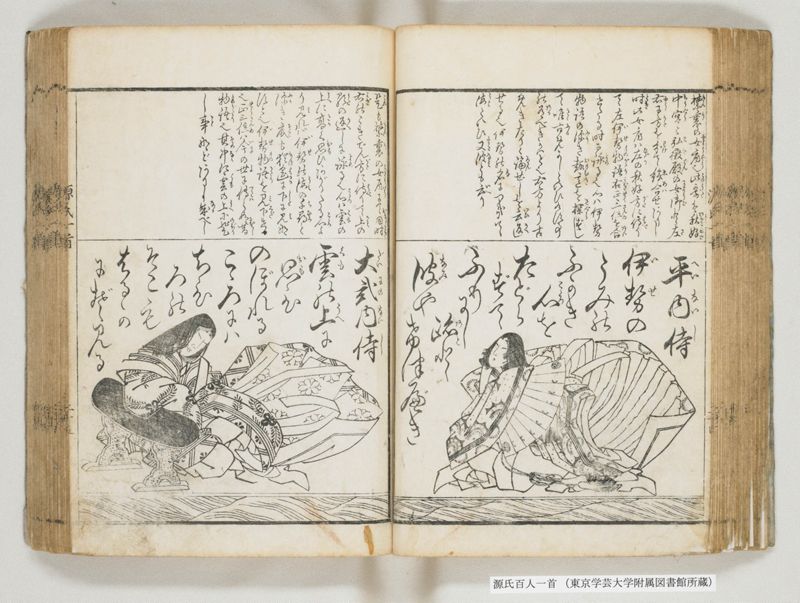
翻刻
【右丁 上段】
禁裏(きんり)の女房(にようばう)也 此哥(このうた)は秋好(あきこのむ)
中宮(ちうぐう)と弘徽殿(こきでん)の女御(にようご)と左(さ)
右(ゆう)に方(かた)を分(わけ)て絵合(ゑあは)せありし
時(とき)此女房は左(ひだり)の秋好 方(がた)に侍(はべ)り
て左 伊勢物語(いせものがたり)右(みぎ)正三位(せうさんゐ)を合(あは)
せたる時に詠(よめ)る也心は伊勢
物語の深(ふか)き趣(おもむき)を探(さぐら)ずし
て唯(たゝ)古(ふる)めかしといひけす事
の有(ある)べきかはと也右方より古
めきたりと論(ろん)ぜしを云(いひ)返(かへ)
せる也伊勢の名(な)につけて
海(うみ)といひ又(また)波(なみ)とも云(いへ)り
【同 下段】
平内侍(へいないし)
伊勢(いせ)の
うみの
ふかき
心(こゝろ)を
たどら
ずて
ふり
にし
跡(あと)と
波(なみ)やけつべき
【左丁 上段】
是(これ)も禁裏(きんり)の女房(にようばう)にて同時(おなじとき)
右(みぎ)のこきでん方(がた)に侍(はべ)りて上(かみ)の
歌(うた)の返(かへ)しに詠(よめ)る也 心(こゝろ)は雲(くも)の
上(うへ)に高(たか)く思(おも)ひあがりたる心(こゝろ)よ
り見(み)れべ伊勢(いせ)の海(うみ)の千尋(ちひろ)と
深(ふか)き底(そこ)も猶(なほ)遙(はるか)に下(した)に見(み)な
すと也 伊勢物語(いせものがたり)を見下(みくだ)せる
也 正三位(せうさんゐ)は今(いま)の世(よ)に伝(つたは)らぬ昔(むかし)
物語(ものがたり)也 其中(そのなか)に雲(くも)の上(うへ)に登(のぼり)
し事(こと)などありし成(なる)べし
【同 下段】
大弐内侍(だいにのないし)
雲(くも)の上(うへ)に
思(おも)ひ
のぼれる
こゝろには
ちひ
ろの
そこも
はるか
にぞ見る
現代語訳
【右丁 上段】
禁裏の女房である。この歌は、秋好中宮と弘徽殿女御とが左右に分かれて絵合わせを行った時のものである。この女房は左の秋好方に仕えて、左が伊勢物語、右が正三位(という物語)を合わせた時に詠んだものである。歌の意味は、伊勢物語の深い趣を探ろうとせずに、ただ古めかしいと批判することがあってよいものかということである。右方から古めかしいと論じられたのに対して言い返したものである。伊勢の名前にちなんで海と言い、また波とも言っている。
【同 下段】
平内侍
伊勢の海の
深き心を
辿らずて
振りにし跡と
波や消つべき
【左丁 上段】
これも禁裏の女房で、同じ時に右の弘徽殿方に仕えて、上の歌への返歌として詠んだものである。歌の意味は、雲の上に高く思い上がった心から見れば、伊勢の海の千尋と深い底も、なお遥かに下に見なすということである。伊勢物語を見下したのである。正三位は今の世に伝わらない昔の物語である。その中に雲の上に登ったことなどがあったのであろう。
【同 下段】
大弐内侍
雲の上に
思い登れる
心には
千尋の底も
遥かにぞ見る
英語訳
【Right Page, Upper Section】
She was a court lady of the imperial palace. This poem was composed during a picture contest (e-awase) when Akikonomu Chūgū (Empress) and Kokiden-no-nyōgo (Imperial Consort) divided into left and right sides. This court lady served the left side of Akikonomu's faction, and composed this when the left side presented the Ise Monogatari (Tales of Ise) against the right side's Shōsanmi (a tale). The meaning is: how could it be acceptable to criticize something as merely old-fashioned without exploring the deep essence of the Tales of Ise? This was her retort when the right side argued that it was antiquated. Playing on the name "Ise," she speaks of the sea and also of waves.
【Same, Lower Section】
Hei-naishi (Court Lady Hei)
Without tracing
the deep heart
of Ise's sea,
should the waves erase
the tracks of what has passed?
【Left Page, Upper Section】
This was also a court lady of the imperial palace who, at the same time, served the right side of Kokiden's faction and composed this as a reply to the above poem. The meaning is: from a heart that has risen high in arrogance to the clouds above, even the thousand-fathom-deep bottom of Ise's sea appears far below. She looked down upon the Tales of Ise. Shōsanmi was an ancient tale not transmitted to the present world. It probably contained episodes of ascending to the clouds above.
【Same, Lower Section】
Daini-no-naishi (Senior Assistant Court Lady)
To a heart that has
thought to climb
above the clouds,
even the thousand-fathom depths
appear distant below.