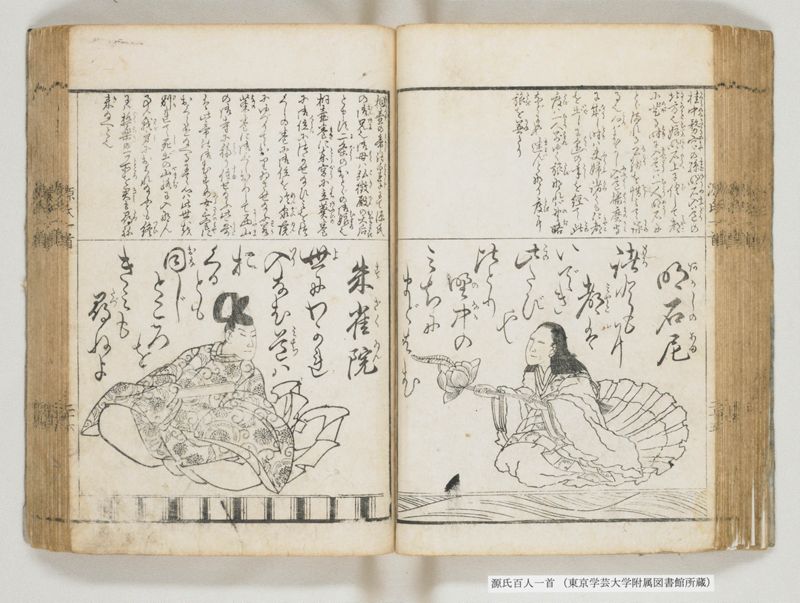
翻刻
【右丁 上段】
桂中務宮(かつらのなかつかさのみや)の孫(まご)明石入道(あかしのにふだう)の
北方(きたのかた)也 娘(むすめ)明石上(あかしのうへ)に倶(ぐ)して都(みやこ)
に登(のぼ)る時(とき)に入道(にふだう)は一人(ひとり)明石(あかし)に
とゞまれる名残(なごり)を惜(をし)みて詠(よめ)
る也 心(こゝろ)はむかし入道(にふだう)は播磨守(はりまのかみ)
に成(なり)し時(とき)は夫婦(ふうふ)諸(もろ)ともに都(みやこ)
を出(いで)しに遙(はるか)の年(とし)を経(へ)て此(この)
度(たび)は一人(ひとり)別(わかれ)ゆく旅(たび)なれば野路(のぢ)
などにや迷(まよは)んとなり度(たび)に
旅(たび)を兼(かね)たり
【同 下段】
明石尼(あかしのあま)
諸(もろ)ともに
都(みやこ)は
いでき
此(この)たび
や
ひとり
野中(のなか)の
みちに
まどはむ
【左丁 上段】
桐壺(きりつぼ)の帝(みかど)の皇子(わうじ)にて源氏
の御兄(おんあに)也御 母(はゝ)は弘徽殿(こきでん)の大后(おほきさき)
と申す二条(にでう)のおとゞの御 娘(むすめ)也
桐壺 巻(まき)に東宮(とうぐう)に立(たち)葵(あふひの)巻
に御 位(くらゐ)につかせ給ひみをつ
くしの巻に御位を冷泉院(れんぜいゐん)
にゆづりておりゐさせ給ふ若(わか)
菜(なの)巻に御ぐしおろして西山(にしやま)
の御寺に移(うつ)り住(すま)せ給ふ此 哥(うた)
は此帝の御むすめ女三宮(によさんのみや)に
おくらせ給へるにて心は此世を
別(わか)れて死出(しで)の山路(やまぢ)に入なん
事は我身(わがみ)におくれ給ふとも終(つひ)
には極楽(ごくらく)の一ッ所(ところ)を君(きみ)も尋(たづ)ね
来(き)給へと也
【同 下段】
朱雀院(すざくゐん)
世(よ)にわかれ
入(いり)なむ道(みち)は
お
くる
とも
同(おな)じ
ところ
を
きみも
尋(たづ)ねよ
現代語訳
【右丁 上段】
桂中務宮の孫で、明石入道の北の方(妻)である。娘の明石の上と共に都に上る時、入道は一人明石に留まったその別れを惜しんで詠んだものである。歌の意味は、昔入道が播磨守になった時は夫婦一緒に都を出たのに、長い年月を経て今度は一人別れて行く旅なので、野道などで迷うのではないかということである。「度」に「旅」の意味を掛けている。
【同 下段】
明石尼
共に都は
出でしに
この度や
一人野中の
道に惑わん
【左丁 上段】
桐壺帝の皇子で源氏の御兄である。御母は弘徽殿の大后と申し上げる、二条大臣の御娘である。桐壺の巻で東宮に立たれ、葵の巻で御位に就かれ、澪標の巻で御位を冷泉院に譲って退位なさる。若菜の巻で御髪を下ろして西山の御寺に移り住まわれる。この歌はこの帝の御娘女三宮にお贈りになったもので、歌の意味は、この世を別れて死出の山路に入ることは私の方が先であっても、最後には極楽の同じ所を君も尋ねて来てくださいということである。
【同 下段】
朱雀院
世に別れ
入りなん道は
後るとも
同じ所を
君も尋ねよ
英語訳
【Right Page, Upper Section】
She was the granddaughter of Prince Katsura-no-nakatsukasamiya and the wife (kitanokata) of Akashi-nyūdō (the Akashi Lay Monk). When she accompanied her daughter Akashi-no-ue to the capital, while the lay monk remained alone in Akashi, she composed this poem lamenting their parting. The meaning is: long ago when the lay monk became Governor of Harima, they left the capital together as a couple, but after many years have passed, this time she must travel alone in separation, so she might lose her way on country roads. The poem plays on the words "tabi" (time/occasion) and "tabi" (journey).
【Same, Lower Section】
Akashi-no-ama (The Akashi Nun)
Though together we
left the capital,
on this occasion
shall I alone wander lost
on the path through the fields?
【Left Page, Upper Section】
He was a prince of Emperor Kiritsubo and the elder brother of Genji. His mother was Empress Kōkiden, the daughter of Minister Nijō. In the Kiritsubo chapter he was made Crown Prince, in the Aoi chapter he ascended to the throne, in the Miotsukushi chapter he abdicated and passed the throne to Emperor Reizei. In the Wakana chapter he took Buddhist vows and moved to a temple in the western mountains. This poem was sent to his daughter, the Third Princess. The meaning is: even though I may precede you in departing this world and entering the path of death, in the end, please seek out the same place in paradise where I will be.
【Same, Lower Section】
Suzaku-in (Retired Emperor Suzaku)
Though I may precede you
on the path I'll enter
departing from this world,
seek out the same place
where I too shall go.