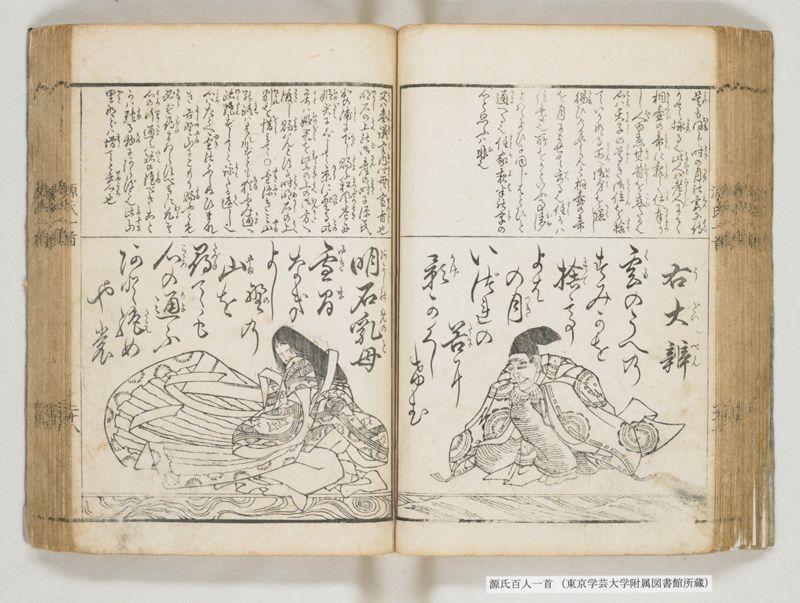
翻刻
【右丁 上段】
是(これ)も同(おな)じ時(とき)の月(つき)の宴(えん)に侍(はべ)
りて詠(よめ)る也 此人(このひと)は老人(らうじん)にて
桐壺(きりつぼ)の帝(みかど)に親(した)しく仕(つか)へ奉(たてまつ)り
し人(ひと)ゆゑ其(その)昔(むかし)を恋(こひ)たる也
心(こゝろ)は天子(てんし)の尊(たふと)き御位(みくらゐ)を捨(すて)
ていかなる所(ところ)へ御身(おんみ)を隠(かく)し
賜(たま)ひけるやらんと桐壺の帝
を月によせて云(いへ)る也 住(すみ)かは
住処也所をかといふ事 多(おほ)し
よはゝよひに同じはとひと
通(かよ)へる也 住家(すみか)夜半(よは)の字(じ)の
心と思ふは非(ひ)也
【同 下段】
右大弁(うだいべん)
雲(くも)のうへの
すみかを
捨(すて)て
よは
の月(つき)
いづれの
谷(たに)に
影(かげ)かくし
けむ
【左丁 上段】
父(ちゝ)は参議(さんぎ)宮内卿(くないけう)母(はゝ)は宣旨(せんじ)也
明石(あかし)の上(うへ)の御産(ごさん)の時(とき)に源氏
かの浦(うら)に下(くだ)し賜(たま)ふ松風巻(まつかぜのまき)に
姫君(ひめぎみ)にぐして京(けう)に登(のぼ)る此(この)
哥(うた)は姫君(ひめぎみ)を紫(むらさき)の上(うへ)の御方(おんかた)へ
渡(わた)し賜(たま)はんとする時(とき)明石(あかし)の上(うへ)
別(わかれ)を惜(をし)みて○雪(ゆき)深(ふか)きみ山(やま)
の路(みち)ははれずとも猶(なほ)ふみ通(かよ)へ
跡(あと)絶(たえ)ずしてと詠(よみ)たる返(かへ)し也
心(こゝろ)はたとへ雪(ゆき)のふらぬひまな
き吉野山(よしのやま)にこもり賜(たま)ふとも
必(かなら)ず尋(たづね)まゐらすべきに凡(およ)そ
心(こゝろ)の行通(ゆきかよ)ふ跡(あと)の絶(たゆ)べきこと
かは絶(たゆ)る物(もの)にあらずと也 此山(このやま)
里(ざと)などは増(まし)てと云(いふ)心(こゝろ)也
【同 下段】
明石乳母(あかしのめのと)
雪間(ゆきま)
なき
よし
野(の)の
山(やま)を
尋(たづね)ても
心(こゝろ)の通(かよ)ふ
あと絶(たえ)め
やも
現代語訳
【右丁 上段】
これも同じ時の月の宴に参列して詠んだものである。この人は老人で、桐壺帝に親しくお仕えした人であるゆえ、その昔を恋い慕っているのである。歌の意味は、天子の尊い御位をお捨てになって、いったいどのような所にお身を隠しなさったのだろうかと、桐壺帝を月に寄せて詠んだものである。「すみか」は住処、つまり場所を問うということ。「よは」は「よひ」と同じで「は」と「ひ」は通用する。住家、夜半の字の意味だと思うのは間違いである。
【同 下段】
右大弁
雲の上の
住処を捨てて
夜半の月
いずれの谷に
影隠しけん
【左丁 上段】
父は参議宮内卿、母は宣旨である。明石の上の御出産の時に源氏がかの浦に下向なさる。松風の巻で姫君を連れて京に上る。この歌は姫君を紫の上の御方へお渡しになろうとする時、明石の上が別れを惜しんで「雪深き深山の道は晴れずとも なおふみ通え跡絶えずして」と詠んだその返歌である。歌の意味は、たとえ雪の降らない間もない吉野山にお隠れになっても、必ずお尋ねして参るであろうし、およそ心の行き通う跡が絶えることがあろうか、絶えるものではない、ということである。この山里などはなおさらである、という意味である。
【同 下段】
明石乳母
雪間なき
吉野の山を
尋ねても
心の通う
跡絶えめやも
英語訳
【Right Page, Upper Section】
This person also attended the same moon-viewing banquet and composed this poem. This person was an elderly man who had served Emperor Kiritsubo intimately, and therefore yearned for those bygone days. The meaning of the poem is that the emperor abandoned his noble throne and wonders in what place he might have hidden himself, comparing Emperor Kiritsubo to the moon. "Sumika" means dwelling place, asking about location. "Yowa" is the same as "yoi" - "wa" and "i" are interchangeable. It is incorrect to interpret this as meaning the characters for "dwelling" or "midnight."
【Same, Lower Section】
Udaiben (Senior Secretary of the Right)
Abandoning your dwelling
above the clouds,
O moon of midnight—
in which valley
did you hide your light?
【Left Page, Upper Section】
Her father was Sangi Kunaiky (Counselor and Palace Minister), her mother was Senji (Imperial messenger). When Akashi-no-ue gave birth, Genji went down to that bay. In the Matsukaze chapter, he brought the young princess up to the capital. This poem was composed as a response when Akashi-no-ue, regretting the separation as the princess was to be transferred to Murasaki-no-ue's quarters, had written: "Though the path through the deep snowy mountains may not clear, still keep treading it, never letting the tracks cease." The meaning is that even if she were to seclude herself in Mount Yoshino where snow falls without pause, I would certainly come seeking her, and how could the tracks of a communicating heart ever cease? They are not something that would break off. The meaning is "all the more so for this mountain village."
【Same, Lower Section】
Akashi-no-menoto (Akashi's Wet Nurse)
Even seeking you
in Mount Yoshino
where there are no breaks in snow,
could the tracks of
a communicating heart ever cease?