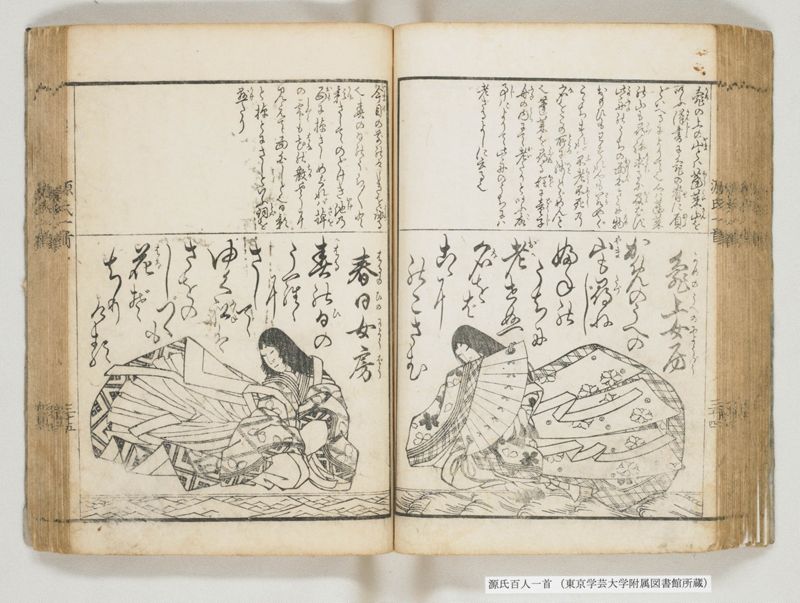
翻刻
【右丁 上段】
亀(かめ)の上の山(やま)とは蓬莱山(ほうらいさん)を
いふ漢書(かんじよ)に亀の脊(せ)に負(おふ)
といへるによりて也心は蓬莱
の山も尋(たづ)ね求(もとむ)るに及(およ)ばず
此舟(このふね)のうちの面白(おもしろ)さに物(もの)
おもひもわすれ心も若(わか)やぐ
こゝちすれば不老不死(ふらうふし)の
名(な)をこの所(ところ)に残(のこ)しとゞめんと
也蓬莱を尋(たづぬ)る程(ほど)に童子(どうじ)
舟(ふね)の内(うち)にて老(おい)たりといふ故(こ)
事(じ)によりて此舟のうちには
老ざるよしに云る也
【同 下段】
亀上女房(かめのうへのにようばう)
かめのうへの
山(やま)も尋(たづ)ね
じ
ふねの
うちに
老(おい)せぬ
名(な)をば
こゝに
のこさむ
【左丁 上段】
今(いま)目(め)の前のけしきを詠(よめ)る
也春の日のうら〳〵と
影(かげ)さしてのどけき池(いけ)の
面(おも)に棹さしめぐれば棹(さを)
の雫(しづく)も花(はな)の散(ちる)やうに
見えて面白しと也日影
と棹とにさしといふ詞(ことば)を
懸(かけ)たり
【同 下段】
春日女房(はるのひのにようばう)
春(はる)の日(ひ)の
うらゝ
に
さして
ゆく船(ふね)は
さをの
しづくも
花(はな)ぞ
ちり
ける
現代語訳
【右丁 上段】
亀の上の山とは蓬莱山のことを指す。『漢書』に「亀の背に負う」とあることに由来する。歌の意味は、蓬莱の山も探し求める必要はない。この舟の中の面白さに、物思いも忘れ心も若返る気持ちがするので、不老不死の名をこの場所に残し留めよう、ということである。蓬莱を尋ねているうちに童子が舟の内で老いてしまったという故事により、この舟の中では老いることがないという意味で詠んでいる。
【同 下段】
亀上女房
亀の上の
山も尋ねじ
舟の内に
老いせぬ名をば
ここに残さん
【左丁 上段】
今目の前の景色を詠んだものである。春の日がうららかに光を差して、のどかな池の面に棹を差して巡ると、棹の雫も花が散るように見えて美しい、ということである。「日影」と「棹」に「さし」という言葉を掛けている。
【同 下段】
春日女房
春の日の
うららに
差して
行く船は
棹の雫も
花ぞ散りける
英語訳
【Right Page, Upper Section】
"The mountain on the turtle's back" refers to Mount Hōrai (the mythical mountain of immortals). This derives from a passage in the Book of Han stating "carried on a turtle's back." The meaning of the poem is: There is no need to seek out Mount Hōrai. In the delight of this boat, I forget my troubles and feel my heart grow young, so I will leave the name of immortality in this place. This alludes to the legend that while seeking Hōrai, a young boy aged within the boat, so she composes this to mean that within this boat, one does not grow old.
【Same, Lower Section】
Kamenoue Lady-in-waiting
The mountain on turtle's back—
I shall not seek it out.
Within this boat
the name of agelessness
I leave here.
【Left Page, Upper Section】
This poem describes the scene before her eyes now. When the spring sun shines gently and brightly, and they pole around the tranquil surface of the pond, even the droplets from the pole appear like falling flower petals—how beautiful it is. There is a wordplay on "sashi" (shine/pole) connecting "sun's rays" and "pole."
【Same, Lower Section】
Haruno-hi Lady-in-waiting
The spring sun
shining gently
as we go—
from our boat's pole
the droplets too
are falling flowers