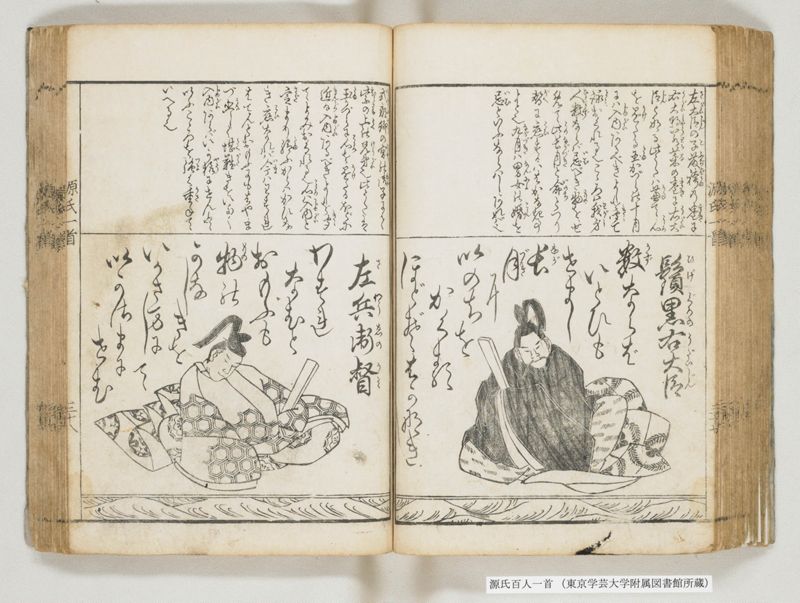
翻刻
【右丁 上段】
左大臣(さだいじん)の子(こ)藤袴(ふぢばかま)の巻(まき)に
右大将(うだいしやう)若菜(わかな)の巻(まき)に右大(うだい)
臣(じん)となる此うたは兼(かね)て心(こゝろ)
を懸(かけ)たる玉(たま)かづらの十月
には入内(じゆだい)あるべきよしを聞(きゝ)て
詠(よみ)おくれる也こゝろは我身(わがみ)
人数(ひとかず)ならば忌(いむ)べき物(もの)をせ
めて此(この)長月(ながづき)と命(いのち)とつり
替(がへ)に恋(こひ)するははかなき事
よと也 九月(ながづき)は男女(なんによ)の婚(こん)を
忌(いむ)といふならはしあれば也
【同 下段】
鬚黒右大臣(ひげぐろのうだいじん)
数(かず)ならば
いとひも
せまし
長(なが)
月(づき)
に
いのちを
かくる
ほどぞはかなき
【左丁 上段】
式部卿(しきぶけう)の宮(みや)の御(おん)子にて
紫(むらさき)の上(うへ)の兄弟(けうだい)也此うたは
玉(たま)かづらに心(こゝろ)を懸(かけ)たるほどに
近日(きんじつ)入内(じゆだい)あるべきよしを聞(きゝ)
てよみおくれる也 心(こゝろ)は入内(じゆだい)と
定(さだ)まり給(たま)ふからはかひな
き恋(こひ)なれば今(いま)はわすれ腎
はてんとおもふにもはやま
づ悲(かな)しく堪難(たへがた)きをいよ〳〵
入内(じゆだい)あらばいか様(やう)にせんと
いふこゝろを強(つよ)く重(かさ)ねて
いへる也
【同 下段】
左兵衛督(さへうゑのかみ)
わすれ
なむと
おもふも
物(もの)のかなしきを
いかさまに
して
いかさまに
せむ
現代語訳
【右丁 上段】
左大臣の息子で、藤袴の巻では右大将、若菜の巻では右大臣となる。この歌は、以前から心を寄せていた玉鬘が十月には入内するということを聞いて詠んだものである。歌の意味は、私が人並みの身分であれば忌むべき月であるのに、せめてこの長月(九月)と命とを交換してでも恋をするのは、はかないことだなあ、ということである。九月は男女の結婚を忌むという習わしがあるからである。
【同 下段】
髭黒右大臣
数ならば
厭ひもせまし
長月に
命をかくる
程ぞはかなき
【左丁 上段】
式部卿宮の御子で、紫の上の兄弟である。この歌は玉鬘に心を寄せていたところ、近日入内することを聞いて詠んだものである。歌の意味は、入内と決まりなさったからには甲斐のない恋なので、今は忘れ果てようと思うのだが、まず悲しくて堪え難い。いよいよ入内となったらどのようにしようか、という心を強調して重ねて言ったものである。
【同 下段】
左兵衛督
忘れなんと
思ふも物の
悲しきを
いかさまにして
いかさまにせん
英語訳
【Right Page, Upper Section】
He was the son of the Minister of the Left, who was Right General in the "Bush Clover" chapter and became Right Minister in the "Young Herbs" chapter. This poem was composed when he heard that Tamakazura, to whom he had long been devoted, would enter the imperial court in the tenth month. The meaning of the poem is: If I were of proper standing, I would avoid this inauspicious month, but even exchanging my life for this long month (September) to pursue love is a fleeting thing. This is because there was a custom of avoiding marriage between men and women in the ninth month.
【Same, Lower Section】
Higekuro no Udaijin (Right Minister Higekuro)
If I were among those who count,
I too would shun this time—
yet in the long month
to stake my life on love
seems such a fleeting thing.
【Left Page, Upper Section】
He was a son of Prince Shikibu-kyō and a brother of Murasaki no Ue. This poem was composed when he heard that Tamakazura, to whom he had been devoted, would soon enter the imperial court. The meaning of the poem is: Since it has been decided that she will enter the court, this love is fruitless, so I think I should forget her completely, but first the sadness is unbearable. When she actually enters the court, what shall I do? He expresses this sentiment with strong emphasis and repetition.
【Same, Lower Section】
Sahyōe no Kami (Captain of the Left Palace Guards)
Even thinking
I should forget
brings such sorrow—
how shall I manage,
how shall I bear it?