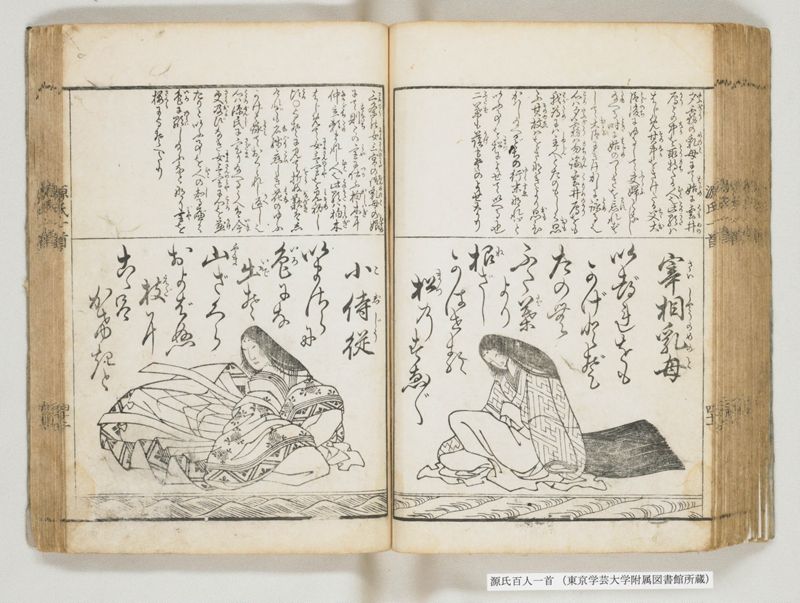
翻刻
【右丁 上段】
夕霧(ゆふぎり)の乳母(めのと)にて始(はじめ)に雲井(くもゐの)
鳫(かり)との中(なか)を取持(とりもち)たる人(ひと)也 此歌(このうた)は
はじめ其中(そのなか)をさけたる父(ちゝ)大(お)
臣(とゞ)後(のち)にゆるして夫婦(ふうふ)となし
給(たま)へる時(とき)に始(はじめ)のつらさを忘(わす)れず
して大臣(おとゞ)にきけかしに詠(よめ)る也
心(こゝろ)は夕霧(ゆふぎり)は勿論(もちろん)雲井鳫(くもゐのかり)をも
我為(わがため)には主人(しゆじん)とたのもしく思(おも)
ふ其故(そのゆゑ)はをさなきより思(おも)ひ
かはし給へるどちの行末(ゆくすゑ)なればと
いふ事を松(まつ)によせていへる也
二葉(ふたば)も蔭(かげ)もそのよせなり
【同 下段】
宰相乳母(さいしやうのめのと)
いづれをも
かげとぞ
たのむ
ふた葉(ば)
より
根(ね)ざし
かはせる
松(まつ)のすゑ〴〵
【左丁 上段】
三条(さんでう)の女三宮(によさんのみや)の御乳母(おんめのと)の娘(むすめ)
にて則(すなはち)この宮(みや)に仕(つか)ふ柏木(かしはぎ)に
仲立(なかだち)頼(たの)まれし人(ひと)也 此歌(このうた)は柏木(かしはぎ)
はじめて女三宮(によさんのみや)を見初(みそめ)し
頃(ころ)○よそに見て折(をら)ぬ歎(なげき)はし
けれども名残(なごり)恋(こひ)しき花(はな)のゆふ
かげと詠(よみ)ておくられし返(かへ)し也
心(こゝろ)は源氏(げんじ)に定(さだま)り給へるうへは今(いま)
更(さら)及(およ)びなき女三宮(によさんのみや)に心(こゝろ)を懸(かけ)
たりといふ事を人(ひと)の知(し)るべく
色(いろ)に顕(あらは)し給ふなとなり宮(みや)を
桜(さくら)によそへたり
【同 下段】
小侍従(こじじう)
いまさらに
色(いろ)にな
出(いで)そ
山(やま)ざくら
およばぬ
枝(えだ)に
こゝろ
かけきと
現代語訳
【右丁 上段】
夕霧の乳母で、最初に雲居雁との仲を取り持った人である。この歌は、はじめその仲を裂いた父大臣が、後に許して夫婦とされた時に、最初の辛さを忘れずに大臣に聞かせるために詠んだものである。歌の意味は、夕霧はもちろん雲居雁をも私にとっては主人として頼もしく思う、その理由は幼い頃から思いを交わし合ってこられた二人の将来だからということを、松に寄せて言ったものである。「二葉」も「蔭」もその寄せ言葉である。
【同 下段】
宰相乳母
いずれをも
蔭とぞ頼む
二葉より
根ざし交わせる
松の末々
【左丁 上段】
三条の女三宮の御乳母の娘で、すなわちこの宮に仕える人である。柏木に仲立ちを頼まれた人である。この歌は柏木がはじめて女三宮を見初めた頃、「よそに見て折らぬ嘆きはしけれども名残恋しき花の夕陰」と詠んで送られた返歌である。歌の意味は、源氏の君にお決まりになった上は、今更及びもない女三宮に心をかけたということを人が知るように、色に表し出されるなということである。宮を桜に例えたものである。
【同 下段】
小侍従
今更に
色にな出でそ
山桜
及ばぬ枝に
心かけきと
英語訳
【Right Page, Upper Section】
She was Yūgiri's wet nurse and the person who initially arranged the relationship between him and Kumoi no Kari. This poem was composed to be heard by the Minister when he later permitted them to become husband and wife, after having initially separated them, and she had not forgotten the initial hardship. The meaning is that she regards both Yūgiri and of course Kumoi no Kari as trustworthy masters, because their future together was built on feelings they had exchanged since childhood—this sentiment is expressed through the metaphor of pine trees. Both "futaba" (first leaves) and "kage" (shade) are related metaphors.
【Same, Lower Section】
Saishō no Menoto
Both of them
I trust as my shade—
from their first leaves,
these pines whose roots
have intertwined, through all their years to come.
【Left Page, Upper Section】
She was the daughter of Sanjō's Nyosan no Miya's wet nurse, and thus served this princess. She was the person Kashiwagi asked to act as intermediary. This poem is her response to one that Kashiwagi sent when he first fell in love with Nyosan no Miya: "Yoso ni mite oranu nageki wa shikeredo nagori koishiki hana no yūkage" (Though I suffer from gazing from afar without plucking, how lovely is the lingering evening shadow of this flower). The meaning is: since she is already promised to Genji, do not now reveal in your expression that you have set your heart on the unattainable Nyosan no Miya, lest people should know of it. She compares the princess to a cherry blossom.
【Same, Lower Section】
Ko-jijū
Do not now reveal
your feelings in your expression—
mountain cherry,
knowing you have set your heart
on an unreachable branch.