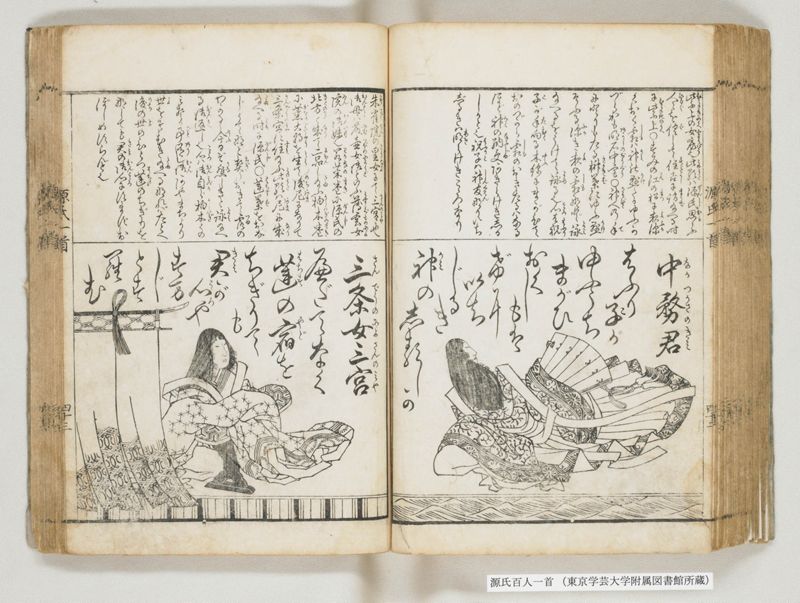
翻刻
【右丁 上段】
紫上(むらさきのうへ)の女房(にようばう)也 此歌(このうた)は源氏(げんし)思(おも)ふ
人々(ひと〴〵)を倶(ぐ)して住吉(すみよし)に詣(まうで)給へる時
に紫上(むらさきのうへ)○すみの江(え)の松(まつ)に夜深(よふか)
くおく霜(しも)は神(かみ)の懸(かけ)たるゆふか
づらかも明石中宮(あかしのぢうぐう)○神人(かみびと)の手(て)
にとりもたる榊葉(さかきば)にゆふ懸(かけ)
そふる深(ふか)き夜(よ)の霜(しも)など詠(よみ)
給へるをうけて詠(よめ)る也 心(こゝろ)は祝(はふり)
子(こ)が手向(たむく)る木綿(ゆふ)にまがひて
おのづから霜(しも)のおきたるはなる
ほど神(かみ)の納受(なふじゆ)あきらけきしる
しかと也 祝子(はふりこ)は神官(しんくはん)なりいち
じるきは明(あき)らけきこゝろなり
【同 下段】
中務君(なかつかさのきみ)
はふり子(こ)が
ゆふうち
まがひ
おくし
もは
げに
いち
じる
き
神(かみ)のしるしか
【左丁 上段】
朱雀院(すざくゐん)の皇女(わうぢよ)にて三宮(さんのみや)也
御母(おんはゝ)は藤壺女御(ふぢつぼのにようご)といふ薄雲女(うすぐものによ)
院(ゐん)の御妹(おんいもと)也 若菜巻(わかなのまき)に源氏(げんじ)の
北方(きたのかた)と成(なり)て二品(にほん)し給ふ柏木巻(かしはぎのまき)
に薫大将(かをるだいしやう)を生(うみ)て後(のち)尼(あま)になりて
三条宮(さんでうのみや)に住(すみ)給ふ此歌(このうた)は尼(あま)に成(なり)
給(たま)へる時(とき)に源氏(げんじ)○蓮葉(はちすば)をおな
じうてなと契(ちぎ)りおきて露(つゆ)の
わかるゝ今日(けふ)ぞ悲(かな)しきと詠(よみ)給へ
る御返(おんかへ)し也 心(こゝろ)は御自(おんみづか)ら柏木(かしはぎ)との
みそか事(ごと)有(あり)し御(おん)あやまちより
世(よ)をそむき給(たま)へるなればたとへ
後(のち)の世(よ)のひとつ蓮(はちす)のちぎりを
なしても君(きみ)の御心(おんこゝろ)にすまずお
ぼしめすらんと也
【同 下段】
三条女三宮(さんでうのによさんのみや)
へだてなく
蓮(はちす)の宿(やど)を
ちぎりて
も
君(きみ)が
心(こゝろ)や
すま
じ
とす
ら
む
現代語訳
【右丁 上段】
紫上の女房である。この歌は源氏が思いを寄せる人々を伴って住吉に参詣された時に、紫上が「住の江の松に夜深くおく霜は神の懸けたる木綿鬘かも」、明石中宮が「神人の手に取り持たる榊葉に木綿懸け添ふる深き夜の霜」など詠まれたのを受けて詠んだものである。歌の意味は、神官が手向ける木綿に紛れて自然に霜が置いたのは、なるほど神の受納が明らかな証拠であるということである。祝子は神官のことで、「いちじるき」は明らかという意味である。
【同 下段】
中務君
祝子が
木綿打ち紛い
おく霜は
げにいちじるき
神の印か
【左丁 上段】
朱雀院の皇女で三宮である。御母は藤壺女御という薄雲女院の御妹である。若菜巻で源氏の北方となって二品の位を賜り、柏木巻で薫大将を生んで後に尼となって三条宮に住まわれる。この歌は尼になられた時に、源氏が「蓮葉を同じ台と契りおきて露の分かるる今日ぞ悲しき」と詠まれた御返歌である。歌の意味は、御自ら柏木との密事があった御過失により世を厭い出家されたので、たとえ後の世で同じ蓮の台の契りを結んでも、君の御心に納得がいかず思し召すだろうということである。
【同 下段】
三条女三宮
隔てなく
蓮の宿を
契りても
君が心や
すまじとすらん
英語訳
【Right Page, Upper Section】
She was a lady-in-waiting to Murasaki no Ue. This poem was composed in response to poems by Murasaki no Ue ("The frost that settles deep at night on the pines of Sumie shore—are these the sacred streamers hung by the gods?") and Akashi Chūgū ("The frost of the deep night that clings to the sacred sakaki branches held in the hands of the shrine attendants, adding to their paper streamers") when Genji took his beloved ladies on a pilgrimage to Sumiyoshi. The meaning is that the frost that naturally settled, mingling with the paper streamers offered by the shrine priests, is indeed clear evidence of the gods' acceptance of their prayers. "Hafuriko" means shrine priest, and "ichijiruki" means "clearly evident."
【Same, Lower Section】
Nakatsukasa no Kimi
The frost that settles,
mingling with the paper streamers
offered by the priests—
truly this is clear evidence
of the gods' divine sign.
【Left Page, Upper Section】
She was a princess of Suzaku-in, the Third Princess. Her mother was Fujitsubo no Nyōgo, who was the younger sister of Usugumo Nyōin. In the Wakana chapter, she became Genji's consort and received the Second Rank; in the Kashiwagi chapter, she gave birth to Kaoru Daishō and later became a nun, residing at Sanjō-miya. This poem is her response to Genji's poem when she became a nun: "Having pledged to share the same lotus platform, how sad this day when we must part like morning dew." The meaning is that since she herself renounced the world due to her transgression of having a secret affair with Kashiwagi, even if they were to pledge to share the same lotus platform in the afterlife, his heart would probably not find peace with this arrangement.
【Same, Lower Section】
Sanjō Nyosan no Miya
Even if we pledge
without reserve to share
the lotus dwelling,
your heart would probably
not find this acceptable.