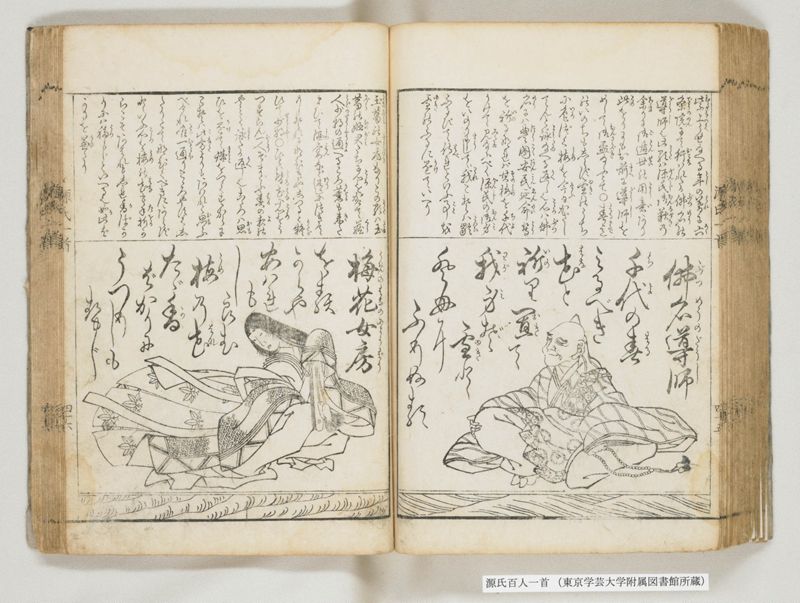
翻刻
【右丁 上段】
紫上(むらさきのうへ)うせ給へる年(とし)の暮(くれ)に六(ろく)
条院(でうのゐん)にて行(おこな)はれたる仏名(ぶつめう)の
導師(だうし)也此 歌(うた)は源氏(げんじ)御歎(おんなげき)の
余(あま)りに御遁世(ごとんせい)の用意(ようい)あり
此(この)をりにもお前(まへ)に導師(だうし)を
めして御盃(おんさかづき)給ふとて○春迄(はるまで)
のいのちもしらず雪(ゆき)のうち
に色(いろ)づく梅(うめ)を今日(けふ)かざし
てんと詠(よみ)給(たま)へる返(かへ)し也 心(こゝろ)は仏(ぶつ)
名(めう)には豊国(ほうこく)安民(あんみん)延命(ゑんめい)等(とう)
を祈(いの)るなれば其(その)梅(うめ)を千代(ちよ)
かけて見(み)給(たま)ふべく源氏(げんじ)の御身(おんみ)
をいのり申して我(われ)こそは齢(よはひ)
ふるびて侍(はべ)れといふ事(こと)を
雪(ゆき)のふるに懸(かけ)ていへり
【同 下段】
仏名導師(ぶつめうのだうし)
千代(ちよ)の春(はる)
みるべき
花(はな)と
祈(いの)り置(おき)て
我身(わがみ)ぞ
雪(ゆき)と
ともに
ふりぬる
【左丁 上段】
玉葛(たまかづら)の女房(にようばう)なりこの歌(うた)は玉(たま)
葛(かづら)の姫君(ひめぎみ)たちに心(こゝろ)をかけて蔵(くら)
人(うどの)少将(せうしやう)の通(かよ)へるころ薫(かをる)も来(き)た
まひて酒宴(しゆえん)など有(あり)しにつきて
もしそれになびきやしつると疑(うたが)
ひて少将(せうしやう)○ひとは皆(みな)花(はな)に心(こゝろ)をう
つすらん一人(ひとり)ぞまどふ春(はる)の夜(よ)の
やみと詠(よみ)たる返(かへ)し也ころは思(おも)
ひを懸(かけ)て誠(まこと)をつくすからに
こそは此方(こなた)よりもあはれと思(おも)ふ
べけれ唯(たゞ)一通(ひとゝほ)りこゝろやすくし
たりとてなびくべきにあらず
といふ心(こゝろ)を梅(うめ)の花(はな)も手折(たをる)か
らこそあはれもしれ香(か)ばか
りには移(うつ)らじといへる也 如此(か)ば
かりを兼(かね)たり
【同 下段】
梅花女房(うめのはなのにようばう)
をる
からや
あはれ
も
しらむ
梅(うめ)の花(はな)
たゞ香(か)
ばかりに
うつり
しも
せじ
現代語訳
【右丁 上段】
紫上が亡くなられた年の暮れに六条院で行われた仏名会の導師である。この歌は源氏が御嘆きのあまり出家の準備をしていらっしゃった時に、この折にもお前に導師を招いて御盃を差し上げるといって「春までの命も知らず雪の中に色づく梅を今日かざしてん」と詠まれたことへの返歌である。歌の意味は、仏名会では豊国安民延命などを祈るものであるから、その梅を千代にわたって見ていただけるよう源氏の御身を祈り申し上げて、私こそは年老いて侍るということを、雪が降ることにかけて言ったのである。
【同 下段】
仏名の導師
千代の春
見るべき花と
祈り置きて
我が身ぞ雪と
共に降りぬる
【左丁 上段】
玉葛の女房である。この歌は玉葛の姫君たちに心をかけて蔵人少将が通っていた頃、薫も来られて酒宴などがあったことについて、もしかしてそれになびいたのではないかと疑って少将が「人は皆花に心を移すらん一人ぞ惑ふ春の夜の闇」と詠んだことへの返歌である。歌の意味は、思いをかけて誠を尽くすからこそ、こちらからもあはれと思うべきである。ただ一通り心安くしたからといってなびくべきものではない、ということを、梅の花も手折るからこそあはれも知れるのであり、香りだけでは心移りはしないと言ったのである。このような意味を兼ね備えている。
【同 下段】
梅花女房
折るからや
あはれも知らん
梅の花
ただ香ばかりに
移りしもせじ
英語訳
【Right Page, Upper Section】
This is the Buddhist priest who conducted the Butsumy-e ceremony held at Rokujō-in at the end of the year when Murasaki-no-ue passed away. This poem is a response to Genji's verse, composed when he was so overwhelmed with grief that he was preparing to become a monk, and on this occasion he summoned the priest before him to offer sake, reciting: "Not knowing if I'll live until spring, I shall wear the plum blossoms that bloom amid the snow today." The meaning is that since the Butsumy-e ceremony prays for national prosperity, peace for the people, and longevity, he prays for Genji's well-being so that he may view those plum blossoms for a thousand generations, while saying that he himself has grown old, playing on the word "furu" (to fall/to age) with the falling snow.
【Same, Lower Section】
The Butsumy-e Priest
Praying that you'll see
the blossoms of
a thousand springs,
my own body falls
with the snow
【Left Page, Upper Section】
This is a court lady serving Tamakazura. This poem is a response to a verse by Kurōdo-no-shōshō, who was courting Tamakazura's daughters during a time when Kaoru also visited and there were banquets. Suspecting that she might have been swayed by such attention, the Shōshō composed: "Everyone seems to turn their hearts to flowers, while I alone am bewildered in the darkness of a spring night." The meaning of her response is that it is precisely because one devotes sincere feelings and loyalty that one should be regarded with affection from this side as well. One should not be swayed merely by casual courtesies. She expresses this by saying that even plum blossoms reveal their beauty only when picked—one cannot be moved by fragrance alone. The poem encompasses all these meanings.
【Same, Lower Section】
Plum Blossom Court Lady
Is it by plucking
that one truly knows
the plum blossom's beauty?
I shall not be moved
by fragrance alone