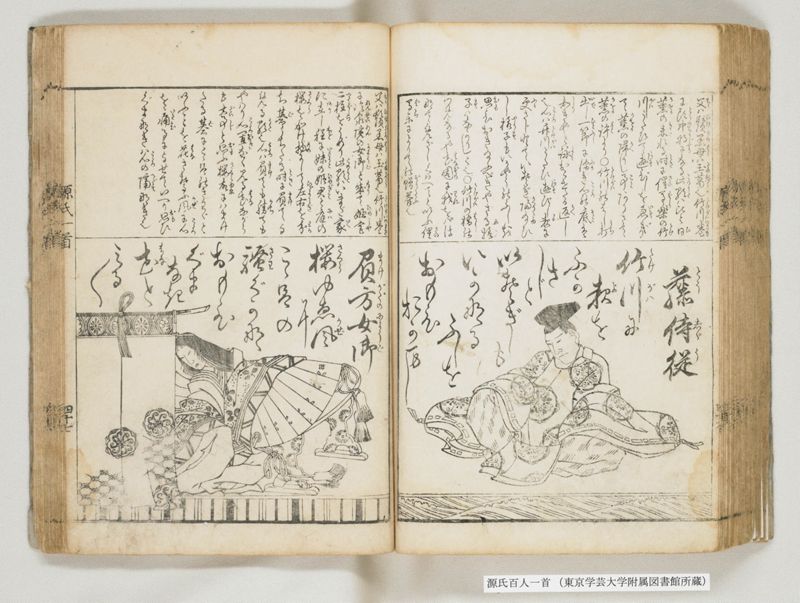
翻刻
【右丁 上段】
父(ちゝ)は鬚黒(ひげぐろ)母(はゝ)は玉葛(たまかづら)也 竹川巻(たけがはのまき)
に頭中将(とうのちうじやう)になる此歌(このうた)はひと日(ひ)
薫(かをる)の来(きた)れる時(とき)に催馬楽(さいばら)の竹(たけ)
川(がは)うたひて遊(あそ)びしを急(いそ)ぎ
て薫(かをる)の帰(かへ)りし事(こと)ありさて
薫(かをる)の許(もと)より○竹川(たけがは)のはし打(うち)
出(いで)し一節(ひとふし)に深(ふか)き心(こゝろ)の底(そこ)は
知(しり)きやと詠(よみ)おこせたる返(かへ)し
也 心(こゝろ)は竹川(たけがは)うたひ遊(あそ)びし夜(よ)に
更(ふか)さじとていそぎ帰(かへり)給(たま)ひ
し様子(やうす)もいかやうのふしを
思(おも)ひおき給ふべきやさる様(やう)
子(す)はなかりしと也○竹川(たけがは)の橋(はし)の
つめなるや花園(はなぞの)に我(われ)をばは
なてめざしくはへてといふ催(さい)
馬楽(ばら)によりての贈答(ぞうたふ)也
【同 下段】
藤侍従(とうじゞう)
竹川(たけがは)に
夜(よ)を
ふか
さ
じと
いそぎしも
いかなる
ふしを
おもひ
おかまし
【左丁 上段】
父(ちゝ)は鬚黒(ひげぐろ)母(はゝ)は玉葛(たまかづら)也 竹川巻(たけがはのまき)
に冷泉院(れんぜいゐん)の女御(にようご)と成(なり)て姫宮(ひめみや)
二柱(ふたばしら)をうめり此歌(このうた)はいまだ家(いへ)
に在(あり)し程(ほど)に妹(いもうと)の姫君(ひめぎみ)と庭(には)の
桜(さくら)をかけ物(もの)にして左右(ひだりみぎ)を分(わか)
ち碁(ご)うちたる時(とき)に負(まけ)てよ
める歌(うた)也 心(こゝろ)は負(まけ)ても勝(かち)ても
やはり心置(こゝろおき)なく見る花(はな)ながら
も大事(だいじ)と思(おも)ふ桜(さくら)故(ゆゑ)にはまけ
たる碁(ご)にこゝろのさわぐと
いふことを花(はな)さそふ風(かぜ)に心(こゝろ)
を痛(いたむ)るによせていへり思(おも)ひ
ぐまなきは心(こゝろ)の隔(へだて)なき也
【同 下段】
負方女御(まけがだのにようご)
桜(さくら)ゆゑ風(かぜ)
に
こゝろの
騒(さわ)ぐかな
おもひ
ぐま
なき
花(はな)と
みる
〳〵
現代語訳
【右丁 上段】
父は髭黒、母は玉鬘である。竹河の巻で頭中将になる。この歌は、ある日薫が来た時に催馬楽の「竹河」を歌って遊んでいたのを、急いで薫が帰ったことがあった。そこで薫のもとから「竹河の橋打ち出でし一節に深き心の底は知りきや」と詠み送ってきたことへの返歌である。歌の意味は、竹河を歌い遊んだ夜に、夜を更かすまいとして急いでお帰りになった様子も、いったいどのような節を思い置きになるのだろうか、そのような様子はなかったのに、ということである。「竹河の橋のつめなるや花園に我をば離てめざしくはへて」という催馬楽によっての贈答である。
【同 下段】
藤侍従
竹河に
夜を更かさじと
急ぎしも
いかなる節を
思ひ置かまし
【左丁 上段】
父は髭黒、母は玉鬘である。竹河の巻で冷泉院の女御となって姫宮二柱を産んだ。この歌は、まだ家にいた頃に妹の姫君と庭の桜を賭け物にして左右に分かれて碁を打った時に負けて詠んだ歌である。歌の意味は、負けても勝ってもやはり心置きなく見る花ながらも、大事と思う桜ゆえに負けた碁に心が騒ぐということを、花を誘う風に心を痛めることに寄せて言ったのである。思いぐまなきは心の隔てがないということである。
【同 下段】
負け方女御
桜ゆえ風に
心の騒ぐかな
思ひ隈なき
花と見るみる
英語訳
【Right Page, Upper Section】
The father is Higeguro and the mother is Tamakazura. He becomes Head Middle Captain (Tō-no-chūjō) in the Takekawa (Bamboo River) chapter. This poem is a response to a verse sent from Kaoru after an incident where Kaoru hurriedly departed when they were singing and playing the saibara song "Takekawa" one day. Kaoru had sent: "Did you truly understand the deep feelings behind that one verse when we sang of crossing Takekawa bridge?" The meaning of the response is: regarding your hurried departure that night when we sang Takekawa, saying you wouldn't stay late into the night—what kind of emotions were you harboring? There was no such indication at the time. This is an exchange of poems based on the saibara song that goes "At the edge of Takekawa bridge, in the flower garden, keep me close and don't let me go."
【Same, Lower Section】
Tō-jijū (Fujiwara Chamberlain)
At Takekawa,
hurrying away
saying you wouldn't
stay late into the night—
what feelings did you harbor?
【Left Page, Upper Section】
The father is Higeguro and the mother is Tamakazura. In the Takekawa chapter, she becomes Imperial Consort to Emperor Reizei and bears two princesses. This poem was composed when she was still at home, playing go with her sister princess, using the garden cherry blossoms as stakes, dividing into left and right sides, and she lost the game. The meaning is that whether losing or winning, although these are flowers we view without reserve, because I treasure these cherry blossoms, my heart is troubled by losing the go game. She expresses this by comparing it to how one's heart aches when the wind threatens to scatter the blossoms. "Omoi-guma naki" means having no hidden thoughts or barriers in one's heart.
【Same, Lower Section】
The Losing Side's Imperial Consort
Because of the cherry blossoms,
my heart is troubled
by the wind—
viewing these flowers
without hidden thoughts