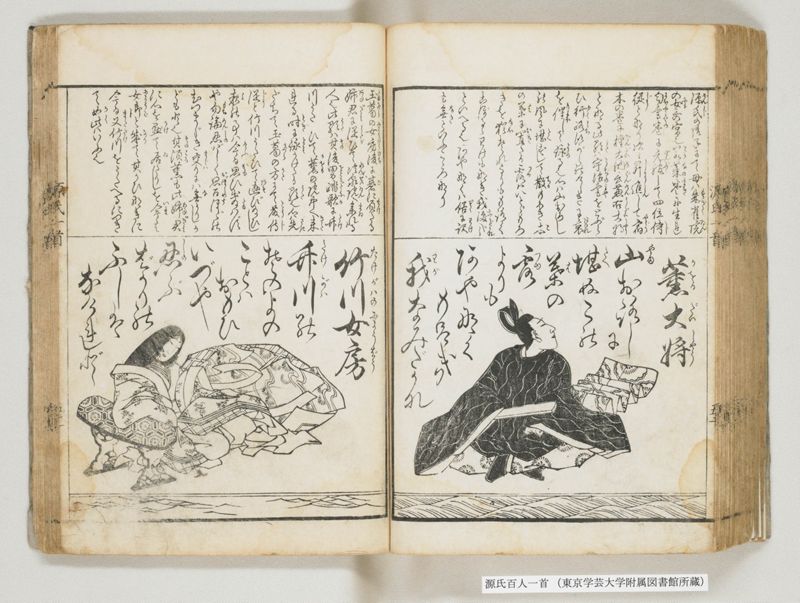
翻刻
【右丁 上段】
源氏(げんじ)の御子にて母は朱雀院(すざくゐん)
の女(によ)三の宮也 若菜巻(わかなのまき)に生れ
匂宮(にほふみやの)巻に元服(げんぶく)して四位 侍(じ)
従(じう)となり次々 昇進(しようしん)して宿(やどり)
木の巻に権大納言(ごんだいなごん)兼(けん)右大将(うだいしやう)
となる此 歌(うた)は宇治宮(うぢのみや)をとぶら
ひ行(ゆく)路(みち)すがらのけしきに哀(あはれ)
を催(もよほ)して詠(よめ)る也心は山おろし
の風に堪(たへ)ずして散(ちる)もろき木(こ)
の葉(は)に置(おき)たる露(つゆ)はいとゞもろ
きを猶(なほ)それよりももろく
こぼるゝわけもなき我 涙(なみだ)哉(かな)
といへる也あやなくは俗(ぞく)に訳(わけ)
も無(なき)といふこゝろなり
【同 下段】
薫大将(かをるだいしやう)
山(やま)おろしに
堪(たへ)ぬこの
葉(は)の
露(つゆ)
よりも
あやなく
もろき
我(わが)なみだかな
【左丁 上段】
玉葛(たまかづら)の女房(にようばう)後(のち)に碁(ご)に負(まけ)たる
姉君(あねぎみ)に従(したが)ひて冷泉院(れんぜいゐん)へ参(まゐ)れる
人也此 歌(うた)は其(その)後 男踏歌(をとこだふか)に竹(たけ)
川うた ひて薫(かをる)の院中へ来(きた)
れる時(とき)に詠(よみ)かけたる歌(うた)也心は先(さき)
だちて玉 葛(かづら)の方(かた)にて藤侍(とうじ)
従(じう)と竹川うたひて遊(あそ)び給ひし
夜(よ)の事は今日(けふ)思(おも)ひ出 給(たま)はず
や勿論(もちろん)忍(しの)ばしく思召(おぼしめす)ほどの
むつまじき交(まじは)りには無(な)かりしか
どもと也 其頃(そのころ)薫も此 姉君(あねぎみ)
に心を懸(かけ)て居(ゐ)たりしを今(いま)は
女御(にようご)と成(なり)て其かひなきに
今日 又(また)竹(たけ)川をうたへるにつき
て如此(かく)はいふ也
【同 下段】
竹川女房(たけがはのにようばう)
竹川(たけがは)の
そのよの
ことは
おもひ
いづや
忍(しの)ぶ
ばかりの
ふしは
なけれど
現代語訳
【右丁 上段】
薫は源氏の御子で、母は朱雀院の女三の宮である。若菜巻で生まれ、匂宮の巻で元服して四位侍従となり、次々と昇進して宿木の巻で権大納言兼右大将となる。この歌は宇治宮を弔問に行く道すがらの景色に哀愁を感じて詠んだものである。歌の心は、山から吹き下ろす風に耐えきれずに散る脆い木の葉に置いた露はとても脆いものだが、それよりもさらに脆く、理由もなくこぼれ落ちる私の涙よ、ということである。「あやなく」は俗に「訳もなく」という意味である。
【同 下段】
薫大将
山おろしに
堪えぬ木の葉の
露よりも
あやなく脆き
我が涙かな
【左丁 上段】
玉葛の女房で、後に碁に負けた姉君に従って冷泉院へ参上した人である。この歌は、その後男踏歌で「竹川」を歌って薫が院中へ来た時に詠みかけた歌である。歌の心は、以前玉葛の方で藤侍従と「竹川」を歌って遊ばれた夜のことを、今日思い出されませんか。もちろん、人目を忍ぶほど親密な関係ではありませんでしたが、ということである。その頃薫もこの姉君に心を寄せていたが、今は女御となってその甲斐もなく、今日また「竹川」を歌うことに関連してこのように言うのである。
【同 下段】
竹川女房
竹川の
その夜のことは
思い出づや
忍ぶばかりの
節はなけれど
英語訳
【Right Page, Upper Section】
Kaoru is the son of Genji, and his mother is the Third Princess, daughter of Emperor Suzaku. He was born in the Wakana (Young Herbs) chapter, came of age in the Niou no Miya (The Perfumed Prince) chapter becoming a Fourth Rank Chamberlain, and gradually rose in rank to become Acting Major Counselor and Right General in the Yadorigi (The Mistletoe) chapter. This poem was composed when he was moved to melancholy by the scenery along the road while going to pay his respects at the Uji Palace. The heart of the poem is: "The dew placed on the fragile leaves that scatter, unable to withstand the wind blowing down from the mountains, is very fragile indeed, but even more fragile than that are my tears that spill for no reason at all." "Ayanaku" means "for no reason" in common parlance.
【Same, Lower Section】
Major General Kaoru
More fragile than the dew
on leaves that cannot
withstand the mountain wind—
my tears that fall
for no reason at all
【Left Page, Upper Section】
This is a lady-in-waiting of Tamakazura who later accompanied the elder lady who lost at go to serve at the Reizei Palace. This poem was composed when she addressed Kaoru as he came to the palace during the men's ceremonial dance, singing "Takegawa." The heart of the poem is: "Do you remember that night when you previously played and sang 'Takegawa' with the Chamberlain Tō at Tamakazura's residence? Of course, it was not an intimate relationship that required secrecy." At that time, Kaoru had also set his heart on this elder lady, but now that she has become an imperial consort and his efforts have come to naught, she speaks thus in connection with today's singing of "Takegawa" once again.
【Same, Lower Section】
Lady Takegawa
Do you recall
that night
of Takegawa—
though there were no moments
requiring secrecy