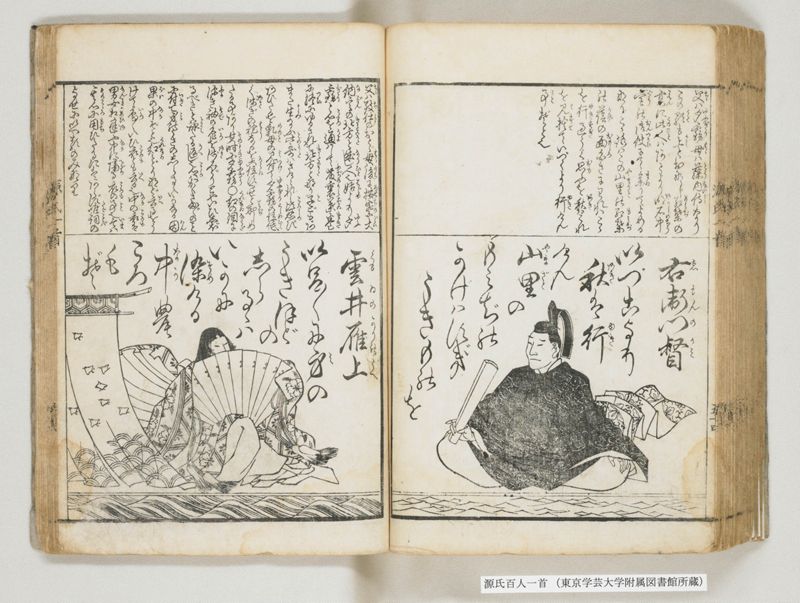
翻刻
【右丁 上段】
父(ちゝ)は夕霧(ゆふぎり)母(はゝ)は藤内侍(とうないし)なり
この歌(うた)も上(かみ)とおなじ紅葉(もみぢ)の
宴(えん)に此人(このひと)はあとより明石中(あかしのちう)
宮(ぐう)の御使(おんつかひ)にて参(まゐ)りてよめる
なりこゝろはこの山里(やまざと)の紅葉(もみぢ)
の蔭(かげ)の面白(おもしろ)さにわれはこゝ
を行過(ゆきすぎ)うく思(おも)ふを秋(あき)はこれ
を見捨(みすて)ていづくより行(ゆき)けん
事(こと)ぞと也
【同 下段】
右衛門督(ゑもんのかみ)
いづこより
秋(あき)は行(ゆき)
けん
山里(やまざと)の
もみぢの
かげはすぎ
うきもの
を
【左丁 上段】
父(ちゝ)は致仕(ちじ)のおとゞ母(はゝ)は後(のち)に按察大(あせちのだい)
納言(なごん)の北方(きたのかた)と成(なり)し人也 始(はじめ)より夕(ゆふ)
霧(ぎり)と心(こゝろ)を通(かよ)はして藤裏葉巻(ふぢのうらばのまき)
に終(つひ)にゆるされて北方(きたのかた)となり子どもあ
また生(うみ)給ふ此哥(このうた)はさけられし頃(ころ)忍(しの)び
あひたるを乳母(めのと)の見付(みつけ)て夕霧(ゆふぎり)の位(くらゐ)低(ひく)
く浅(あさ)ぎの袍(はう)なるを六位(ろくゐ)すくせと恥(はぢ)しめ
たる事あり其時(そのとき)に夕霧(ゆふぎり)○紅(くれなゐ)の泪(なみだ)に
深(ふか)き袖(そで)の色(いろ)を浅(あさ)みどりとやいひしぼ
るべきと詠(よみ)たる返(かへ)し也 心(こゝろ)はかくさま〴〵のこと
に付(つき)て身(み)のうさのしらるゝいかなる因(いん)
果(ぐは)の中(なか)ぞと也 紅(くれなゐ)みどりなど云(いへ)るをう
けて色々(いろ〳〵)いひ衣(ころも)とも云(いへ)る也 中(なか)の衣(ころも)は
男女(なんによ)相逢(あひあ)ふ中(なか)に隔(へだつ)る衣(ころも)の事(こと)也 今(いま)は
其心(そのこゝろ)に用(もち)ひたるにはあらず唯(たゞ)詞(ことば)の
よせにいへるのみなり
【同 下段】
雲井雁上(くもゐのかりのうへ)
いろ〳〵に身(み)の
うきほどの
しらるゝは
いかに
染ける
中(なか)の
ころ
も
ぞ
現代語訳
【右丁 上段】
父は夕霧、母は藤内侍である。この歌も上記と同じ紅葉の宴で、この人は後から明石中宮の使者として参上して詠んだものである。歌の心は、この山里の紅葉の陰の美しさに、私はここを通り過ぎるのが辛く思われるのに、秋はこれを見捨ててどこへ行ってしまったのだろうか、ということである。
【同 下段】
右衛門督
どこから
秋は行ったのだろうか
山里の
紅葉の陰は
過ぎ去りがたい
ものを
【左丁 上段】
父は致仕の大臣、母は後に按察大納言の北の方となった人である。初めから夕霧と心を通わせ、藤裏葉巻でついに許されて北の方となり、子どもたちもお生みになる。この歌は引き離されていた頃、忍んで逢ったところを乳母に見つけられ、夕霧の位が低く浅葱の袍であるのを六位の身分が低いと恥じられたことがあった。その時に夕霧が「紅の涙に深き袖の色を浅緑とや言ひ絞るべき」と詠んだ返歌である。歌の心は、このようなさまざまなことによって身の辛さが知られる、いったいどのような因果なのだろうか、ということである。「紅」「緑」などと言うのを受けて「色々」と言い、「衣」とも言っている。「中の衣」は男女が逢う仲に隔てる衣のことであるが、今はその意味で用いたのではなく、ただ言葉の縁語として言っただけである。
【同 下段】
雲井雁上
様々に身の
辛いほどが
知られるのは
どのように
染めた
中の
衣
なのだろうか
英語訳
【Right Page, Upper Section】
His father is Yūgiri and his mother is Tō no Naishi. This poem was also composed at the same maple viewing banquet mentioned above. This person came later as a messenger from Akashi no Chūgū and composed this poem. The heart of the poem is: while I find it painful to pass by this mountain village because of the beauty of the maple shadows, where has autumn gone, abandoning this scene?
【Same, Lower Section】
Right Gate Guard Captain
From where
has autumn departed?
The shadows of maples
in this mountain village
are too precious
to leave behind
【Left Page, Upper Section】
Her father is the Retired Minister and her mother is the woman who later became the consort of the Asechi no Dainagon. From the beginning she had exchanged hearts with Yūgiri, and in the Fujinouraba (Wisteria Leaves) chapter she was finally permitted to become his consort and bore him children. This poem is her reply from the time when they were kept apart. When they secretly met, her wet nurse discovered them and shamed Yūgiri for his low rank and light green court robe, calling him a lowly sixth-rank courtier. At that time Yūgiri composed: "Should one call the deep color of sleeves wet with crimson tears light green?" This is her reply. The heart of the poem is: through all these various circumstances, the pain of my situation becomes known—what kind of karma is this? She picks up on his words "crimson" and "green" to say "various colors," and also uses "garment." "Naka no koromo" (middle garment) refers to the clothing that separates men and women when they meet, but here it is not used in that sense, but merely as a verbal association.
【Same, Lower Section】
Lady Kumoi no Kari
In various ways
the extent of my life's
pain is revealed—
how was it dyed,
this middle
garment?