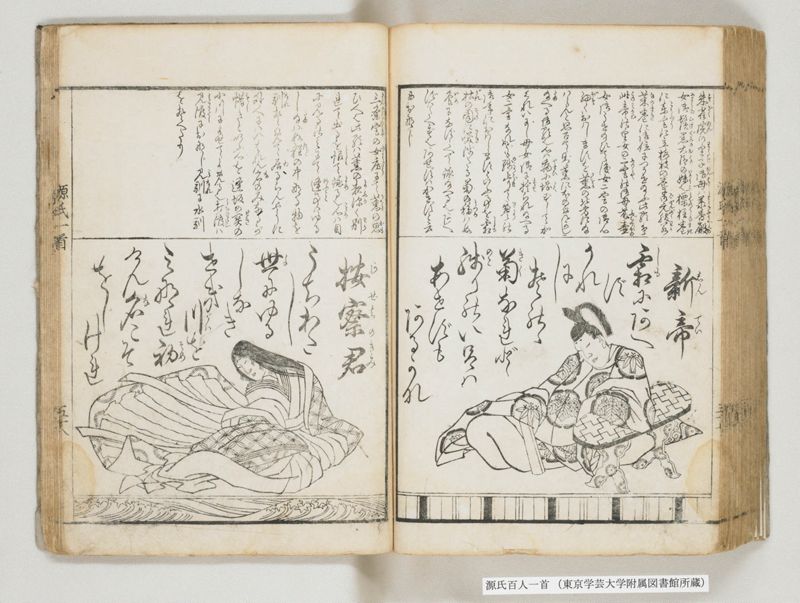
翻刻
【右丁 上段】
朱雀院(すざくゐん)の皇子(わうじ)御母(おんはゝ)は承香殿(しようきやうでんの)
女御(にようご)鬚黒大臣(ひげぐろのおとゞ)の妹(いもうと)也 標柱巻(みをつくしのまき)
に東宮(とうぐう)に立梅枝の巻に御元服(ごげんぶく)若(わか)
菜巻(なのまき)に御位につかせ給ふ此歌は
此帝(このみかど)の皇女の二宮(にのみや)の御母 藤壺(ふぢつぼの)
女御うせ給ひて後女二宮の御心
細(ぼそ)くおはしますを薫(かをる)の北方に給
はらんと思召て則薫にほのめかし
給(たま)へる御願也心は病(やまひ)に堪(たへ)ずしてか
くれいにし母女御に捨(すて)られ給へる
女二宮なれども残(のこり)止(とゞま)りて盛(さかり)の
御年におはしますといふ事を霜(しも)
枯(がれ)の園(その)に咲(さき)残たる菊の移(うつろ)はぬ
色(いろ)になずらへて詠給へる也あへ
ずはたへず也あせずはかせずと云
におなじ
【同 下段】
新帝(しんてい)
霜(しも)にあへ
ず
かれ
に
し
そのゝ
菊(きく)なれど
残(のこ)りのいろは
あせずも
あるかな
【左丁 上段】
三条宮(さんでうのみや)の女房(にようばう)にて薫(かをる)の思(おも)
ひ人なり此歌は薫の夜深(よふか)く別(わか)
れて出るを恨(うらみ)て詠(よめ)る也 心(こゝろ)は目
に見るのみにて逢事(あふこと)はゆる
し給(たま)はぬ程(ほど)の中なる物を
馴(なれ)そめて居(ゐ)るらんやうに
外人にはいはれん名(な)のみなるが
惜(をし)きといふ心を逢坂の関(せき)の
小川によせてよめる也 打渡(うちわたし)は
見渡(みわたし)におなじ見馴(みなれ)に水馴
をそへたり
【同 下段】
按察君(あぜちのきみ)
うちわた
し
世(よ)にゆる
しなき
せき
川(がは)を
みなれ初(そめ)
けん名(な)こそ
をしけれ
現代語訳
【右丁 上段】
朱雀院の皇子で、御母は承香殿の女御、鬚黒大臣の妹である。標柱の巻で東宮に立てられ、梅枝の巻で御元服、若菜の巻で御位に就かれた。この歌はこの帝の皇女である二宮の御母・藤壺の女御が亡くなられた後、女二宮が心細くおられるのを薫の北の方に差し上げようと思し召して、すなわち薫にほのめかされた御願いである。歌の心は、病に堪えきれずに隠れてしまった母女御に捨てられた女二宮であるけれども、残り留まって盛りの御年齢におられるということを、霜枯れの園に咲き残った菊の色褪せない色になぞらえて詠まれたものである。「あへず」は「たへず」(堪えず)のことである。「あせず」は「かせず」(褪せず)と同じ意味である。
【同 下段】
新帝
霜に堪えきれず
枯れてしまった
その園の
菊であるけれど
残った色は
褪せずにいることよ
【左丁 上段】
三条宮の女房で薫の恋人である。この歌は薫が夜深く別れて出て行くのを恨んで詠んだものである。歌の心は、目に見るだけで逢うことは許されないほどの間柄であるのに、馴れ親しんで過ごしているかのように他人には言われるであろう、その評判だけが惜しいという心を、逢坂の関の小川に寄せて詠んだものである。「打渡し」は「見渡し」と同じ意味である。「見馴れ」に「水馴れ」を掛けている。
【同 下段】
按察君
見渡すかぎり
世に許しがたい
関の川を
見馴れ初めてしまった
その評判こそ
惜しいことよ
英語訳
【Right Page, Upper Section】
He is a prince of Emperor Suzaku, whose mother was Lady Shōkyōden, sister to Minister Higekkuro. He was made Crown Prince in the "Miwotsukushi" (Channel Buoys) chapter, came of age in the "Umegae" (Plum Blossoms) chapter, and ascended to the throne in the "Wakana" (Young Greens) chapter. This poem represents the Emperor's wish when he hinted to Kaoru about giving him the Second Princess as his wife, after the Second Princess's mother, Lady Fujitsubo, had passed away and the princess was living in lonely circumstances. The heart of the poem is: though the Second Princess was left behind by her mother, Lady Fujitsubo, who died unable to bear her illness, she remains and is in the prime of her years. This is expressed through the metaphor of chrysanthemums that bloom unfaded in a frost-withered garden. "Ahezu" means "taezu" (unable to endure). "Asezu" has the same meaning as "kasezu" (not fading).
【Same, Lower Section】
The New Emperor
Though these are
chrysanthemums in a garden
that withered,
unable to bear the frost,
their remaining colors
do not fade
【Left Page, Upper Section】
She is a court lady of Sanjō Palace and Kaoru's beloved. This poem was composed in resentment when Kaoru departed late at night. The heart of the poem is: though we are in a relationship where we are only allowed to see each other and not meet intimately, others would say we are behaving as if we were familiar lovers, and it is only this reputation that I regret. This sentiment is expressed through reference to the stream at Osaka Barrier. "Uchiwatashi" has the same meaning as "miwatashi" (looking across). "Minare" (familiar sight) is paired with "mizunare" (familiar with water).
【Same, Lower Section】
Azechi no Kimi
Looking across
this barrier stream
that the world
will not permit,
how regrettable is the reputation
of having grown familiar
with its sight