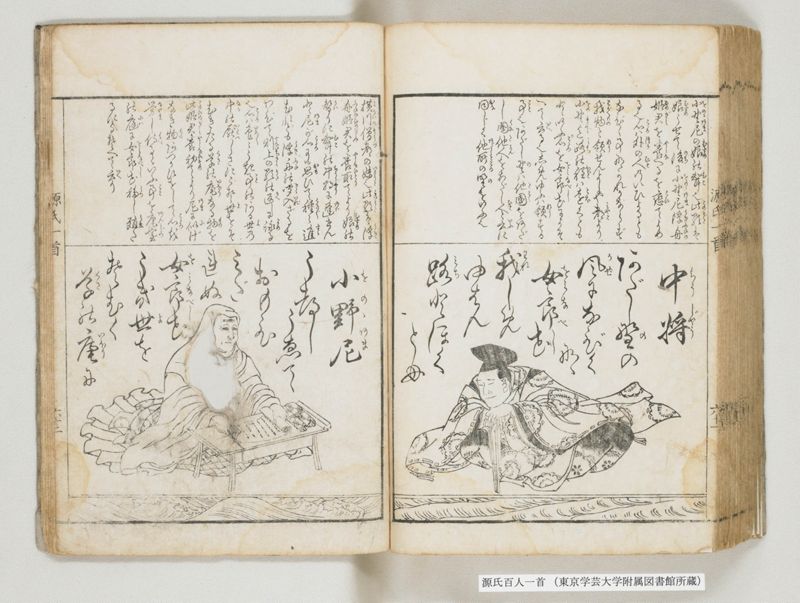
翻刻
【右丁 上段】
小野尼(をのゝあま)の娘(むすめ)の聟(むこ)也 此歌(このうた)は
娘(むすめ)うせて後(のち)に小野尼(をのゝあま)浮舟(うきふねの)
姫君(ひめぎみ)を養(やしな)へるを恋(こひ)てよめ
る也 心(こゝろ)は外(ほか)の人(ひと)のいひよるとも
なびく事なかれかならず
我物(わがへもの)と領(れう)せんよしや都(みやこ)より
小野(をの)迄(まで)路(みち)の程(ほど)は遠(とほ)くとも
といふ心(こゝろ)を女郎花(をみなべし)によそ
へて云(いへ)る也しめゆふは領(れう)する
事(こと)也あだし野(の)は他国(たこく)をあだ
し国(くに)他人(たにん)をあだし人(ひと)と云(いふ)に
同(おな)じく他所(あだしところ)の野(の)をいふ也
【同 下段】
中将(ちうじやう)
あだし野(の)の
風(かぜ)になびく
な
女郎花(をみなべし)
我(われ)しめ
ゆはん
路(みち)とほく
とも
【左丁 上段】
横川(よかはの)僧都(そうづ)の妹(いもうと)也 此歌(このうた)は浮(うき)
舟姫君(ふねのひめぎみ)を養取(やしなひとり)てより娘(むすめ)の
替(かは)りに聟(むこ)の中将(ちうしやう)に逢(あは)せん
と尼(あま)が心(こゝろ)にも思(おも)ひて種々(くさ〴〵)進(すゝ)
むれども浮舟(うきふね)の聞入(きゝいれ)ざるを
わびて則(すなはち)上(かみ)の歌(うた)の返(かへ)しに詠(よめ)る
也 心(こゝろ)は色々(いろ〳〵)うき事のある世(よ)の
中(なか)の厭(いとは)しさにこそ世(よ)をそ
むきたる草(くさ)の庵(いほり)なる物(もの)を
此(この)姫君(ひめぎみ)養初(やしなひそめ)てより尼(あま)に似(に)げ
なき物(もの)あつかひをして心(こゝろ)を
労(なやま)し侍(はべ)るといふ事(こと)を庵室(あんじつ)
の庭(には)に女郎花(をみなべし)移(うつ)し植(うゑ)た
るによそへて云(いへ)り
【同 下段】
小野尼(をのゝあま)
うつし
うゑて
おもひ
みだ
れぬ
女郎花(をみなべし)
うき世(よ)を
そむく
草(くさ)の庵(いほり)に
現代語訳
【右丁 上段】
小野尼の娘の婿である。この歌は娘が亡くなった後に、小野尼が浮舟の姫君を養育しているのを恋い慕って詠んだものである。歌の心は、他の人が言い寄ったとしても靡くことはないでほしい、必ず私のものとして所有しよう、たとえ都から小野まで道のりは遠くても、という心を女郎花に託して言ったものである。「しめゆふ」は所有することである。「あだし野」は他国を「あだし国」、他人を「あだし人」と言うのと同じく、よその野を指している。
【同 下段】
中将
あだし野の
風になびく
な
女郎花
我しめ
ゆはん
道遠く
とも
【左丁 上段】
横川の僧都の妹である。この歌は浮舟姫君を養い取ってから、娘の代わりに婿の中将に会わせようと尼が心中でも思って、いろいろと勧めるけれども浮舟が聞き入れないのを嘆いて、すぐ上の歌への返歌として詠んだものである。歌の心は、さまざまな辛いことがある世の中の嫌わしさによって世を背いた草の庵であるのに、この姫君を養い始めてから、尼にふさわしくない物事の世話をして心を悩ませておりますということを、庵室の庭に女郎花を移し植えたことに託して言ったものである。
【同 下段】
小野尼
移し
植えて
思い
乱
れぬ
女郎花
憂き世を
背むく
草の庵に
英語訳
【Right Page, Upper Section】
He is the son-in-law of the daughter of the Ono Nun. This poem was composed out of love for Princess Ukifune, whom the Ono Nun was raising after her own daughter had died. The heart of the poem is: "Even if others come courting you, do not yield to them. I will surely make you mine, even though the path from the capital to Ono may be distant." He expresses this sentiment through the metaphor of the maidenflower. "Shimeyuu" means to possess or claim ownership. "Adashi no" refers to another's field, similar to how we say "adashi kuni" (foreign country) or "adashi hito" (stranger).
【Same, Lower Section】
Chūjō (Middle Captain)
Maidenflower
of the distant field,
do not bend
to the wind—
I will claim you
as mine,
though the path
be far
【Left Page, Upper Section】
She is the sister of the Bishop of Yokawa. This poem was composed as a reply to the above poem, lamenting that although the nun had been thinking in her heart to arrange a meeting between Ukifune and the Middle Captain as a replacement for her deceased daughter, and had urged this in various ways, Ukifune would not listen. The heart of the poem is: "This is supposed to be a grass hermitage where I renounced the world due to the loathsomeness of a world full of various sorrows, yet since I began caring for this princess, I have been handling matters unbefitting a nun and troubling my heart." She expresses this through the metaphor of transplanting maidenflowers in the garden of her hermitage.
【Same, Lower Section】
Ono Nun
Having transplanted
and planted them,
my thoughts
are disturbed—
these maidenflowers
in the grass hermitage
where I turned away
from the sorrowful world