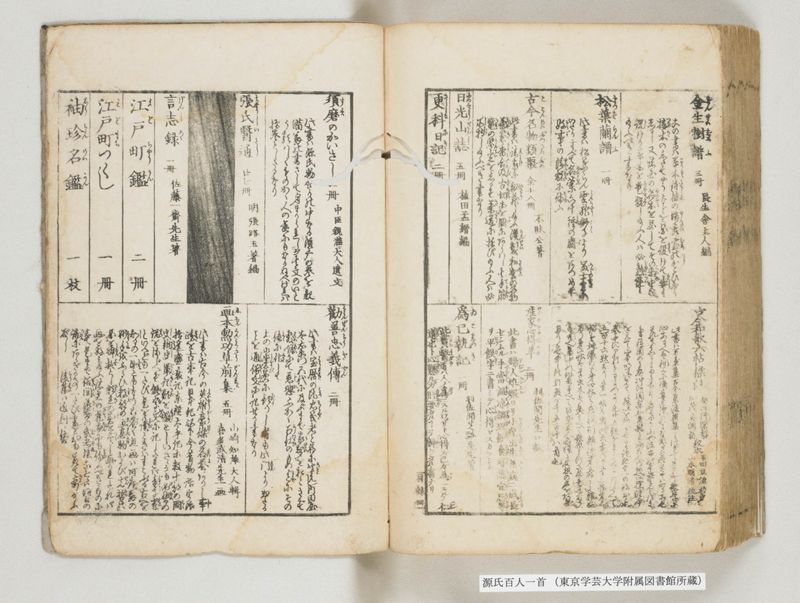
翻刻
【右丁 上段】
金生樹譜(きんせいじゆふ) 三冊 《割書:長生舎主人編》
《割書:この書は草木(さうもく)鉢植(はちうゑ)の培養(やしなひ)室(むろ)のかこひやう|接木(つきき)のしたてやうなどを図(つ)【別本による】を設(まう)けて委(くはし)く》
《割書:しるし又諸国の名木(めいほく)を図してその来由を|説(と)けり草木を愛翫(あいぐわん)し給ふ人は必 熟覧(じゆくらん)し|給ふべき書なり》
【縦線あり】
、松葉蘭譜(まつばらんふ) 一冊
《割書:此書は松葉らん雲竜獅子(うんりやうじし)より富士雪(ふじのゆき)に|いたりすべて名闌(めいらん)六十 種(しゆ)の図(づ)をあつめて|好事(かうじ)の清翫(せいくわん)に備(そな)ふ》
【縦線あり】
古今名物類聚(ここんめいぶつるゐじゆ) 《割書: |全十八冊》 《割書:不昧公著》
《割書:此書は諸家(しよけ)に秘蔵(ひさう)し給ふ漢製(かんせい)和製(わせい)の名物|茶器(ちやき)香合(かうがふ)及(および)古切(ふるきれ)等を図(づ)にあらはし其 手筋(てすぢ)》
《割書:竈(かま)の鑒定(かんてい)をしるす茶道(さどう)に遊び給ふ人は必|所持(しよぢ)し給ふべき書なり》
【縦線あり】
日光山誌(につくわうざんし) 五冊 《割書:植田孟縉編》
【縦線あり】
更科日記(さらしなにき) 二冊
【左丁 上段】
須磨(すま)のかいさし 一冊 《割書:中臣親満大人遺文》
《割書:此書は源氏物かたりの中なる須磨の巻を親|満翁の書さして身まかられしが其文のいと》
《割書:うるはしくものかく人の益にもなりぬべければ|摺巻としたるなり》
【縦線あり】
張氏医通(ちやうしいとう) 廿七冊 《割書:明張路玉著編》
【二行分位の枠を黒塗り】
言志録(げんしろく) 一冊 《割書:佐藤一斎先生著》
【縦線あり】
江戸町鑑(えどちやうかん) 二冊
【縦線あり】
江戸町(えどまち)つくし 一冊
【縦線あり】
袖珍名鑑(しうちんめいかん) 一枚
【右丁 下段】
古今和歌六帖標注 《割書:契沖阿闍梨|加茂真淵翁》校本《割書:平田豆流校定|山本明清校注》
《割書:此書は万葉集古今集御撰集につきて昔より歌学に|心ある人は机上に備置れ証歌になす事は各曽て知る所也》
《割書:され共はやうより善本うせけるにや流布の本誤多したま|たま桂園の主契沖阿闍梨加茂県主両大人の校正標注本》
《割書:をえて山本明清先生に校注を加へさせたる証歌第一の珍本也|巻中に部類をわかつ事凡廿五題をまうくることすべて》
《割書:五百十六題なり第一帖は歳時天象の部第二帖第三|帖は地像の部第四帖は恋祝別雑体【別本による】第五帖に又雑思》
《割書:あり第六帖は草虫木鳥魚すべて題のまうけさま意味あり|こと共也集中の作者すべて百九十三人各儀に父祖の名をあげ|たり巻中の歌数四千五百十八首也》
【縦線あり】
産家心得草(サンカコヽロヱクサ) 《割書: |二冊》 《割書:羽佐間先生口訣》
《割書:此書ハ不婦人(フジン)妊娠(ニンシン)ヨリ小児(セウニ)出生(シユツシヤウ)無病(ムビヤウ)ニ成長(セイチヤウ)|セシムル手当(テアテ)温涼(ウンレウ)調理(テウリ)飲食(インシヨク)好悪(カウオ)宜忌(ギキ)等(トウ)|ヲ平仮字(ヒラカナ)ニ書シテ心得(コヽロヱ)ヤスカラシム》
【縦線あり】
為己執記(ゐこしつき) 一冊 《割書:羽佐間芝瓢先生著》
《割書:此書ハ医道(イダウ)ハ人ノ為(タメ)ニスルワザト心得ズ己ガ為(タメ)一スルノ仁(ジン)|道(ダウ)也ト心懸(コヽロガケ)ルガ肝要(カンエウ)タルコトヲ弁(ベン)ジタル書ナリ》
【左丁 下巻】
勧善忠義伝(くわんぜんちうぎでん) 二冊
《割書:此書は宝暦(はうれき)の比(ころ)忠義(ちうぎ)者と名の聞(きこ)えし内田屋|太右衛門五代に及ぶまで家声をおとさず》
《割書:発明(はつめい)にて慈悲(じひ)ふかく召仕(めしつかひ)のもの迄(まで)にその|徳(とく)に化(くわ)して》
《割書:上の御 賞美(しやうび)に預り(あづか)りし者も此 門(もん)より出たる|ことを通俗文(つうぞくぶん)に記せる書なり》
【縦線あり】
画本勲功草前集(ゑほんくんこうさうぜんしふ) 五冊 《割書:山崎知雄大人輯|喜多武清先生画》
《割書:此書は古今の英雄(えいゆう)豪傑(がうけつ)の名誉(めいよ)ありし事(じ)|蹟(せき)を古事記日本紀以下今昔物語宇治》
《割書:拾遺盛衰記東鑑太平記等数十部の国(こく)|史(し)雑史(さつし)軍記(ぐんき)類(るゐ)を徴(しるし)としいさゝかも不稽(ぶけい)の》
《割書:説(せつ)をまじへず仮字文(かなぶん)に記したれば童子輩(どうじはい)|といへども一たび是を読(よむ)ときはすこぶる古へを》
《割書:知(し)るの一 助(じよ)ともなりぬべく且画は可庵翁の|妙手(めうしゆ)をふるひ数部(すぶ)の画巻物(ゑまきもの)および先哲(せんてつ)の》
《割書:図を準拠(じゆんこ)とし彩色(さいしき)の美(び)を尽(つく)し画かれたれば|画を好み給ふ諸君の蔵本(ざうほん)にも備(そな)ふべきものに》
《割書:して是まで俗間(ぞくかん)流布(るふ)の武者絵(むしやゑ)などゝは同日の|論(ろん)にあらざる事一たび書をひもときて察(さつ)し給ふ|べし 後集(こうしふ)は近刻《割書:ニ》仕候》
現代語訳
【右丁 上段】
金生樹譜 三冊 長生舎主人編
(この書は草木の鉢植えの培養・室の囲い方・接木の仕立て方などを図を設けて詳しく記し、また諸国の名木を図にしてその来歴を説いている。草木を愛好される方は必ず熟読されるべき書である)
松葉蘭譜 一冊
(この書は松葉蘭の雲竜獅子から富士雪に至るまで、すべて名蘭六十種の図を集めて愛好家の清らかな楽しみに備えている)
古今名物類聚 全十八冊 不昧公著
(この書は諸家が秘蔵されている中国製・日本製の名物茶器・香合および古切等を図に表し、その手筋・窯の鑑定を記している。茶道に親しまれる方は必ず所持されるべき書である)
日光山誌 五冊 植田孟縉編
更科日記 二冊
【左丁 上段】
須磨の貝刺 一冊 中臣親満大人遺文
(この書は源氏物語の中の須磨の巻を親満翁が書き写して亡くなられたが、その文がとても美しく文章を書く人の益にもなるであろうから、摺本としたものである)
張氏医通 二十七冊 明の張路玉著編
言志録 一冊 佐藤一斎先生著
江戸町鑑 二冊
江戸町尽くし 一冊
袖珍名鑑 一枚
【右丁 下段】
古今和歌六帖標注 契沖阿闍梨・加茂真淵翁校本 平田豆流校定・山本明清校注
(この書は万葉集・古今集・御撰集について、昔から歌学に心ある人は机上に備え置き証歌とすることは皆すでに知るところである。しかし早くから善本が失われたのか、流布の本は誤りが多かった。たまたま桂園の主・契沖阿闍梨・加茂県主両大人の校正標注本を得て、山本明清先生に校注を加えさせた証歌第一の珍本である。巻中に部類を分けることおよそ二十五題を設けることすべて五百十六題である。第一帖は歳時天象の部、第二帖・第三帖は地象の部、第四帖は恋・祝・別・雑体、第五帖にまた雑思があり、第六帖は草・虫・木・鳥・魚すべて題の設け様に意味があることである。集中の作者すべて百九十三人、各々に父祖の名を挙げている。巻中の歌数四千五百十八首である)
産家心得草 二冊 羽佐間先生口訣
(この書は婦人の妊娠より小児の出生・無病に成長させる手当て・温涼・調理・飲食の好悪・宜忌等を平仮名に書いて心得やすくしている)
為己執記 一冊 羽佐間芝瓢先生著
(この書は医道は人のためにする業と心得ず、己のためにする仁道であると心がけることが肝要であることを弁じた書である)
【左丁 下段】
勧善忠義伝 二冊
(この書は宝暦の頃、忠義者として名の聞こえた内田屋太右衛門が五代に及ぶまで家声を落とさず、賢明にて慈悲深く召使の者までがその徳に感化して、上の御賞美に預かった者もこの門より出たことを通俗文に記した書である)
画本勲功草前集 五冊 山崎知雄大人輯・喜多武清先生画
(この書は古今の英雄・豪傑の名誉ある事跡を古事記・日本紀以下今昔物語・宇治拾遺・盛衰記・東鑑・太平記等数十部の国史・雑史・軍記類を証とし、少しも根拠のない説を交えず仮名文に記したので、童子らといえども一度これを読むときはすこぶる古を知る一助ともなるであろう。かつ画は可庵翁の妙手を振るい、数部の絵巻物および先哲の図を準拠とし、彩色の美を尽くして描かれたので、画を好まれる諸君の蔵本にも備えるべきものであって、これまで俗間に流布の武者絵などとは同日の論ではないことを、一度書を紐解いて察せられるべし。後集は近刊予定)
英語訳
【Right Page, Upper Section】
Kinsei Jufu (Golden Age Tree Guide) - 3 volumes - Edited by Master Chōseisha
(This book details the cultivation of potted plants and trees, greenhouse enclosures, grafting techniques, etc. with illustrations, and also depicts famous trees from various provinces with explanations of their origins. Those who love plants and trees should definitely read this book thoroughly)
Matsuba Ranfu (Pine-needle Orchid Guide) - 1 volume
(This book collects illustrations of 60 varieties of famous orchids, from pine-needle orchids of the cloud-dragon-lion type to Fuji-snow varieties, for the refined enjoyment of enthusiasts)
Kokon Meibutsu Ruijū (Collection of Ancient and Modern Treasures) - Complete 18 volumes - Written by Lord Fumai
(This book illustrates Chinese and Japanese treasure tea implements, incense containers, and ancient fabric pieces secretly treasured by various houses, recording their characteristics and kiln appraisals. Those who practice the tea ceremony must possess this book)
Nikkōzan-shi (Records of Mount Nikkō) - 5 volumes - Edited by Ueda Mōshin
Sarashina Nikki (Sarashina Diary) - 2 volumes
【Left Page, Upper Section】
Suma no Kaisashi (Suma Shell Gathering) - 1 volume - Posthumous writings of Master Nakatomi Chikamitsu
(This book contains the Suma chapter from The Tale of Genji that Master Chikamitsu had copied before his death. Since the writing is very beautiful and would benefit those who write, it was made into a printed edition)
Chōshi Itsū (Zhang's Medical Principles) - 27 volumes - Written and edited by Zhang Luyü of the Ming Dynasty
Genshiroku (Records of Aspirations) - 1 volume - Written by Master Satō Issai
Edo Chōkan (Edo Town Directory) - 2 volumes
Edo-machi Tsukushi (Complete Guide to Edo Towns) - 1 volume
Shūchin Meikan (Pocket Directory of Names) - 1 sheet
【Right Page, Lower Section】
Kokin Waka Rokujō Hyōchū (Annotated Six Books of Ancient and Modern Poetry) - Edited by Abbot Keichū and Master Kamo Mabuchi, revised by Hirata Mameru, annotated by Yamamoto Meisei
(Regarding the Man'yōshū, Kokinshū, and Imperial anthologies, those interested in poetry study have long kept this on their desks as reference poetry, as everyone knows. However, good editions were lost early on, and circulated versions contained many errors. Fortunately obtaining the corrected and annotated editions by the masters of Keien-in, Abbot Keichū, and Kamo no Agata-nushi, with additional annotations by Master Yamamoto Meisei, this is the premier rare book for reference poetry. The volumes are divided into approximately 25 categories with a total of 516 topics. Volume 1 covers seasonal and celestial phenomena, Volumes 2-3 cover terrestrial features, Volume 4 covers love, celebration, parting, and miscellaneous forms, Volume 5 includes miscellaneous thoughts, and Volume 6 covers plants, insects, trees, birds, and fish - all topics meaningfully arranged. The collection includes 193 poets total, each with ancestral names listed. The total number of poems is 4,518)
Sanka Kokoro-e Gusa (Guide for Childbirth Households) - 2 volumes - Oral instructions of Master Hazama
(This book covers everything from women's pregnancy through children's birth and healthy development, including care, temperature regulation, food preparation, dietary preferences, and taboos, written in hiragana for easy understanding)
Iko Shitsuki (Records of Self-Cultivation) - 1 volume - Written by Master Hazama Shihyō
(This book explains that medical practice should not be understood as work for others, but as the way of benevolence practiced for oneself - this mindset is essential)
【Left Page, Lower Section】
Kanzen Chūgi-den (Tales of Encouraging Virtue and Loyalty) - 2 volumes
(This book records in popular writing about Uchidaya Taemon, famous as a loyal man during the Hōreki era, whose family maintained their reputation for five generations through wisdom and deep compassion, even influencing their servants with virtue, with some receiving imperial commendation)
Gahon Kunkō-sō Zenshū (Illustrated Collection of Meritorious Deeds, First Volume) - 5 volumes - Compiled by Master Yamazaki Tomoo, illustrated by Master Kita Takesei
(This book records the glorious deeds of ancient and modern heroes and brave men, using dozens of national histories, miscellaneous histories, and military chronicles including the Kojiki, Nihon Shoki, Konjaku Monogatari, Uji Shūi, Seisui-ki, Azuma Kagami, and Taiheiki as sources, without mixing in any unfounded theories, written in kana so that even children can gain help in understanding antiquity by reading it once. The illustrations demonstrate Master Ka-an's masterful technique, using multiple picture scrolls and diagrams by previous sages as references, with exquisite coloring, making it worthy of collectors who appreciate fine art - clearly distinguishing it from the warrior pictures commonly circulated among the masses, as one glance at the book will reveal. The second volume is planned for upcoming publication)