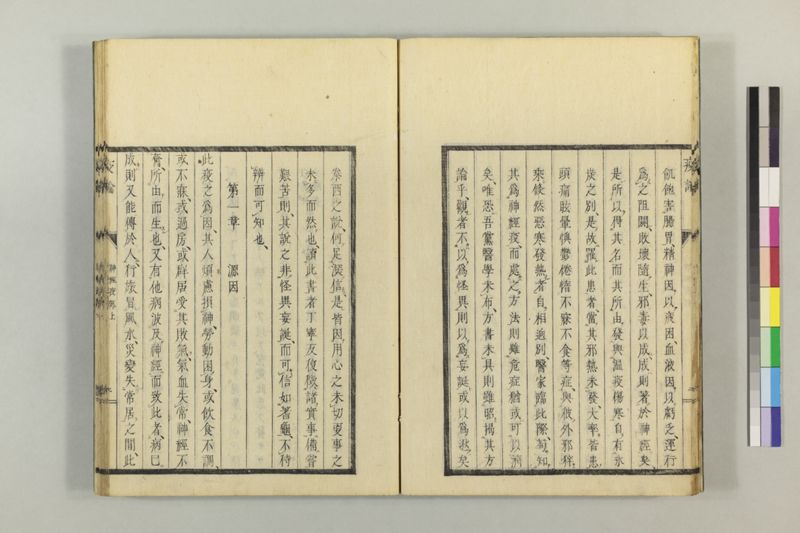
翻刻
飢飽害_二腸胃_一、精神因 ̄テ以 ̄テ疲困、血液因 ̄テ以 ̄テ虧乏、運行
為_レ ̄メニ之阻閼 ̄シ、敗壊随 ̄テ生、邪毒以成 ̄ル、成 ̄ハ則著_二 ̄ク於神経_一 ̄ニ矣、
是 ̄レ所_三-以 ̄ニシテ得_二其名_一而其所_二由 ̄テ発_一与_二温疫傷寒_一自 ̄ラ有_二氷
炭之別_一、是 ̄ノ故 ̄ニ罹_二 ̄ル此患_一者、当_二 ̄テ其邪熱未_一_レ発、大率 ̄ネ皆患_二 ̄フ
頭痛眩暈懊鬱倦惰不寐不食等症_一、与_二彼 ̄ノ外邪猝 ̄カニ
乗 ̄シ倏-然悪寒発熱 ̄スル者_一自 ̄ラ相迥別、医家臨_二此際、苟 ̄モ知_三 ̄テ
其為_二神経疫_一、而処_二 ̄トキハ之 ̄カ方法_一則 雖_二危症_一猶或 ̄ハ可_二以済_一
矣、唯恐 ̄ル吾党医学未_レ布、方書未_レ具則雖_三昭 ̄カニ掲_二其方
論_一乎、観 ̄ル者不_三 ̄トキハ以 ̄テ為_二怪異_一則以 ̄テ為_二 ̄ス妄誕_一 ̄ト或以-為逖 ̄タル矣
泰西之説、何 ̄ソ足_二深 ̄ク信_一 ̄スルニ、是 ̄レ皆因_二 ̄テ用心之未_レ切更事之
未_一_レ ̄ルニ多而然 ̄ル也、読_二此書_一者丁寧反復徴_二 ̄シ諸 ̄ヲ実事_一 ̄ニ備 ̄ニ嘗_二
艱苦_一則、其説之非_二 ̄シテ怪異妄誕_一、而可_レ ̄キヿ信如_二蓍亀_一、不_レ待
_レ弁而可_レ知也、
第一章 源因
此疫之為_レ因、其人煩慮損_レ神、労動困_レ ̄メ身、或飲食不調、
或不寐、或過房、或群居受_二其敗気_一 ̄ヲ、気血失_レ常、神経不
_レ旧、所_二由 ̄テ而生_一 ̄スル也、又有_下他病波_二-及 ̄シテ神経_一 ̄ニ而致_レ此者_上、病巳 ̄ニ
成 ̄トキハ則又能伝_二於人_一 ̄ニ、行旅冒_二 ̄シ風水_一、災変失_二 ̄スルノ常居_一 ̄ヲ之間、此
現代語訳
飢えや過食が腸胃を害し、精神がそのために疲困し、血液がそのために虧乏し、運行がそのために阻害され、敗壊が随って生じ、邪毒が形成される。形成されると神経に現れる。これがこの名称を得る所以であり、その発生する原因は温疫・傷寒とは自ずから氷炭の別がある。
この理由で、この患いにかかった者は、その邪熱がまだ発していない時期において、大抵皆、頭痛・眩暈・懊鬱・倦怠・不眠・食欲不振などの症状に患う。これは外邪が急に侵入し、突然悪寒発熱するものとは自ずから大いに異なる。
医家がこの際に臨んで、もしそれが神経疫であることを知り、それに対する方法で処置すれば、危険な症状であっても、なお救済できる場合がある。ただ恐れるのは、我が医学がまだ普及せず、方書も完備していないので、その方論を明確に掲げても、観る者がそれを怪異とし、あるいは妄誕とし、あるいは遠い泰西の説として、どうして深く信ずるに足りようかと考えることである。これは皆、用心が切実でなく、経験が多くないために然るのである。
この書を読む者は、丁寧に反復して実際の事例に照らし合わせ、困苦を十分に嘗めれば、その説が怪異妄誕ではなく、蓍亀のように信頼できることは、弁ずるまでもなく知ることができる。
第一章 源因
この疫の原因となるのは、その人が煩慮によって神を損ない、労働によって身を困らせ、あるいは飲食が不調であり、あるいは不眠であり、あるいは房事に過度であり、あるいは集団生活でその敗気を受け、気血が正常を失い、神経が旧に復さないことによって生じるものである。また他の病気が神経に波及してこれを引き起こす場合もある。病気がすでに成立すると、また人に伝染することができる。旅行中に風水にさらされたり、災変によって通常の居住地を失ったりする間に、この
英語訳
Hunger and overeating harm the intestines and stomach, the spirit becomes exhausted thereby, blood becomes deficient thereby, circulation becomes obstructed thereby, corruption follows and develops, and pathogenic toxins are formed. Once formed, they manifest in the nervous system. This is why it receives this name, and the causes of its occurrence naturally differ from warm epidemics and cold damage like ice and charcoal.
For this reason, those afflicted with this ailment, during the period when the pathogenic heat has not yet manifested, generally all suffer from symptoms such as headache, dizziness, mental depression, fatigue, insomnia, and loss of appetite. This naturally differs greatly from cases where external pathogens suddenly invade and abruptly cause chills and fever.
When physicians encounter such cases, if they understand that it is a nervous epidemic and treat it with appropriate methods, even dangerous symptoms may still be salvageable in some cases. The only concern is that our medical knowledge has not yet spread widely and medical texts are not complete, so even when the therapeutic principles are clearly presented, observers regard them as strange phenomena, or consider them as wild fantasies, or dismiss them as distant Western theories hardly worth deep trust. This all occurs because attention is not earnest enough and experience is insufficient.
Those who read this book should carefully and repeatedly examine it against actual cases and fully experience hardships. Then they will know without need for argument that these theories are not strange fantasies but can be trusted like divination with yarrow and tortoise shell.
Chapter One: Source and Causes
The causes of this epidemic are: the person damages their spirit through excessive worry, exhausts their body through overwork, has irregular eating and drinking, suffers from insomnia, engages in excessive sexual activity, or receives corrupted qi from group living, causing qi and blood to lose their normal state and the nervous system to fail to return to its original condition. There are also cases where other diseases affect the nervous system and cause this condition. Once the disease is established, it can also transmit to other people. During travel exposure to wind and dampness, or losing one's usual residence due to disasters, this