翻刻
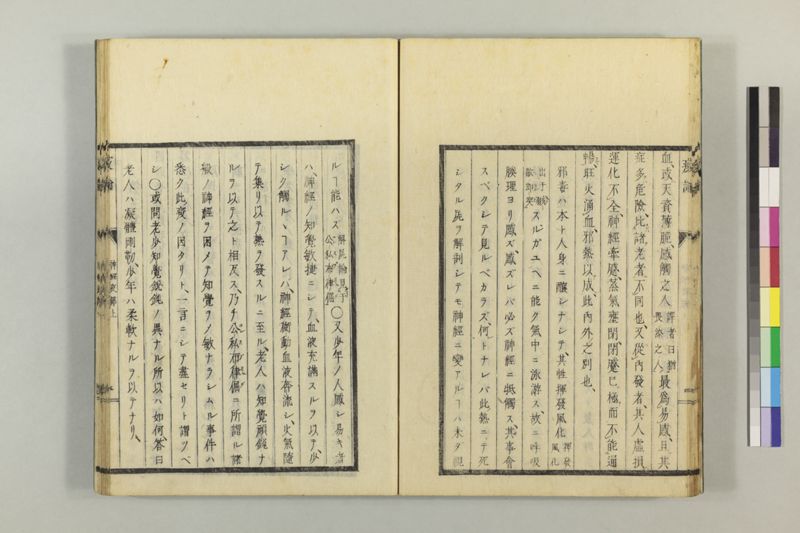
血、或 ̄ハ天資簿脆、感-触之人《割書:訳者曰猶_二|畏漆之人_一 ̄ノ》最為_レ易_レ感、且 ̄ツ其
症多 ̄クハ危険、比_二 ̄スレハ諸 ̄ヲ老者_一 ̄ニ不_レ同也、又従_レ内発者、其人虚損
運化不_レ全、神経牽蹙、蒸気壅閉、閉蹙巳 ̄ニ極 ̄テ而不_レ能_二通
暢_一 ̄スルヿ、旺火涌_レ血、邪熱以 ̄テ成 ̄ル、此内外 ̄ノ之別也、
邪毒ハ本ト人身ニ醸シナシテ、其性揮-発風-化《割書:揮発|風化》
《割書:出_二于 翼(ヒユツ)-|歇(ヘ)-郎(ラン)-突(ド)_一》スルガユヘニ能ク気中ニ泳游ス、故ニ呼吸
腠理ヨリ感ズ、感ズレバ必ズ神経ニ牴触ス、其事会
スベクシテ見ルベカラズ、何 ̄ン トナレバ此 ̄ノ熱ニテ死
シタル屍ヲ解剖シテモ神経ニ変アルヿハ未ダ視
ルヿ能ハズ《割書:解屍論見_二 ̄タリ于|公(コン)-私(ス)-布(プ)-律(リユ)-倔(グ)_一》○又少年ノ人感シ易キ者
ハ、神経ノ知-覚敏-捷ニシテ、血液充満スルヲ以テ、少
シク触ルヽヿアレバ、神経衝-動血液奔-流シ、火気随
テ集リ以テ熱ヲ発スルニ至ル、老人ハ知覚頑-鈍ナ
ルヲ以テ之ト相反ス、乃チ公(コン)-私(ス)-布(プ)-律(リユ)-倔(グ)ニ所謂ル諸
般ノ神経ヲ困メテ知覚ヲシテ敏ナラシムル事件ハ
悉ク此 ̄ノ疫ノ因タリト、一言ニシテ尽セリト謂ツベ
シ○或問老-少知-覚鋭-鈍ノ異ナル所以ハ如何、答曰
老人ハ凝体剛-靭、少年ハ柔-軟ナルヲ以テナリ、
現代語訳
血気が弱い、あるいは生まれつき体質が薄弱で、感触に敏感な人(訳者注:漆にかぶれやすい人のようなもの)が最も感染しやすく、かつその症状は多くの場合危険である。これは老人と比較すると異なる点である。また内部から発症する場合は、その人は虚弱で消化機能が完全でなく、神経が緊張し、蒸気が壅塞して、閉塞がすでに極限に達して通暢することができず、旺盛な火が血を湧き上がらせ、邪熱が形成される。これが内外の違いである。
邪毒はもともと人体内で醸成されて、その性質が揮発・風化(ヒュッヘランドより出典)するために気中を泳ぎ回ることができる。故に呼吸や皮膚から感染する。感染すれば必ず神経に衝突する。その様子は理解できるが目に見えない。なぜならば、この熱病で死んだ死体を解剖しても、神経に変化があることはまだ確認できていない(解剖論はコンスブリュックに見られる)。また少年が感染しやすいのは、神経の知覚が敏捷で、血液が充満しているため、少し触れることがあれば、神経が衝動し血液が奔流し、火気が随って集まって熱を発するに至るからである。老人は知覚が鈍感であるため、これと相反する。すなわちコンスブリュックの言うところの、あらゆる神経を困らせて知覚を敏感にする事件は、すべてこの疫病の原因であると、一言で言い尽くせるといえよう。
ある人が問う「老少の知覚の鋭鈍が異なる理由は何か」。答えて言う「老人は凝体が剛靭で、少年は柔軟であるためである」。
英語訳
Those with weak blood qi, or those naturally frail in constitution and sensitive to touch (translator's note: like people who are susceptible to lacquer poisoning) are most susceptible to infection, and their symptoms are often dangerous. This differs when compared to elderly people. When the disease develops from within, the person is weak with incomplete digestive function, the nerves are tense, vapors are congested, obstruction has already reached its limit and cannot flow smoothly, vigorous fire stirs up the blood, and pathogenic heat is formed. This is the difference between internal and external causes.
Pathogenic toxins are originally brewed within the human body, and because their nature involves volatilization and weathering (derived from Hufeland), they can swim about in the air. Therefore, infection occurs through breathing and the skin. Once infected, it necessarily collides with the nerves. This process can be understood but cannot be seen. This is because even when dissecting corpses of those who died from this fever, changes in the nerves have not yet been confirmed (anatomical theory can be seen in Consbruch). The reason young people are easily infected is that their nervous perception is quick and agile, and their blood is abundant, so if there is even slight contact, the nerves are stimulated, blood rushes, fire qi gathers accordingly, and heat develops. Elderly people have dull perception, so this is reversed. In other words, what Consbruch calls all incidents that trouble the various nerves and make perception sensitive are entirely the causes of this epidemic - this can be said to sum it up in one statement.
Someone asks, "What is the reason for the difference in sharpness and dullness of perception between young and old?" The answer is: "Because in elderly people the solid body is tough and resilient, while in young people it is soft and flexible."