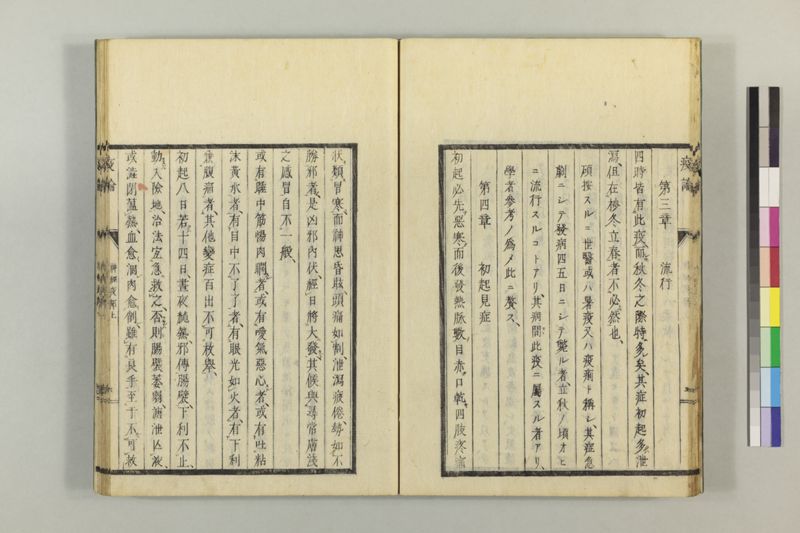
翻刻
第三章 流行
四時皆有_二此疫_一、而 ̄レトモ秋冬之際特 ̄ニ多 ̄シ矣、其症初起多 ̄クハ泄
瀉、伹在_二杪冬立春_一 ̄ニ者不_二必 ̄シモ然_一也、
碩按スルニ世医或ハ暑疫又ハ疫痢ト称シ、其症急
劇ニシテ発病四五日ニシテ斃ル者、立秋ノ頃オヒ
ニ流行スルコトアリ、其病 間(マヽ)此疫ニ属スル者アリ、
学者参考ノ為メ此ニ贅ス、
第四章 初起見症
初起必先 ̄ツ悪寒 ̄シテ而後発熱脈数目赤 ̄ク口乾 ̄キ四肢疼痛
状 ̄チ類_二 ̄ス冒寒_一 ̄ニ、而神思昏眩、頭痛如_レ割、泄瀉疲倦、勢如_二不
勝_レ邪者_一 ̄ノ、是凶邪内伏、経_レ日将_二大 ̄ニ発_一 ̄セント、其候与_二尋常膚浅
之感冒_一自不_二 一般_一、
或有_二睡中筋愓肉瞤 ̄スル者_一、或有_二噯気悪心 ̄スル者_一、或有_下吐_二粘
沫黄水_一者_上、有_下目中不_二了-了_一者_上、有_二眼光如_レ火者_一、有_下 下利
兼_二腹痛_一者_上、其他変症百出不_レ可_二枚挙_一、
初起八日若 ̄クハ十四日、昼夜純熱、邪伝_二腸襞_一、下利不_レ止、
動 ̄モスレハ入_二険地_一、治法宜_二急 ̄ニ救_一_レ之、否 ̄ラサレハ則腸襞萎弱、溏泄亡_レ液、
或渋閉薀_レ熱、血愈く涸 ̄レ肉愈く削 ̄レ、雖_レ有_二良手_一至_二于不_一_レ ̄ルニ可_レ救
現代語訳
第三章 流行
四季すべてにこの疫病があるが、秋冬の時期に特に多い。その症状は初期に多くは下痢を呈するが、晩冬から立春にかけてのものは必ずしもそうではない。
碩(訳者)が按ずるに、世の医者は暑疫または疫痢と称し、その症状が急激で発病から四、五日で死亡する者が、立秋の頃にしばしば流行することがある。その病気の中にはこの疫病に属するものがある。学者の参考のためにここに付け加える。
第四章 初期の症状
初期には必ずまず悪寒がして、その後発熱し、脈が速く、目が赤く、口が乾き、四肢が疼痛する。様子は風邪に似ているが、意識が朦朧とし、頭痛が激しく、下痢と疲労倦怠があり、邪気に勝てないような勢いである。これは凶悪な邪気が内部に潜伏し、日を経て大いに発症しようとするもので、その症候は通常の軽い感冒とは明らかに異なる。
睡眠中に筋肉がけいれんし肉が震える者もあり、げっぷや悪心のある者もあり、粘った泡や黄色い水を吐く者もあり、目がはっきりしない者もあり、眼光が火のような者もあり、下痢に腹痛を伴う者もある。その他の変症は百出して枚挙にいとまがない。
初期から八日ないし十四日、昼夜純粋な熱が続き、邪気が腸の襞に伝わり、下痢が止まらず、ともすれば危険な状態に陥る。治療法は急いで救うべきであり、そうしなければ腸襞が萎弱し、軟便で体液を失い、あるいは便秘して熱を蓄積し、血はますます涸れ、肉はますます削がれ、良医があっても救うことができなくなる。
英語訳
Chapter 3: Epidemic Patterns
This epidemic occurs in all four seasons, but is particularly frequent during autumn and winter. The symptoms initially often present with diarrhea, but cases occurring in late winter to early spring do not necessarily follow this pattern.
The translator Seki notes that worldly physicians call this "summer epidemic" or "epidemic dysentery," with symptoms so acute that patients die within four to five days of onset, often epidemic around the beginning of autumn. Among such diseases, some belong to this epidemic. This is added here for scholars' reference.
Chapter 4: Initial Symptoms
Initially, there is always first chills, followed by fever, rapid pulse, red eyes, dry mouth, and pain in the limbs. The condition resembles catching cold, but with confused consciousness, severe headache like splitting, diarrhea and fatigue, with a momentum as if unable to overcome the pathogenic influence. This represents malignant pathogenic qi lurking internally, preparing to erupt greatly after some days. These symptoms are clearly different from ordinary superficial common colds.
Some have muscle spasms and flesh tremors during sleep, some have belching and nausea, some vomit sticky foam and yellow fluid, some have unclear vision, some have eyes blazing like fire, some have diarrhea accompanied by abdominal pain. Other variant symptoms appear in hundreds of forms, too numerous to list.
From the initial onset, for eight to fourteen days, there is pure fever day and night, the pathogenic qi transmits to the intestinal folds, diarrhea does not stop, and patients readily enter dangerous territory. The treatment method should urgently rescue them; otherwise the intestinal folds become weak and atrophic, loose stools cause loss of body fluids, or constipation accumulates heat, blood becomes increasingly depleted, flesh increasingly wasted, and even with skilled physicians, the condition becomes beyond救 rescue.