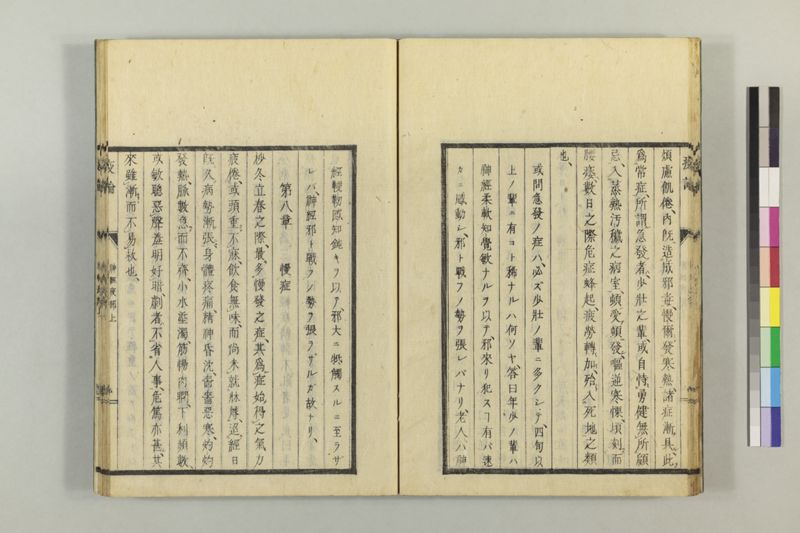
翻刻
煩慮飢倦、内既 ̄ニ造_二-成邪毒_一、慢-爾 ̄トシテ発_二寒熱_一、諸症漸 ̄ク具 ̄ル、此 ̄ヲ
為_二常症_一、所-謂 ̄ル急発 ̄ノ者 ̄ハ、少壮之輩、或自恃_二 ̄ミ勇健_一無_レ所_二顧
忌_一、入_二蒸-熱汚-穢之病室_一、頓 ̄ニ受 ̄テ頓 ̄ニ発 ̄シ、嘔逆寒慄、頃刻 ̄ニシテ而
腰痿 ̄ヘ、数日之際危症蜂起、疲労転〱加 ̄リ、殆 ̄ント入_二死地_一之類
也、
或問急発ノ症ハ、必ズ少壮ノ輩ニ多クシテ、四旬以
上ノ輩ニ有コト稀ナルハ何ソヤ、答曰年少ノ輩ハ
神経柔-軟知-覚敏ナルヲ以テ、邪来リ犯スヿ有バ速
カニ感動シ、邪ト戦フノ勢ヲ張レバナリ、老人ハ神
経鞕-靱感-知鈍キヲ以テ、邪大ニ牴触スルニ至ラザ
レバ、神経邪ト戦フノ勢ヲ張ラザルガ故ナリ、
第八章 慢症
杪冬立春之際、最 ̄モ多_二慢発之症_一、其為_レ ̄ル症始 ̄メ得_レ之気力
疲倦、或頭重 ̄クシテ不_レ寐、飲食無_レ味、而尚未_レ就_二牀蓐_一、迢_二 ̄テ経日
既 ̄ニ久 ̄ク病勢漸 ̄ク張_一 ̄ルニ、身体疼痛、精神昏沈、嗇-嗇悪寒、灼-灼
発熱、脈数急 ̄ニシテ而不斉、小水垽濁、筋愓肉瞤、下利頻数、
或敏聡悪_レ声羞明好_レ暗、劇者 ̄ハ不_レ省_二 人事_一、危篤亦甚 ̄シ、其
来雖_レ漸 ̄ナリト而不_レ易_レ救也、
現代語訳
煩慮や飢餓、疲労により、体内で既に邪毒が造成され、ゆっくりと寒熱を発し、諸症状が次第に現れる。これを常症という。いわゆる急発の者は、若い人たちで、あるいは自分の勇健さを過信して何も恐れることなく、蒸し暑く汚穢な病室に入り、急に感染して急に発症し、嘔逆や寒慄を起こし、短時間のうちに腰が萎え、数日の間に危険な症状が次々と起こり、疲労がますます加わり、ほとんど死地に入るような類である。
ある人が問う「急発の症は、必ず若い人に多くて、四十歳以上の人には稀なのはなぜか」。答えて曰く「年少の人は神経が柔軟で知覚が敏感であるため、邪気が来て犯すことがあれば速やかに感動し、邪気と戦う勢いを張るからである。老人は神経が堅靱で感知が鈍いため、邪気が大いに抵触するに至らなければ、神経が邪気と戦う勢いを張らないからである」。
第八章 慢症
晩冬から立春の際に、最も慢発の症が多い。その症状は、初めは気力の疲倦を得て、あるいは頭が重くて眠れず、飲食に味がなく、しかしまだ床に就いていない状態で、遠く日を経て既に久しく病勢が次第に張ってくると、身体疼痛、精神昏沈、ぞくぞくとした悪寒、灼熱感のある発熱、脈が数急で不整、小水が濁り、筋肉の痙攣、下痢が頻繁、あるいは敏感で音を嫌い明るさを恥じて暗さを好み、劇症の者は人事不省となり、危篤もまた甚だしい。その来方は緩やかであるが救い難いものである。
英語訳
Through worry, hunger, and fatigue, pathogenic toxin is already formed within the body, gradually producing chills and fever, with various symptoms appearing progressively. This is called the ordinary type. The so-called acute onset occurs in young people who, perhaps overconfident in their robust health and fearless of consequences, enter steamy, hot, and contaminated sickrooms, suddenly contract the disease and develop symptoms rapidly, experiencing nausea, vomiting, and chills. Within a short time their lower back weakens, dangerous symptoms arise one after another over several days, fatigue increasingly accumulates, and they nearly enter the realm of death.
Someone asks, "Why does acute onset necessarily occur mostly in young people and rarely in those over forty?" The answer: "Young people have flexible nerves and keen perception, so when pathogenic qi comes to attack them, they quickly respond and mount a vigorous fight against the pathogen. Elderly people have tough, resilient nerves and dull sensation, so unless the pathogen greatly conflicts with them, their nerves do not mount a vigorous fight against the pathogen."
Chapter 8: Chronic Conditions
Late winter to early spring sees the highest occurrence of gradual onset symptoms. These symptoms begin with fatigue and exhaustion of vital energy, or a heavy head with insomnia, tasteless food and drink, yet still not confined to bed. After many days have passed and the disease condition has gradually intensified, there is body pain, mental stupor, shivering chills, burning fever, rapid irregular pulse, turbid urine, muscle spasms and twitching, frequent diarrhea, or hypersensitivity with aversion to sound, shame at light and preference for darkness. Severe cases lose consciousness, and the critical condition is also extreme. Though the onset is gradual, it is not easy to cure.