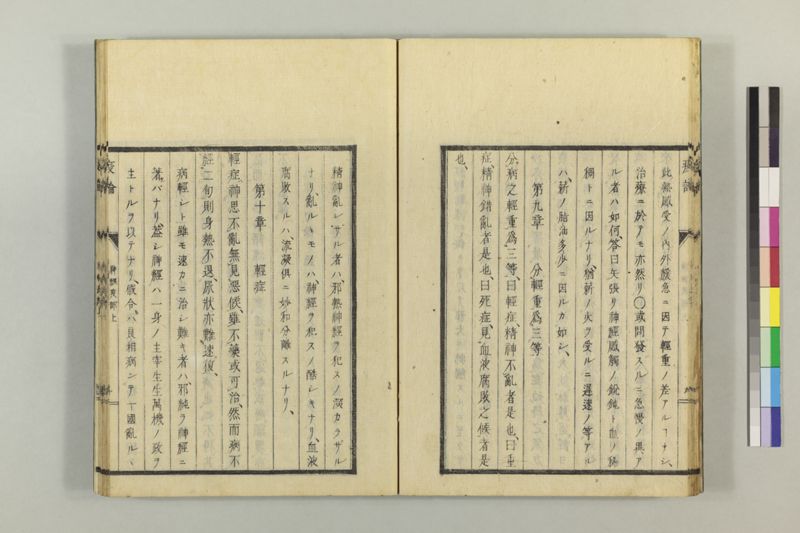
翻刻
此 ̄ノ熱感受ノ内外緩急ニ因テ軽重ノ差アルヿナシ、
治療ニ於テモ亦然リ○或問発スルニ急慢ノ異ア
ル者ハ如何、答曰矢張リ神経感触ノ鋭鈍ト血ノ稀
稠トニ因ルナリ、猶薪ノ火ヲ受ルニ遅速ノ等アル
ハ、薪ノ脂-油多-少ニ因ルガ如シ、
第九章 分_二軽重_一為_二 三等_一
分_二 ̄テ病之軽重_一為_二 三等_一、曰軽症、精神不_レ乱者是也、曰重
症、精神錯乱者是也、曰死症、見_二血液腐敗之候_一者是
也、
精神乱レザル者ハ、邪熱神経ヲ犯スノ深カラザル
ナリ、乱ルヽモノハ、神経ヲ犯スノ酷シキナリ、血液
腐敗スルハ、流-凝俱ニ妙-和分-離スルナリ、
第十章 軽症
軽症 ̄ハ神思不_レ乱無_レ見_二悪候_一、雖_レ不_レ薬或可_レ治、然而病不
_レ経_二 二旬_一則身熱不_レ退、尿状亦難_二速 ̄ニ復_一、
病軽シト雖モ速カニ治シ難キ者ハ、邪純ラ神経ニ
著 ̄ケ バナリ、蓋シ神経ハ一身ノ主宰生-生万機ノ政ヲ
主トルヲ以テナリ、仮令ハ良-相病ンテ一-国乱ルヽ
現代語訳
この熱病の感受は内外の緩急によって軽重の差があることは言うまでもない。治療においてもまた同様である。○ある人が問う「発症に急性と慢性の違いがあるのはなぜか」。答えて曰く「やはり神経感触の鋭敏さと鈍感さ、そして血液の希薄さと濃厚さによるものである。ちょうど薪が火を受ける際に遅速の違いがあるのが、薪の脂油の多少によるのと同じである」。
第九章 軽重を分けて三等とする
病気の軽重を分けて三等とする。軽症とは、精神が乱れない者である。重症とは、精神錯乱する者である。死症とは、血液腐敗の兆候が見える者である。
精神が乱れない者は、邪熱が神経を犯すことが深くないからである。乱れる者は、神経を犯すことが激しいからである。血液が腐敗するのは、流動と凝固の両方が微妙な調和を失い分離するからである。
第十章 軽症
軽症は神思が乱れず悪候も見えない。薬を用いなくても治ることもある。しかし病気が二十日を経なければ身熱は退かず、尿の状態もまた速やかに回復することは困難である。
病気が軽いといえども速やかに治し難いのは、邪気がもっぱら神経に着いているからである。思うに神経は一身の主宰であり、生々たる万機の政治を主るものだからである。たとえば良相が病んで一国が乱れるような
英語訳
This fever's reception naturally has degrees of severity based on internal and external, gradual and acute factors. The same applies to treatment. ○ Someone asks, "Why are there differences between acute and chronic onset?" The answer: "It is still due to the sharpness or dullness of nervous sensitivity and the thinness or thickness of blood. Just as firewood receives fire at different speeds depending on the amount of oil and resin in the wood."
Chapter 9: Dividing Severity into Three Grades
Dividing the severity of disease into three grades: Mild symptoms are those where the spirit is not disturbed. Severe symptoms are those with mental derangement. Fatal symptoms are those showing signs of blood corruption.
Those whose spirit is not disturbed have pathogenic heat that does not deeply invade the nerves. Those who become disturbed have severe invasion of the nerves. Blood corruption occurs when both flow and coagulation lose their delicate harmony and separate.
Chapter 10: Mild Symptoms
In mild symptoms, mental faculties are not disturbed and no ominous signs appear. Sometimes recovery is possible even without medicine. However, if the disease does not pass twenty days, the body heat will not subside, and the condition of urine will also be difficult to restore quickly.
Even though the disease is mild, it is difficult to cure quickly because the pathogen adheres purely to the nerves. Indeed, the nerves are the sovereign of the entire body and govern the vital functions of all bodily mechanisms. For example, it is like when a good minister falls ill and the entire country falls into disorder.