翻刻
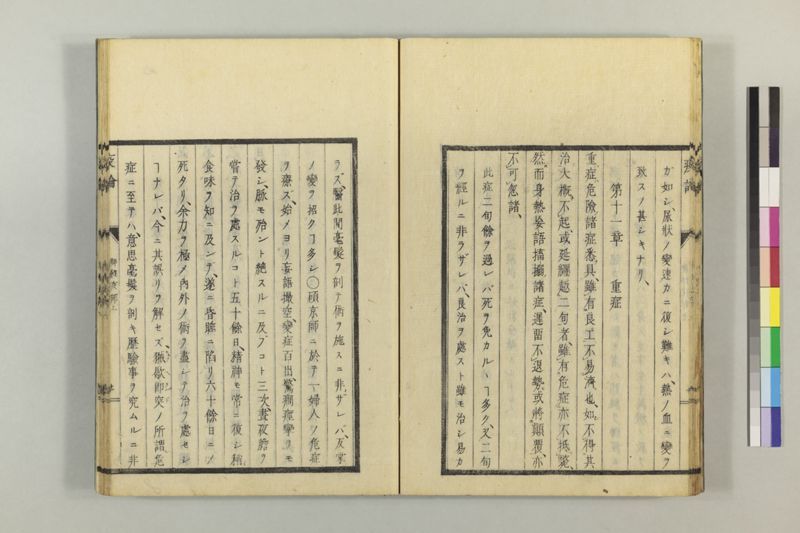
ガ如シ、尿状ノ変速カニ復シ難キハ、熱ノ血ニ変ヲ
致スノ甚シキナリ、
第十一章 重症
重症 ̄ハ危険 ̄ノ諸症悉 ̄ク具、雖_レ有_二良工_一不_レ易_レ済 ̄ヒ也、如 ̄シ不_レ得_二其
治_一大概 ̄ネ不_レ起、或延纏越_二 二旬_一者、雖_レ有_二危症_一亦不_レ抵_レ ̄ラ斃、
然 ̄レトモ而身-熱妄-語搐-搦 ̄ノ諸症、遅留不_レ退勢 ̄ヒ或将_二顚覆_一、亦
不_レ可_レ忽諸、
此症二旬余ヲ過レバ死ヲ免カルヽヿ多ク、又二旬
ヲ経ルニ非ラザレバ、良治ヲ処スト雖モ治シ易カ
ラズ、医此-間毫-髪ヲ剖テ術ヲ施スニ非ザレバ、反掌
ノ変ヲ招クヿ多シ○碩京-師ニ於テ一-婦-人ノ危症
ヲ療ズ、始メヨリ妄-語撮-空、変-症百-出、驚-癇痙-攣ヲモ
発シ、脈モ殆ント絶スルニ及ブコト三次、昼-夜胆ヲ
嘗テ治ヲ処スルコト五十余日、精神モ常ニ復シ稍〱
食味ヲ知ニ及ンデ、遂ニ昏睡ニ陥リ六十余日ニシテ
死タリ、余力ヲ極メ内外ノ術ヲ尽シテ治ヲ処セシ
ヿナレバ、今ニ其誤リヲ解セズ、翼(ヒユツ)-歇(ヘ)-郎(ラン)-突(ド)ノ所-謂 ̄ル危
症ニ至テハ、意-思毫-髪ヲ剖キ歴-験事ヲ究ムルニ非
現代語訳
のようなものである。尿の状態が速やかに回復し難いのは、熱が血液に変化をもたらすことが甚だしいからである。
第十一章 重症
重症は危険な諸症状をことごとく具えており、良い医師がいても治すことは容易ではない。もしその治療法を得られなければ、大概は回復しない。あるいは病気が長引いて二十日を越える者でも、危険な症状があっても必ずしも死に至るわけではない。しかしながら身熱・妄語・痙攣などの諸症状が遅滞して退かず、その勢いが転覆しそうになることもあり、決して軽視してはならない。
この症状は二十日余りを過ぎれば死を免れることが多く、また二十日を経るのでなければ、良い治療を施しても治しやすいものではない。医師がこの期間に細心の注意を払って治療を施すのでなければ、たちまちの変化を招くことが多い。○私は京師において一婦人の危症を治療した。始めから妄語・撮空があり、様々な変症が現れ、驚癇・痙攣も発し、脈もほとんど絶えるに至ること三度、昼夜を問わず胆を嘗める思いで治療を施すこと五十余日、精神も平常に復し少しずつ食べ物の味を知るようになったが、ついに昏睡に陥り六十余日で死去した。私は力を極めて内外の術を尽くして治療を施したのだから、今でもその誤りを理解できない。フーヘランドの言うところの危症に至っては、思考を細かく分析し経験に基づいて事を究めるのでなければ
英語訳
such is the case. The difficulty in quickly restoring the urine condition is due to the severity of heat causing changes in the blood.
Chapter 11: Severe Symptoms
Severe symptoms present all dangerous manifestations completely, and even with skilled physicians, they are not easy to cure. If proper treatment cannot be obtained, generally there is no recovery. Even those whose illness extends beyond twenty days, though they may have dangerous symptoms, do not necessarily die. However, various symptoms such as body heat, delirium, and convulsions may linger without subsiding, and their condition may threaten to deteriorate, which must never be neglected.
With these symptoms, many escape death after twenty-some days pass, and unless twenty days have elapsed, even with good treatment, they are not easily cured. Unless the physician applies treatment with meticulous care during this period, sudden changes often occur. ○ I treated a woman with severe symptoms in the capital. From the beginning she had delirium and grasping at empty air, various abnormal symptoms appeared, she also developed convulsions and spasms, and her pulse nearly ceased three times. I administered treatment day and night with utmost anxiety for over fifty days. Her mental faculties returned to normal and she gradually began to recognize the taste of food, but then she fell into a coma and died after sixty-some days. Since I applied treatment exhausting all internal and external methods to the utmost, I still do not understand what went wrong. Regarding what Hufeland calls severe symptoms, unless one analyzes thoughts minutely and investigates matters based on experience,