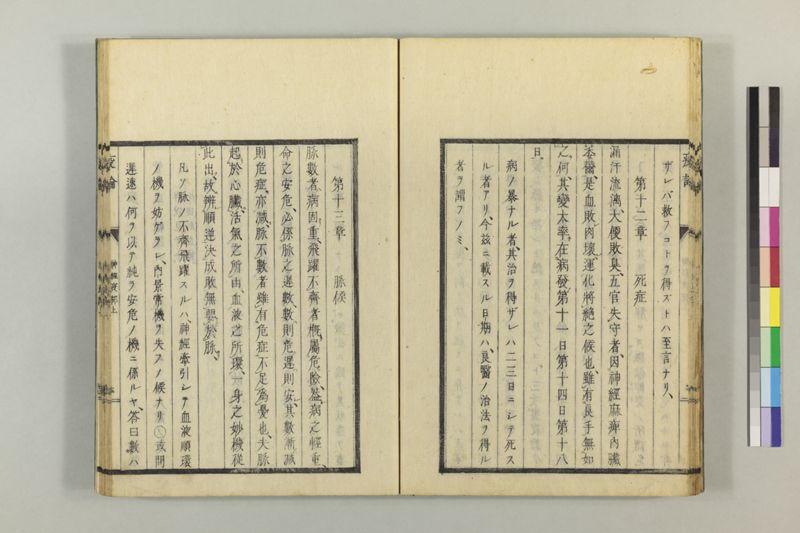
翻刻
ザレバ救フコトヲ得ズトハ至言ナリ、
第十二章 死症
漏汗流-漓、大便敗-臭、五官失_レ守者、因_二神経麻-痺内臟
萎-薾_一、是血敗 ̄レ肉壊 ̄レ、運化将_レ絶之候也、雖_レ有_二良手_一無_二如
_レ之 ̄ヲ何_一、其変大-率 ̄ネ在_二病発 ̄シテ第十一日第十四日第十八
日_一 ̄ニ
病ノ暴ナル者、其治ヲ得ザレハ二三日ニシテ死ス
ル者アリ、今茲ニ載スル日-期ハ、良医ノ治法ヲ得ル
者ヲ謂フノミ、
第十三章 脈候
脈数者 ̄ハ病固 ̄ヨリ重、飛躍不_レ斉者概 ̄ネ属_二危険_一、蓋 ̄シ病之軽重、
命之安危、必係_二脈之遅数_一、数 ̄ハ則危 ̄ク遅 ̄ハ則安 ̄シ、其数漸 ̄ク減
則危症 ̄モ亦減 ̄ス、脈不_レ数者雖_レ有_二危症_一不_レ足_レ為_レ憂也、夫脈 ̄ハ
起_二 ̄リ於心臓_一 ̄ニ、活気之所_レ由、血液之所_レ環、一身之妙-機従
_レ此出 ̄ツ、故 ̄ニ弁_二 ̄シ順逆_一決_二成敗_一無_レ要_レ ̄ナルハ於_レ脈 ̄ヨリ、
凡ソ脈ノ不-斉飛-躍スルハ、神経牽引シテ血液順環
ノ機ヲ妨ゲラレ、内-景常-機ヲ失フノ候ナリ○或問
遅速ハ何ヲ以テ純ラ安危ノ機ニ係ルヤ、答曰数ハ
現代語訳
なければ救うことはできないというのは至言である。
第十二章 死症
漏汗が流れ出て、大便が敗臭を放ち、五官が機能を失う者は、神経麻痺により内臓が萎縮することが原因で、これは血が敗れ肉が壊れ、運化が絶えようとする兆候である。良い医師がいても如何ともしがたい。その変化は大抵病が発してから第十一日、第十四日、第十八日に起こる。
病が激烈な者は、その治療法を得なければ二、三日で死ぬ者もいる。今ここに記載する日期は、良医が治法を得た者について述べるのみである。
第十三章 脈候
脈が数(速い)の者は病がもともと重く、飛躍して不斉な者は概ね危険に属する。そもそも病の軽重、命の安危は必ず脈の遅速にかかっている。数なら危険で、遅なら安全である。その数が漸次減ずれば危症もまた減ずる。脈が数でない者は危症があっても憂うるに足りない。そもそも脈は心臓に起こり、活気の由来するところ、血液の環流するところであり、一身の妙機はここから出る。故に順逆を弁じ成敗を決するのに脈ほど重要なものはない。
およそ脈が不斉で飛躍するのは、神経が牽引されて血液順環の機能が妨げられ、内景が常機を失う兆候である。○ある人が問う、遅速は何をもって純粋に安危の機に係るのか。答えて曰く、数は
英語訳
one cannot save [the patient] - this is a profound truth.
Chapter 12: Fatal Symptoms
When perspiration flows profusely, stool has a putrid odor, and the five senses lose their function, this is due to paralysis of the nerves causing internal organs to atrophy. This indicates that the blood is corrupted, flesh is decaying, and metabolic functions are about to cease. Even skilled physicians can do nothing about this condition. These changes generally occur on the 11th, 14th, or 18th day after the onset of illness.
In cases where the disease is violent, if proper treatment is not obtained, some die within two or three days. The time periods recorded here refer only to cases where skilled physicians have obtained proper treatment methods.
Chapter 13: Pulse Conditions
Those with rapid pulses have fundamentally severe illness, and those with irregular, jumping pulses generally belong to the dangerous category. The severity of illness and safety of life necessarily depend on whether the pulse is slow or rapid. If rapid, then dangerous; if slow, then safe. When the rapidity gradually decreases, dangerous symptoms also decrease. Those whose pulse is not rapid need not worry even if they have dangerous symptoms. The pulse originates in the heart - it is the source of vital energy and where blood circulates, and the subtle mechanisms of the entire body emerge from here. Therefore, nothing is more important than the pulse for distinguishing favorable from unfavorable conditions and determining success or failure.
Generally, when the pulse is irregular and jumping, this indicates that the nerves are being pulled, obstructing the mechanism of smooth blood circulation, causing the internal landscape to lose its normal function. ○ Someone asks: why does slow or rapid [pulse] relate purely to the mechanism of safety or danger? The answer is: rapid means