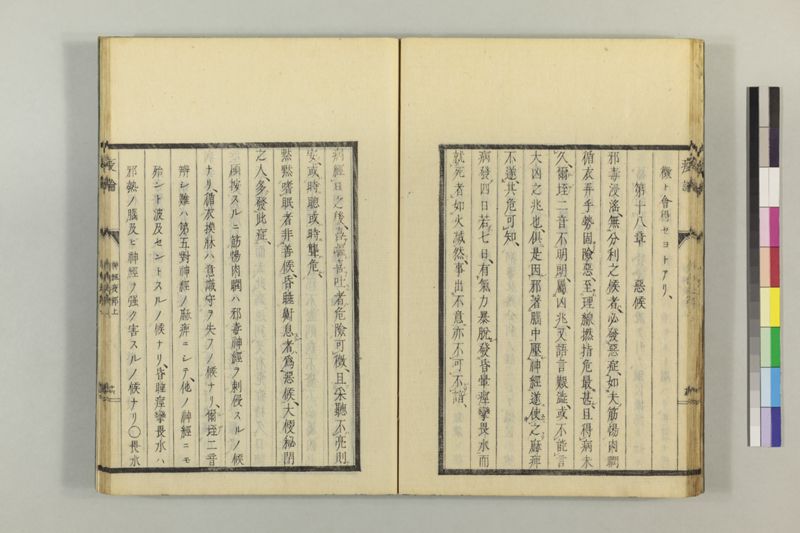
翻刻
徴ト会得セヨトアリ、
第十八章 悪候
邪毒浸淫、無_二分利之候_一者 ̄ハ、必発_二悪症_一、如_二夫 ̄ノ筋-愓肉-瞤
循-衣弄-手_一勢固 ̄ヨリ険-悪、至_二 ̄テハ理-線撚-指_一危最 ̄モ甚 ̄シ、且得_レ病未
_レ久、爾垤(ルデ)二音不_二明朗_一、属_二凶兆_一、又語-言艱-渋、或不_レ能_レ言
大-凶之兆也、俱 ̄ニ是因_下 ̄ル邪著_二脳中_一圧_二 ̄シ神経_一遂 ̄ニ使_中_レ ̄ムルニ之 ̄ヲシテ麻-痺
不-遂_上、其危可_レ知、
病発 ̄シテ四日若 ̄クハ七日、有_下気力暴脱 ̄シ発_二昏-暈痙-攣畏-水_一而
就_レ死者_上如_二火滅_一然 ̄リ、事出_二不意_一 ̄ニ亦不_レ可_レ不_レ ̄ンハアル諳、
病経_レ日之後、喜 ̄テ嘔 ̄シ喜 ̄テ吐 ̄スル者 ̄ハ危険可_レ徴、且 ̄ソ采聴不_レ ̄ハ亮則 ̄チ
安 ̄ク、或 ̄ハ時 ̄ニ聡或 ̄ハ時 ̄ニ聾 ̄ハ危 ̄シ、
黙-黙嗜_レ眠者非_二善候_一、昏-睡鼾-息 ̄スル者 ̄ハ為_二悪候_一、大便秘閉
之人、多 ̄ク発_二此症_一、
碩按スルニ筋-愓肉-瞤ハ邪-毒神-経ヲ刺侵スルノ候
ナリ、循-衣摸-牀ハ意-識守ヲ失フノ候ナリ、爾垤(ルデ)二音
弁シ難ハ第-五-対神-経ノ麻痺ニシテ、他ノ神経ニモ
殆ント波及セントスルノ候ナリ、昏-睡痙-攣畏-水ハ
邪熱ノ脳及ビ神経ヲ強ク害スルノ候ナリ○畏水
現代語訳
徴候として理解せよとある。
第十八章 悪候
邪毒が浸淫し、分離する兆候がない者は、必ず悪症を発する。例えば筋肉の痙攣や肉の震え、衣服を触ったり手をもてあそぶような動作は、もとより険悪であるが、糸を撚ったり指を動かすような動作に至っては、危険が最も甚だしい。また病気になってまだ久しくないのに、ルデ音が明朗でないのは凶兆に属する。また言語が困難で渋く、あるいは話すことができないのは大凶の兆である。これらは皆、邪気が脳中に着いて神経を圧迫し、ついにそれを麻痺させて機能不全にするためで、その危険は知ることができる。
病気が発症して四日もしくは七日で、気力が急激に脱落し、昏暈・痙攣・畏水を発して死に至る者は、火が消えるようである。事は不意に起こり、また諳んじないわけにはいかない。
病気が日を経た後、嘔吐を好む者は危険の徴候である。また聴力が明瞭でなければ安全であるが、時に聞こえ時に聞こえないのは危険である。
黙々として眠りを好む者は良い兆候ではない。昏睡していびきをかく者は悪い兆候である。大便が秘結閉塞している人は、多くこの症状を発する。
碩(新宮涼庭)が按ずるに、筋肉の痙攣や震えは邪毒が神経を刺激侵襲する兆候である。衣服を触り床を撫でるのは意識を失う兆候である。ルデ音の聞き分けが困難なのは第五対神経の麻痺であって、他の神経にもほとんど波及しようとする兆候である。昏睡・痙攣・畏水は邪熱が脳および神経を強く害する兆候である○畏水は
英語訳
sign to be understood.
Chapter 18: Malignant Signs
When pathogenic toxins pervade without signs of separation, malignant symptoms will inevitably develop. For instance, muscle spasms and flesh tremors, touching clothes or fidgeting with hands are inherently ominous, but when it reaches the point of twisting threads or moving fingers, the danger is most severe. Also, when Rale sounds are not clear even though the illness has not lasted long, this belongs to ominous signs. Furthermore, when speech is difficult and labored, or when one cannot speak at all, these are signs of great misfortune. All of these occur because pathogenic qi lodges in the brain, compresses the nerves, and eventually causes them to become paralyzed and dysfunctional; the danger of this can be known.
When the disease develops and after four or seven days, there is sudden collapse of vital energy, development of stupor, convulsions, and hydrophobia leading to death, it is like a fire being extinguished. Events occur unexpectedly, and one cannot fail to memorize this.
After the disease has progressed for days, those who tend to vomit are signs of danger to be observed. Also, if hearing is not clear, then it is safe, but if sometimes hearing and sometimes deaf, it is dangerous.
Those who are silently fond of sleep are not good signs. Those who are in coma and snoring are malignant signs. People with constipated and blocked bowel movements often develop these symptoms.
Seki (Shingu Ryōtei) observes that muscle spasms and tremors are signs of pathogenic toxins irritating and invading the nerves. Touching clothes and stroking the bed are signs of losing consciousness. Difficulty distinguishing Rale sounds is paralysis of the fifth cranial nerve pair, and is a sign that it is about to spread to other nerves as well. Stupor, convulsions, and hydrophobia are signs of pathogenic heat severely harming the brain and nerves ○ Hydrophobia